无液氦1.5T磁共振

Search documents
40年深耕,飞利浦开启与华同新的新篇章
Di Yi Cai Jing· 2025-11-14 12:07
Core Insights - Philips has undergone a transformation in China over the past 40 years, focusing on a new mission of safeguarding health and well-being [4] - At the recent China International Import Expo, Philips showcased nearly 50 innovative products and solutions, including ten new products making their debut in China and several AI-enabled offerings [5][4] Company Development - Philips has established itself as a significant player in China's health industry since its first joint venture in 1985, now becoming the company's second-largest global market [4] - The company has built a closed-loop system of local R&D and manufacturing with five innovation centers and five production bases in China [4][12] Product Innovation - Philips aims to enhance health outcomes for more people, addressing the diverse structure of China's healthcare system and the growing health needs of the population [5] - The MR7700 multi-nuclear magnetic resonance system, recently registered with China's NMPA, is a key product that allows for non-radiative, comprehensive biochemical metabolic mapping of the human body [6][5] AI Empowerment in Healthcare - Philips invests €1.7 billion annually in R&D, with nearly 50% focused on AI and data science, resulting in almost 1,000 related patents [7] - The Spectral CT 7600 exemplifies the integration of AI in clinical imaging, allowing for simultaneous high and low-energy data acquisition, improving early disease detection while reducing patient radiation exposure [7][10] Local Manufacturing and Sustainability - Philips has established a complete production chain in Suzhou, achieving 100% localization for certain products, which have served over 2,000 medical institutions globally [12] - The company has significantly reduced the helium requirement for its MRI machines, addressing supply chain vulnerabilities and contributing to a 20% reduction in carbon emissions [12]


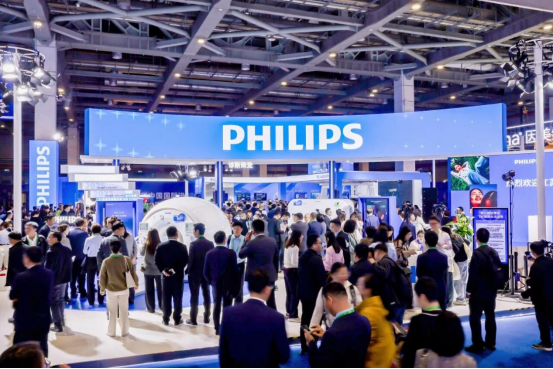
GPS,集体失速!
第一财经· 2025-07-10 15:35
Core Viewpoint - The article discusses the challenges faced by major medical device companies, specifically Philips, GE Healthcare, and Siemens Healthineers (collectively referred to as GPS), in the Chinese market and globally due to trade wars and increasing competition. The companies are focusing on localization and adapting their strategies to navigate these challenges effectively [1][3][5]. Group 1: Market Challenges - In 2024, Philips experienced a double-digit revenue decline in the Chinese market, a trend mirrored by GE Healthcare and Siemens Healthineers [1][5]. - The trade war has significantly impacted GPS, with GE Healthcare estimating a loss of approximately $380 million due to tariffs by 2025, while Philips anticipates losses between €250 million to €300 million [4][5]. - The overall market environment is characterized by intensified competition, price pressures, and the need for strategic adaptation in response to new tariffs [5][14]. Group 2: Localization Efforts - Philips has achieved over 95% of its products being manufactured locally in China, positioning the country as a key supply chain and manufacturing hub [7][8]. - GE Healthcare emphasizes the importance of localizing every component, not just the equipment, to enhance supply chain resilience and quality [9][10]. - Both companies recognize the necessity of building local ecosystems and training talent to support their localization strategies [10][11]. Group 3: Competitive Landscape - Local Chinese companies like United Imaging, Neusoft, and Mindray are emerging as strong competitors, moving beyond imitation to innovation and price competition [14]. - The growing demand for healthcare solutions in China, driven by an aging population and increasing chronic diseases, presents ongoing market opportunities for GPS [14][15]. - The companies are adapting their strategies to focus on specific market segments rather than attempting to cover all areas, indicating a more targeted approach to competition [15].