
日历

Search documents
自制“民间周边”,粉丝“为爱发电”面临侵权风险
Zhong Guo Qing Nian Bao· 2026-01-06 02:48
Core Viewpoint - The article highlights the rise of a vibrant fan-driven merchandise market, where fans create and share custom items related to their favorite idols, raising questions about copyright and intellectual property rights in this burgeoning sector [1][2][7]. Group 1: Fan Activities and Community Engagement - Fans are organizing events and creating custom merchandise, such as calendars and concert materials, fostering a sense of community and shared passion among "同担" (fans of the same idol) [1][3]. - The process of creating and exchanging fan-made items has become a collaborative effort, with fans actively participating in design and production, often leading to high-quality, unique products [2][4]. - The phenomenon of "开团" (group buying) allows fans to collectively purchase items, often resulting in significant sales, as seen with the 5,000 calendars sold by a fan organizer [3][4]. Group 2: Market Dynamics and Consumer Behavior - The fan merchandise market is characterized by rapid changes in trends and preferences, prompting sellers to adapt quickly to consumer demands [6]. - Non-fans are also drawn to fan-created products, indicating a broader appeal and potential market for these items beyond the immediate fanbase [5][6]. - The competitive landscape includes both fan-led initiatives and commercial enterprises, with businesses recognizing the potential in catering to fan communities [6]. Group 3: Legal and Ethical Considerations - The rise of fan-created merchandise raises legal questions regarding copyright infringement, as many creations utilize celebrity IP without official authorization [7][8]. - Legal experts indicate that even non-profit fan activities could infringe on intellectual property rights, highlighting the need for clearer regulations in this area [7][8]. - The tension between fan creativity and legal boundaries presents a challenge for the industry, as fans seek to express their passion while navigating potential legal repercussions [8].
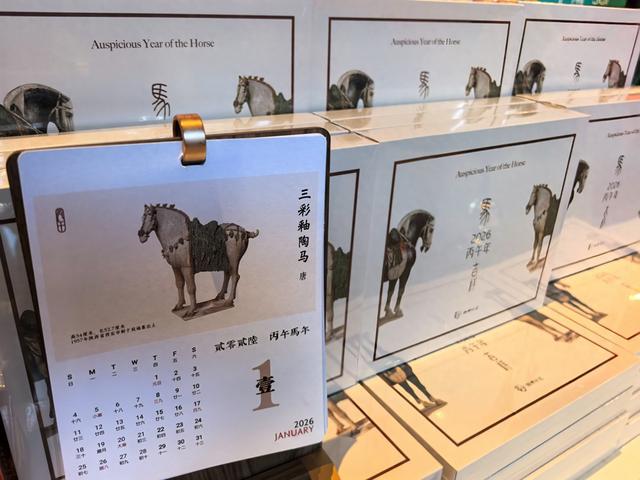
今天随处可见的日历,雏形出现在几千年前
Xin Lang Cai Jing· 2025-12-30 11:54
Group 1 - The article discusses the historical significance of calendars in China, highlighting their evolution from ancient times to the present [1][3]. - It mentions that the earliest known physical calendar was created during the Tang Dynasty, specifically in the year 805 AD, known as the imperial calendar [5]. - The article notes that the "Shoushi Calendar," developed by astronomer Guo Shoujing during the Yuan Dynasty, was a pinnacle of world calendars at the time, with an accuracy of only 26 seconds deviation from the actual solar year [5]. Group 2 - The article emphasizes the importance of calendars in recording significant events and daily activities, particularly in the context of the emperor's actions and state affairs [5]. - It highlights the transition from hand-copied calendars to printed versions during the late Tang Dynasty, which made calendars more accessible and popular among the general public [5]. - The influence of the "Shoushi Calendar" extended beyond China, as it was adopted and adapted by countries like Korea and Japan, becoming a common calendar in East Asia [5].

日本机会品类动向调查-文具
Sou Hu Cai Jing· 2025-08-26 08:44
Core Insights - The report focuses on the Japanese stationery market, highlighting trends and opportunities within categories such as notebooks, planners, calendars, and sticky notes, with a total market value projected at approximately 400 billion yen in 2024 [1][14][15]. Market Overview - The Japanese stationery market is expected to reach around 400 billion yen in 2024, with paper products accounting for 160 billion yen and planners contributing 30-40 billion yen [14][15]. - Traditional stationery demand is declining due to digitalization in education and an aging population, yet brands are diversifying sizes, colors, designs, and functionalities to attract consumers [11][19]. - Notebooks and planners are primarily consumed by students and professionals, with a shift in perception from practical tools to lifestyle enhancers [11][19]. Seasonal Trends - Demand peaks for calendars and planners typically occur from October to December and February to March, while notebooks see higher demand in March and April as consumers prepare for the new academic or fiscal year [19]. Channel Assessment - Basic stationery is commonly purchased at large supermarkets, convenience stores, and online platforms, while unique designs are often found in specialty stores and online [21][22]. - Online shopping is favored due to competitive pricing and ease of finding unique designs, with consumers often making repeat purchases [22]. Competitive Landscape - The market is fragmented, with high brand recognition for notebooks and planners from brands like KOKUYO and Takahashi Bookstore, each offering various product lines and price ranges [24][28]. - KOKUYO's Campus series is particularly popular for its high-quality paper, while Takahashi Bookstore offers a wide range of planners and notebooks catering to diverse consumer needs [28][36]. Consumer Preferences - Consumers select stationery based on usage, with distinct preferences among different demographics; business professionals favor portable, minimalist designs, while students prefer larger notebooks for extensive note-taking [42][47]. - Young consumers are inclined towards customizable stationery that reflects their personality, while "stationery girls" (women aged 20-40) are willing to invest in high-value products that enhance their mood and practicality [48]. Recommendations for Chinese Sellers - It is advised for Chinese sellers to enter niche markets with differentiated designs, targeting specific consumer groups through precise marketing strategies, and to showcase product details effectively on e-commerce platforms to enhance conversion rates [2].


谷歌:Gmail、日历、聊天、云搜索、云端硬盘、会议、任务和谷歌语音的问题已得到解决。
news flash· 2025-06-12 20:04
Core Insights - Google has resolved issues affecting Gmail, Calendar, Chat, Cloud Search, Drive, Meet, Tasks, and Google Voice [1] Group 1 - The problems with Gmail have been addressed, restoring normal functionality [1] - Calendar services are now fully operational after the recent disruptions [1] - Chat functionalities have been fixed, allowing users to communicate without interruptions [1] Group 2 - Cloud Search issues have been resolved, improving search capabilities for users [1] - Google Drive is back to normal, ensuring file storage and sharing services are reliable [1] - Meeting services, including Google Meet, have been restored to full functionality [1] Group 3 - Task management features are now functioning properly, aiding users in organizing their tasks [1] - Google Voice services have been fixed, allowing for seamless communication [1]
