星光·燕赵号旅游专列

Search documents
蓝图变通途 三地若比邻
Xin Lang Cai Jing· 2026-02-22 00:26
Core Viewpoint - The development of the railway network in the Beijing-Tianjin-Hebei region during the "14th Five-Year Plan" period has significantly improved transportation convenience, enhancing the integration of the region and supporting the capital's functional construction and collaborative development [1][2][3]. Group 1: Railway Network Development - The railway department has strengthened the connectivity between Beijing, Tianjin, and Hebei by increasing the frequency of intercity trains and launching new routes, forming four high-speed rail corridors between Beijing and Tianjin [1][2]. - The opening of the Beijing-Tianjin intercity and the introduction of new ticketing products have improved the public transport experience, making travel more convenient for residents [1][3]. - The completion of the Beijing-Tianjin ring high-speed rail has created a fast and efficient transportation loop, reshaping commuting and business travel patterns among the three cities [3][4]. Group 2: Impact on Residents - Residents like Yan Fusheng have experienced enhanced travel convenience, allowing for easier commuting between work and home, thus improving work-life balance [2][3]. - The opening of the Beijing-Tianjin intercity railway has increased travel options, enabling residents to return home more frequently and conveniently [2][3]. - The development of the railway network has led to a significant increase in the number of employees commuting from Beijing and Hebei to work in the Tianjin area, with high-speed rail commuting becoming a norm [5][6]. Group 3: Cultural and Economic Integration - The railway network is not only facilitating transportation but also serving as a platform for cultural exchange and tourism, as seen with the launch of special tourist trains like the "Starry Sky·Yanzhao" train [6][7]. - The railway department is promoting cultural activities at stations, enhancing the travel experience and fostering a sense of community among passengers [7]. - The ongoing development of the railway network is expected to further stimulate economic growth and innovation in the region, particularly in high-end manufacturing and future industries [5][7].
蓝图变通途,三地若比邻
Xin Lang Cai Jing· 2026-02-21 23:23
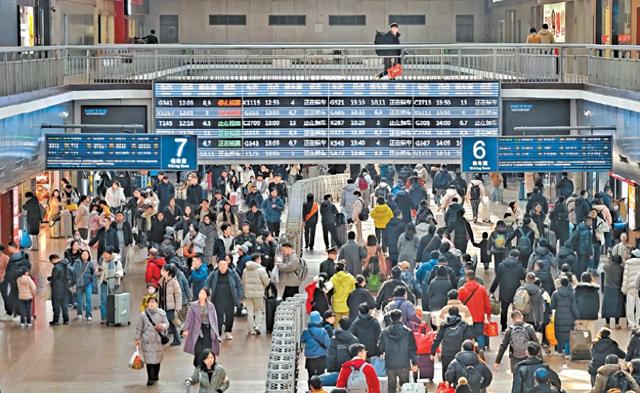
"十四五"期间,"轨道上的京津冀"越织越密。铁路部门通过加密京津城际,开通京滨城际、津兴城际, 形成京津间四条高铁通道,有力服务了京津"双城记";通过增开环京通勤列车、跨线直达高铁,推广新 型票制产品,完成公益性"慢火车"升级,开通邯济铁路、京九铁路、阳涉铁路部分县域车站客运业务, 使京津冀便捷出行"交通圈"更加完善,有效服务了首都"四个中心"功能建设和京津冀协同发展。 北京南站,马年 祝福元素摆在进站显眼位置,增添了浓浓的春节气氛。本报记者 丰家卫摄 2月15日上 午,北京西站迎来出行高峰。越来越完善的铁路网,让人们回家过年的路更快、更便捷。 本报记者 潘 之望摄 "星光·燕赵号"承 德旅游专列上,旅客正在体验捏面人活动。河北日报记者 方素菊摄 1月26日,国铁北京局首次开行京津冀环线高铁列车,方便京津冀旅客的通勤出行。 新华社发 正在天津参与京津冀铁路建设的阎富生,回家十分方便:走出办公室,步行不到两分钟,就可以到达滨 海站。"工作这么多年,从来没有如此便捷的出行体验。"阎富生笑着说,从滨海站乘车半个小时到达天 津站换乘,1个小时左右便可抵达白洋淀站,下车后再有几分钟路程就可以回到他在雄安新区的家中。 " ...