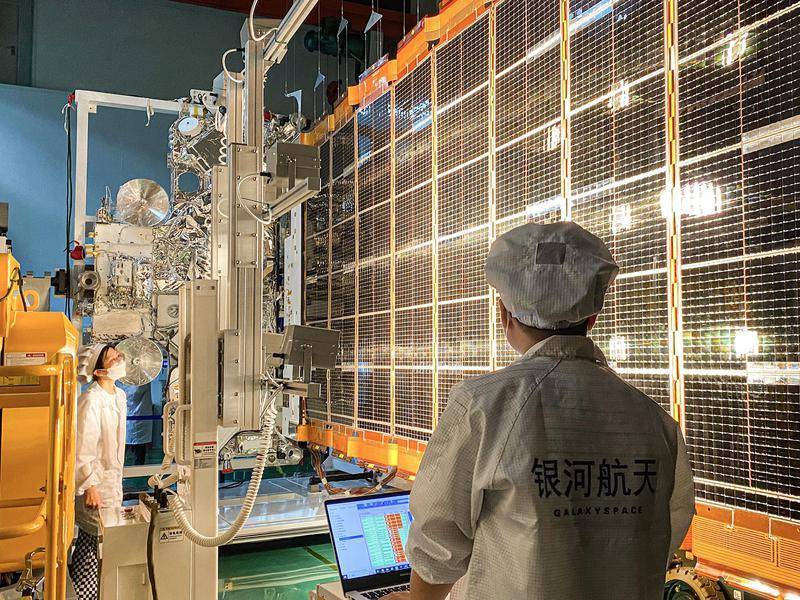
星载毫米波AiP瓦式多波束相控阵天线

Search documents
《环球时报》记者走进中国“太空新基建”工厂车间,感受低轨卫星互联网“加速度”
Huan Qiu Wang Zi Xun· 2026-01-20 23:14
Core Insights - The article discusses the emerging technologies in China's low Earth orbit (LEO) satellite internet sector and its applications in various fields, particularly in emergency response and disaster management. Group 1: Satellite Internet Technology - The integration of LEO satellite internet with drone technology has been successfully tested for emergency firefighting, allowing remote control and real-time data transmission over long distances [3][4]. - By 2025, China is expected to achieve a record 92 satellite launches, with nearly 20 dedicated to deploying internet satellites, indicating a significant push towards the commercialization of LEO satellite internet technology [4]. - The "15th Five-Year Plan" emphasizes the importance of LEO satellite internet as a core infrastructure for the sixth-generation mobile communication network, addressing coverage issues in remote areas [5]. Group 2: Applications and Innovations - The use of LEO satellite internet can enhance disaster response capabilities, particularly in areas where traditional ground-based communication is inadequate, such as mountainous regions prone to forest fires [4][5]. - The development of a "mobile direct satellite connection" is underway, which would allow smartphones to connect directly to satellites, enhancing global internet access [6][7]. - The current transmission speed of the LEO satellite network can reach 200 Mbps, facilitating high-demand applications like online gaming and streaming [6]. Group 3: Industry Growth and Collaboration - The satellite internet sector in China is projected to reach a market size of hundreds of billions to trillions of yuan by 2030, driven by both manufacturing and service sectors [10]. - Collaboration with traditional industries, such as automotive and photovoltaic sectors, is being leveraged to reduce costs and enhance innovation in satellite manufacturing [11]. - The integration of advanced technologies and partnerships with various industries is expected to propel the growth of China's satellite internet industry, which is on the verge of significant expansion [11].

活力中国调研行|每3天一颗星!——从“造星工厂”到太空织网的“银河速度”
Sou Hu Cai Jing· 2025-06-18 12:12
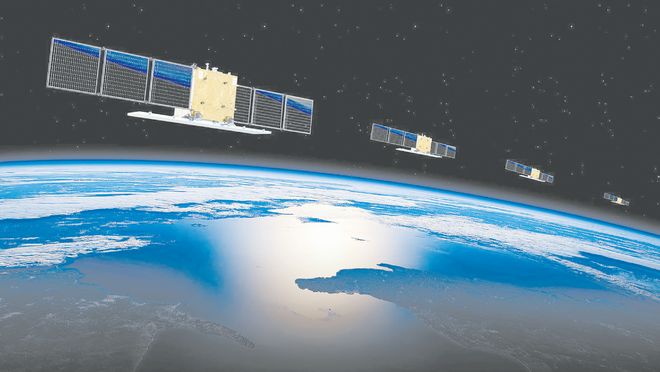
Core Viewpoint - The article highlights the rapid advancements and innovations in China's commercial aerospace sector, particularly focusing on Galaxy Space, which has transformed satellite manufacturing from a custom workshop model to a digital production line, achieving a production capacity of 150 satellites per year, nearing the global average launch volume from 13 years ago [2][5][12]. Group 1: Company Overview - Galaxy Space was established in 2018 in Beijing, entering the satellite internet market during a time when China's commercial aerospace was still in its infancy [5]. - The company combines aerospace engineering with internet technology, which initially faced skepticism due to the contrasting development cycles of the two industries [5]. - In January 2020, Galaxy Space launched its first low-orbit broadband communication satellite, marking a significant milestone in China's satellite communication capabilities [5]. Group 2: Technological Innovations - The company has developed advanced fourth-generation Q/V antennas, achieving an annual production of 100 units, which are crucial for communication quality and bandwidth [5]. - The launch of the Lingxi 03 satellite in July 2023 marked the introduction of China's first satellite using flexible solar wings, enhancing energy absorption and facilitating mass satellite launches [6][9]. - Galaxy Space has reduced the production cycle of SAR satellites to just four months through the use of digital twin technology and a modular production approach [8]. Group 3: Supply Chain and Production Capacity - The supply chain has expanded from about 100 to over 1,300 suppliers, with more than half being private enterprises, showcasing a significant restructuring and enhancement of capabilities [8]. - The company employs an automated detection system for cable routing, reflecting a shift towards more efficient manufacturing processes [8]. Group 4: Global Impact and Future Plans - Galaxy Space's "wheel formation" technology allows for precise satellite positioning, enhancing capabilities in geological disaster warning and ocean monitoring [9]. - The company has initiated overseas applications of its low-orbit satellite internet, providing high-speed internet access to remote areas in Thailand [11]. - Future plans include launching more satellites to support the construction of a space information corridor in countries involved in the Belt and Road Initiative, aiming to connect 2.6 billion unconnected individuals globally [11][12].