星辰智能体平台

Search documents
从“能回应”到“懂你心”,星辰这次升级,让数字人有了“人味儿”
Sou Hu Cai Jing· 2026-01-26 15:42
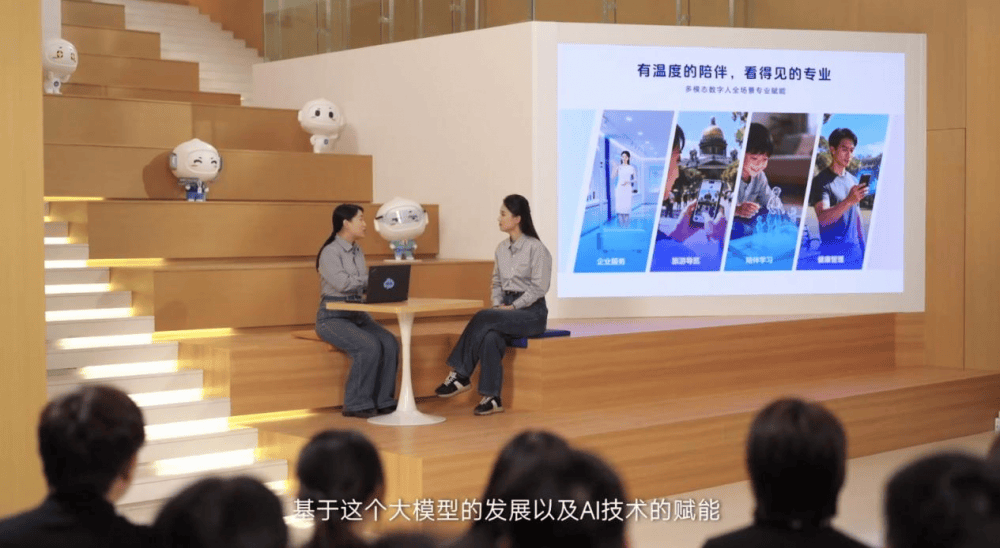
Core Insights - The article discusses the advancements in the Xingchen Intelligent Body platform, which has upgraded its multimodal hyper-human interaction technology to enhance digital human interactions, making them more emotionally engaging and human-like [1][5]. Group 1: Technology Advancements - The new multimodal hyper-human interaction technology integrates voice, facial expressions, and environmental cues, allowing for seamless interaction even in noisy environments [1][2]. - Voice synthesis has improved significantly, offering more natural emotional expression and faster responses, enabling a more genuine connection with users [2]. - The creation of digital human avatars has been simplified, requiring only a single photo to generate a personalized digital persona, which can accurately match text intent with expressions and movements [2][4]. Group 2: Practical Applications - Businesses can create unique digital representatives quickly and cost-effectively, enhancing brand image and reducing operational costs in customer service and business development [4]. - For individuals, these digital humans can provide engaging experiences in various settings, such as guiding tourists with emotional storytelling or assisting in complex processes with patience [4]. - The presence of these emotionally intelligent digital humans is becoming more common in daily life, enhancing experiences in corporate environments, cultural tourism, education, and healthcare [4][5]. Group 3: Future Implications - The ultimate goal of these technological advancements is to improve quality of life by making interactions more human-like and accessible, leading to more efficient and warm experiences [5]. - Continuous technological iterations are expected to introduce even more emotionally intelligent digital humans into various scenarios, enriching every interaction [5].


讯飞星辰智能体平台升级:Agent正式从“对话框”进化为“数字合伙人”
Xin Lang Cai Jing· 2026-01-26 11:09
Core Insights - The article discusses the evolution of intelligent agents from mere digital tools to physical entities capable of enhancing productivity through multi-modal interactions and real-world applications [1][28]. Group 1: Intelligent Agent Capabilities - The upgraded Xingchen intelligent agent platform allows agents to perceive the physical world, understand complex contexts, and communicate in a multi-modal manner, transforming them into "digital partners" with sensory and motor capabilities [1][28]. - The integration of voice, vision, motion, and execution enables agents to seamlessly connect with various smart hardware, facilitating applications in industrial, household, and consumer scenarios [7][32]. - The platform's AIUI integration allows for personalized interactions, enhancing user experience through quick command recognition and execution [6][32]. Group 2: Cost Efficiency and Effectiveness - The intelligent agents can significantly reduce labor and time costs while improving interaction efficiency and effectiveness [8][32]. - Demonstrations of the desktop robot "Xiao Fei" showcased its ability to accurately respond to commands and autonomously navigate environments, highlighting the practical benefits of the technology [8][34]. Group 3: Multi-modal Interaction and Emotional Engagement - The upgraded multi-modal interaction technology allows agents to engage in natural conversations, utilizing voice, facial recognition, and environmental cues to enhance user interaction [11][37]. - The emotional expressiveness of the agents has improved, enabling them to respond more naturally and empathetically, which is crucial for user retention and engagement [14][37]. Group 4: Automation and RPA Integration - The integration of intelligent agents with Robotic Process Automation (RPA) allows for the automation of repetitive tasks, enhancing productivity by enabling agents to perform physical actions [21][44]. - New capabilities such as intelligent components and data tables simplify the automation process, making it accessible to users without technical backgrounds [22][45]. Group 5: Global Expansion and Market Reach - The Xingchen intelligent agent platform is expanding its capabilities to international markets, particularly in the Middle East and Southeast Asia, to support global enterprises [26][47]. - The platform's applications span various sectors, including public services, transportation, and finance, driving innovation and efficiency in global business operations [26][49].

智能体不再 “偏科”,OpenAI、讯飞、千问等各显神通
AI研究所· 2026-01-26 09:33
Market Overview - The Chinese intelligent agent market is projected to reach 7.84 billion yuan by 2025, with an expected growth rate exceeding 70% in 2026, driven by demand from manufacturing, energy, finance, and government sectors, which account for over 70% of the market [1] - The "Artificial Intelligence + Manufacturing" initiative aims to cultivate 1,000 high-level industrial intelligent agents, providing strong momentum for industry development [1] Industry Dynamics - Leading companies are accelerating their strategies in response to market and policy drivers, with OpenAI launching the Operator product in 2025 to simulate human computer operations for tasks like ordering food and booking tickets [2] - Alibaba's upgraded Qianwen can perform full-process collaboration for hotel and product inquiries, while Zhiyuan AI has introduced the Auto framework for intelligent agent development, facilitating the transition from mobile devices to intelligent AI terminals [2] - Challenges such as reliance on single-modal interactions, high customization costs, and incomplete execution chains are hindering industry growth, prompting the search for more efficient solutions [2] Technological Advancements - The core capabilities of intelligent agents lie in environmental perception and demand understanding, with multi-modal fusion becoming a common choice among leading companies [4] - Traditional agents often support only single-modal interactions, leading to perception errors in complex environments. Qianwen employs a multi-modal architecture to synchronize processing and understanding of various inputs [5] - Zhiyuan AI's CogAgent enables full GUI space interaction, while OpenAI's Operator allows AI to interact with graphical user interfaces, simulating human operations [5] Development Accessibility - The scaling of intelligent agents requires lowering development barriers, which is a key focus for leading companies [12] - The Starry Intelligent Agent platform offers a native MaaS architecture, allowing quick connections to over 50 high-quality open-source models, enabling developers to build agents without extensive programming knowledge [12] - Various companies are exploring diverse approaches to reduce development barriers, such as Alibaba's simplified application integration and Zhiyuan AI's focus on rapid empowerment of terminal devices [13] Application and Ecosystem - The value of intelligent agents must be demonstrated through specific scenarios, with leading companies focusing on vertical solutions [15] - The Starry Intelligent Agent platform has diversified its application layout, targeting overseas markets in the Middle East and Southeast Asia, covering public services and infrastructure bidding [15] - Other companies like Alibaba and SenseTime are also focusing on specific sectors, such as consumer services and healthcare, to address core industry needs and enhance operational efficiency [18] Collaborative Innovation - The sustainable development of the intelligent agent industry requires an open ecosystem, a consensus recognized by leading companies [19] - Starry Intelligent Agent leverages resources from iFLYTEK's open platform, which has over 10.26 million developers and covers 4.28 billion terminal devices, creating a comprehensive ecosystem [19] - Companies are fostering a virtuous cycle of "technological breakthroughs - scenario applications - ecosystem feedback" to drive the large-scale development of the intelligent agent industry [19] Future Outlook - The intelligent agent industry is transitioning from technological exploration to large-scale implementation, driven by breakthroughs in multi-modal collaboration, reduced development barriers, and improved ecosystem frameworks [21] - Continuous technological iteration and ecosystem enhancement will further integrate intelligent agents into various industries, becoming a core force for productivity improvement and industrial upgrading [21] - Future development will emphasize scenario adaptability, ease of development, and ecosystem openness, with collaborative innovation between companies and developers as a key driver of industry progress [21]

中国电信国际亮相第十届“一带一路高峰论坛”,共筑智惠丝路新未来
Sou Hu Wang· 2025-09-12 02:21
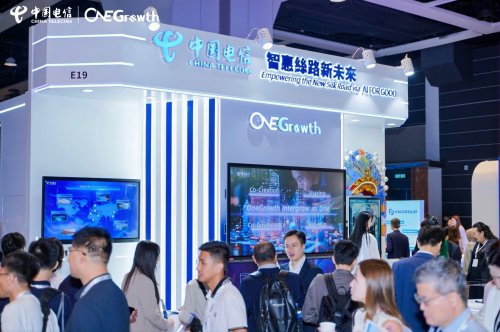
Core Viewpoint - The 10th "Belt and Road Forum" successfully took place in Hong Kong, showcasing China Telecom International's commitment to leveraging AI and digital technology to enhance regional collaboration and development [1][10]. Group 1: AI Capabilities and Innovations - China Telecom International's AI Business Director presented a comprehensive overview of the company's AI capabilities and architecture, highlighting innovative products such as OneTouch AI training machine and AIGC security protection system [3][5]. - The company emphasized its leading position in AI technology research and application, showcasing practical cases of digital solutions for international enterprises [3][6]. Group 2: OneGrowth Global Cooperation Plan - The OneGrowth Global Cooperation Plan was a focal point, emphasizing four core principles: co-creation, sharing, governance, and win-win collaboration [5]. - The plan includes three ecological cooperation directions: "AI + Digital Intelligence Empowerment," "AI + Pan-Mobility," and "AI + Innovative Business," aimed at developing a global ecological computing power scheduling platform [5][6]. Group 3: Infrastructure and Application Demonstrations - The exhibition highlighted China Telecom International's extensive digital infrastructure, including 53 submarine cables, 251 international nodes, and 15 overseas computing centers [6]. - The company showcased AI solutions and benchmark cases, demonstrating its capabilities in supporting digital transformation for industries along the Belt and Road [6][10]. Group 4: Interactive Experience and Cultural Integration - An interactive area featured projects like AI Peking Opera face-changing and 5G robotic dogs, integrating traditional culture with AI technology [8]. - These experiences attracted significant audience participation, showcasing the company's innovations in 5G, AI, IoT, and low-altitude economy [8]. Group 5: Future Prospects and Commitment - During the event, discussions with global clients and partners focused on new opportunities in the digital economy along the Belt and Road [10]. - China Telecom International aims to continue leveraging its cloud network resources and AI technology to provide efficient digital solutions, reinforcing its commitment to the high-quality development of the "Digital Silk Road" [10].

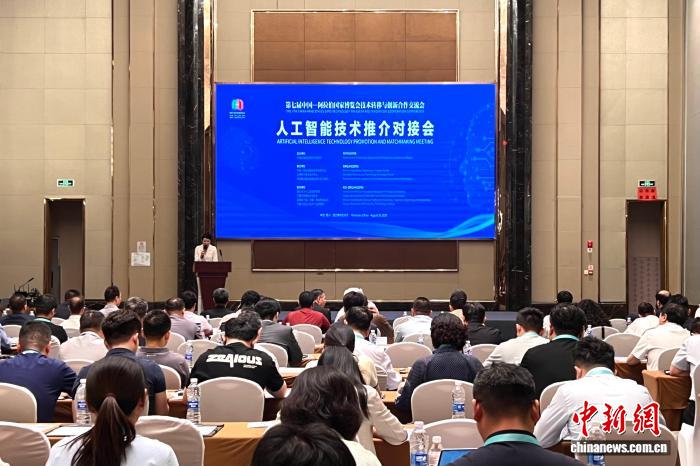
中阿共拓数字技术合作新潜力 人工智能技术推介对接会在银川举行
Zhong Guo Xin Wen Wang· 2025-08-29 14:04
Core Insights - The seventh China-Arab States Expo featured a dedicated session on artificial intelligence technology promotion and matchmaking, showcasing the potential for deep integration of digital technology and the real economy between China and Arab countries [1][4] Group 1: Event Overview - The event highlighted 7 foundational technology achievements and released 8 industry application technologies, demonstrating the vast potential for collaboration in digital technology [1] - A total of 15 latest achievements were showcased, covering key areas of interest for Arab countries such as energy, healthcare, and transportation [3] Group 2: Collaborative Efforts - The president of the National Higher Institute of Artificial Intelligence in Algeria expressed a desire to establish a joint laboratory to advance large model safety governance and vertical scene implementation with Chinese partners [3] - The China Mobile Communications Association's Computing Power Ecological Alliance emphasized a gradual approach to advancing AI applications in sectors like healthcare and education, aiming for deeper cooperation with Arab counterparts [3] Group 3: Future Initiatives - Discussions among representatives focused on collaborative models for talent training, challenges in cross-border data governance, and the scope of scene demonstration promotion, leading to preliminary agreements on multiple cooperation intentions [3] - Ningxia plans to leverage the China-Arab Technology Transfer Center to enhance policy support, scene empowerment, and platform collaboration, aiming to establish Yinchuan as a "technology roadshow hall" and "innovation incubator" for AI [3][4]