
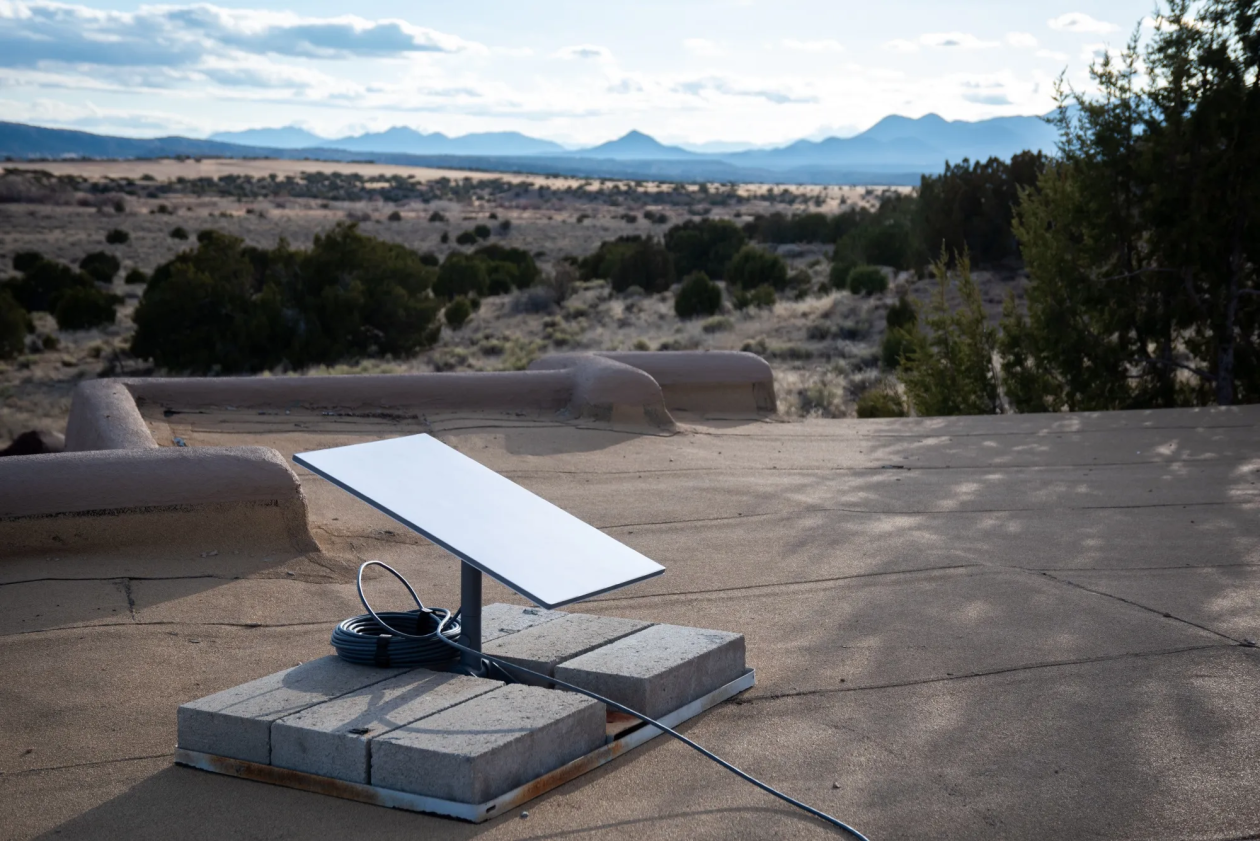
星链终端

Search documents
美国政府被曝曾向伊朗“秘密输送”约6000台“星链”终端,以帮助骚乱人员保持通讯畅通
Xin Lang Cai Jing· 2026-02-13 04:52
Core Viewpoint - The U.S. government secretly supplied approximately 6,000 Starlink terminals to Iran during the January unrest to assist protesters in maintaining communication, indicating a greater level of covert support for anti-government forces than previously understood [1]. Group 1: U.S. Government Actions - The U.S. State Department procured nearly 7,000 Starlink terminals before the unrest, with most purchased in January to help protesters circumvent the Iranian government's internet shutdown strategy [1]. - Approximately 6,000 Starlink terminals were secretly delivered to Iran after the Iranian government took measures to respond to the unrest [1]. - This marks the first instance of the U.S. directly sending Starlink terminals into Iran [1]. Group 2: Political Context - Reports suggest that former President Trump was aware of the smuggling operation, although it is unclear if he or others directly ordered its execution [1]. - The White House has declined to comment on the information regarding the delivery of Starlink terminals [1]. - The actions taken by the U.S. government reflect a significant level of support for Iranian anti-government forces, despite ongoing denials of U.S. involvement in the unrest [1]. Group 3: Background on Unrest - The unrest in Iran involved protests and violent disturbances that severely impacted social order in multiple cities [1]. - The protests have since calmed down, but Iranian President Ebrahim Raisi has claimed that the unrest is part of a series of conspiracies by the U.S. and Israel [1]. - Elon Musk's SpaceX is reportedly providing free Starlink satellite internet services to Iran [1].
美媒爆料:伊朗骚乱期间出现互联网中断后,美国曾秘密向伊朗运送约6000套“星链”终端
Huan Qiu Wang· 2026-02-13 02:21
Core Viewpoint - The Trump administration secretly delivered approximately 6,000 Starlink terminals to Iran during protests to enable anti-government protesters to access the internet despite service disruptions [1][3]. Group 1: Delivery of Starlink Terminals - The U.S. smuggled around 6,000 Starlink terminals into Iran during widespread internet outages in January, marking the first direct delivery of such terminals to the country [3]. - Possession of Starlink terminals is illegal in Iran, with potential penalties including years of imprisonment [3]. Group 2: U.S. Government Involvement - U.S. officials indicated that President Trump was aware of the delivery of Starlink terminals, although it remains unclear whether he personally approved the operation [4]. - The U.S. has denied any involvement in the protests, but the delivery of Starlink terminals suggests covert support for Iranian anti-government protesters [4]. Group 3: Ongoing Tensions and Military Presence - The U.S. has increased military pressure on Iran, deploying multiple naval assets, including the USS Abraham Lincoln, and threatening military intervention [5]. - Trump expressed hope for a nuclear agreement with Iran within about a month, warning of severe consequences for Iran if an agreement is not reached [5].

原油成品油早报-20260213
Yong An Qi Huo· 2026-02-13 01:43
Group 1: Report Industry Investment Rating - No information provided Group 2: Core View of the Report - This week, crude oil prices fluctuated at high levels due to the Iran situation, with the monthly spread declining and the North Sea Brent basis falling to $1.005 per barrel. The first round of US-Iran nuclear negotiations lasted about six hours, and the second round is expected in the next few days. Netanyahu will meet with Trump next Wednesday to discuss the Iran issue. Iran stated it does not want a regional war. Fundamentally, global oil inventories decreased this week, with US commercial crude inventories declining by 3.455 million barrels and refined oil inventories by 5.553 million barrels due to the cold wave. Saudi Arabia adjusted the official selling prices of Arabian light crude for March. Singapore's refined oil inventories increased, while ARA's crude and refined oil inventories decreased. Domestic gasoline and diesel inventories increased. Short - term oil prices are still affected by the Iran situation, and the global crude oil supply - demand fundamentals in the first and second quarters remain in a surplus state, not supporting high valuations [5] Group 3: Summary by Relevant Catalogs 1. Daily News - Israeli Prime Minister Netanyahu is skeptical about the quality of any agreement with Iran, covering nuclear issues, ballistic missiles, and Iran's proxy problems. He also said Trump might reach a good agreement with Iran [3][4] - The Trump administration secretly shipped about 6,000 Starlink terminals to Iran after the Iranian regime's crackdown on demonstrations last month to help anti - regime activists bypass the internet shutdown, though it's illegal in Iran [4] - The IEA lowered the forecast of global oil demand growth in 2026 to 850,000 barrels per day from 930,000 barrels per day in January's report, while keeping the large supply - surplus estimate basically unchanged. OPEC's research department predicted a growth of 1.38 million barrels per day in 2026 [4] 2. EIA Report (02/06 Week) - US crude oil exports decreased by 308,000 barrels per day to 3.739 million barrels per day [14] - US domestic crude oil production increased by 498,000 barrels to 13.713 million barrels per day [14] - Commercial crude inventories excluding strategic reserves increased by 8.53 million barrels to 429 million barrels, a 2.03% increase [14] - The four - week average supply of US crude oil products was 20.827 million barrels per day, a 2.36% increase year - on - year [14] - US Strategic Petroleum Reserve (SPR) inventories decreased by 100,000 barrels to 415.2 million barrels, a 0.0% decrease [14] - US imports of commercial crude oil excluding strategic reserves were 6.805 million barrels per day, an increase of 604,000 barrels per day from the previous week [14] 3. Inventory - No detailed summary information provided other than mentioned in the weekly view 4. Weekly View - Crude oil prices were affected by the Iran situation, with monthly spreads and North Sea Brent basis declining. The US - Iran nuclear negotiations were held, and the second round is expected. Netanyahu will discuss the Iran issue with Trump. Iran doesn't want a regional war. Global oil inventories decreased, and Saudi Arabia adjusted oil prices. Singapore, ARA, and domestic inventories had different trends. Short - term oil prices are affected by the Iran situation, and the first - and second - quarter fundamentals are in surplus [5]