普惠金融产品和服务

Search documents
“十四五”银行业发展:服务实体能力跃升,改革化险成效突出
2 1 Shi Ji Jing Ji Bao Dao· 2025-10-15 01:16
Core Viewpoint - The Chinese banking industry has shown resilience and adaptability during the "14th Five-Year Plan" period, focusing on high-quality development and transforming its operational strategies to enhance capital returns, asset quality, and operational efficiency [1][5][6]. Industry Overview - The total assets of China's banking financial institutions increased from 312.67 trillion yuan at the end of 2020 to 459.04 trillion yuan by July 2025, maintaining the top position globally [1]. - The banking sector has shifted from merely pursuing rapid growth in asset and liability scales to emphasizing capital returns and operational efficiency, with light capital and less cyclical intermediary businesses becoming new growth points [1][5]. Financial Performance - As of mid-2025, the total asset scale of the banking industry reached 467.34 trillion yuan, with a year-on-year growth rate of 7.91% [5]. - The average loan-to-asset ratio for listed banks increased to 57% by mid-2025, up by 1.5 percentage points since early 2021 [5]. - The banking sector has significantly increased its support for key areas such as technology, green finance, inclusive finance, and digital economy, with loans in these sectors accounting for approximately 70% of the total loan increment [5][6]. Asset Quality and Risk Management - The non-performing loan (NPL) ratio for commercial banks was 1.49% at mid-2025, the lowest in nearly a decade, while the provision coverage ratio reached 211.97%, an increase of 27.5 percentage points since early 2021 [7]. - The capital adequacy ratio, tier 1 capital adequacy ratio, and core tier 1 capital adequacy ratio were 15.58%, 12.46%, and 10.93%, respectively, showing improvements since early 2021 [7]. - The banking industry has increased its efforts in disposing of non-performing assets, with a more than 40% increase in asset disposal compared to the "13th Five-Year Plan" period [7][10]. Inclusive Finance Development - By mid-2025, the balance of inclusive loans for small and micro enterprises reached 36 trillion yuan, 2.36 times that of the end of the "13th Five-Year Plan," with an annual growth rate of about 20% [8]. - Large commercial banks played a significant role in this area, with their inclusive loans reaching 16.23 trillion yuan, 3.36 times that of the end of the "13th Five-Year Plan," and an annual growth rate of approximately 30% [8][9]. Reform and Risk Mitigation - The reform and risk mitigation efforts for small and medium-sized financial institutions have shown significant results, with the number of high-risk institutions decreasing substantially [10][11]. - The Jiangsu rural credit system reform serves as an example, achieving a total asset scale of 5.04 trillion yuan and a reduction in the NPL ratio from 1.68% to 1.21% [11][12]. - The overall asset quality of small and medium-sized financial institutions has improved, with urban commercial banks reporting an NPL ratio of 1.78%, a decrease from the previous year [12].

菏泽农商银行:搭建政银企村合作平台,金融活水精准滴灌地方经济
Qi Lu Wan Bao Wang· 2025-07-21 04:48
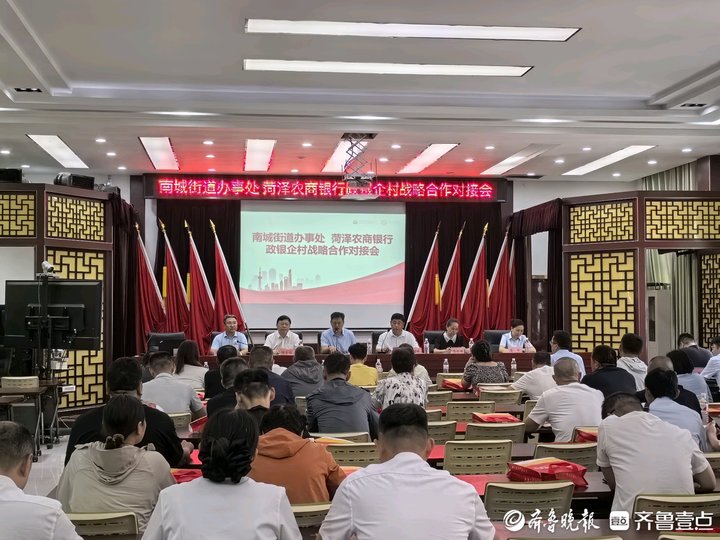
Core Viewpoint - The recent strategic cooperation meeting between Heze Rural Commercial Bank and Nancheng Office aims to create an efficient communication platform to address enterprise financing challenges and support high-quality local economic development [1][3]. Group 1: Meeting Overview - The meeting was hosted by Yan Ruifeng, the director of the People's Congress Working Committee, and attended by key officials from the Nancheng Street Office and Heze Rural Commercial Bank, along with representatives from nearly 70 local enterprises [3]. - The purpose of the meeting was to enhance communication between government, banks, and enterprises, allowing better understanding of financial products and services, and facilitating precise matching of needs to improve financing efficiency [3]. Group 2: Financial Services and Support - Heze Rural Commercial Bank emphasized its commitment to integrating its development with local economic growth, continuously increasing credit support for various market entities [4]. - The bank plans to optimize financial services by offering preferential interest rates, improving approval efficiency, and enhancing service models to better meet the needs of enterprises and communities [4]. - The meeting introduced various financial products tailored for businesses, individual entrepreneurs, and agricultural groups, along with unique service models such as cross-industry alliances and on-site offices [5]. Group 3: Future Initiatives - The successful hosting of the meeting established a positive interaction framework among government guidance, bank empowerment, and enterprise benefits [5]. - Moving forward, all parties will work towards establishing a regular communication mechanism to ensure continuous and precise financial support for local economic development [5].