智慧蓉城

Search documents
将“公园城市”的宏大理念转化为可感可及的幸福生活
Xin Lang Cai Jing· 2026-01-20 17:50
Core Viewpoint - Chengdu is transforming the grand concept of "park city" into a tangible and happy life for its citizens, reflecting a profound change in urban governance and management, emphasizing the importance of citizen participation and cultural identity [1] Group 1: Economic and Digital Transformation - Chengdu is focusing on a dual-win approach by balancing economic and public sentiment, integrating full lifecycle management into urban planning and development [2] - The city is utilizing TOD (Transit-Oriented Development) and EOD (Economic-Oriented Development) models to convert underutilized spaces into high-value areas, exemplified by the transformation of a former bus hub into a vibrant sports park [2] - The "Smart Chengdu" initiative is pivotal in addressing complex urban governance challenges, shifting from traditional management to data-driven control, enhancing citizen experience through efficient service delivery [2] Group 2: Cultural Engagement and Community Involvement - The depth of urban civilization is linked to the breadth of citizen participation, with Chengdu activating cultural heritage and community strength to enhance urban governance [3] - The city is successfully merging cultural memory with urban renewal, creating a shared cultural identity among residents through innovative governance models that encourage community involvement [3] - Chengdu's "micro-network governance" extends its reach into every household, fostering collaboration between community planners and residents to design their living spaces [3] Group 3: Quality of Life and Safety - Chengdu has been recognized as one of the happiest cities in China, prioritizing human needs in its governance approach [4] - The city is implementing various "micro-happiness" projects to address citizens' everyday concerns, enhancing urban aesthetics and quality of life through meticulous governance [4] - Chengdu is expanding its focus beyond housing to include transportation convenience and tourism experience, demonstrating an inclusive governance model that enhances the city's attractiveness and supports high-quality development [4]
以高效能治理助推城市现代化转型
Xin Lang Cai Jing· 2026-01-20 17:50
Core Viewpoint - The article emphasizes the importance of efficient urban governance as a key driver for high-quality urban development, particularly in Chengdu, which aims to become a model for modern urban transformation through effective governance practices [1]. Group 1: Governance Framework - Efficient governance relies on a clear, collaborative, and smoothly operating modern work system, breaking down departmental barriers and enhancing top-level coordination [2]. - Chengdu is establishing a "big city management" framework that coordinates various departments to address cross-domain governance challenges through regular "comprehensive consultations" and "joint strategies" [2]. Group 2: Grassroots Governance - The focus is on decentralizing governance to enhance responsiveness and resource allocation at the grassroots level, integrating various local forces into a rapid response mechanism [3]. - The "micro-grid" governance system allows for real-time problem detection and resolution at the community level, significantly improving the agility and precision of grassroots governance [3]. Group 3: Smart Governance - Digital technology is crucial for transforming urban governance, with Chengdu implementing a "smart city" initiative that integrates IoT, big data, and AI into urban management [4]. - The city's "urban brain" connects vast amounts of real-time data across various sectors, enabling proactive governance and efficient resource allocation [5]. Group 4: Community Engagement - Chengdu promotes community participation through various platforms, enhancing residents' sense of ownership and responsibility in local governance [8]. - Initiatives like resident councils and community planning have empowered citizens to actively participate in decision-making processes, fostering a collaborative governance environment [8]. Group 5: People-Centric Governance - The ultimate goal of efficient governance is to enhance the quality of life for citizens, with Chengdu focusing on citizen satisfaction as a key measure of governance success [9]. - The city actively collects public feedback to inform governance decisions and ensures transparency in major projects, reinforcing a citizen-centered approach [10]. Group 6: Future Innovations - Chengdu's governance model aims to deepen data integration and business collaboration, breaking down data silos and enhancing predictive capabilities [12]. - The city seeks to establish a more mature multi-party governance system, encouraging community organizations and market entities to participate actively in local governance [13].
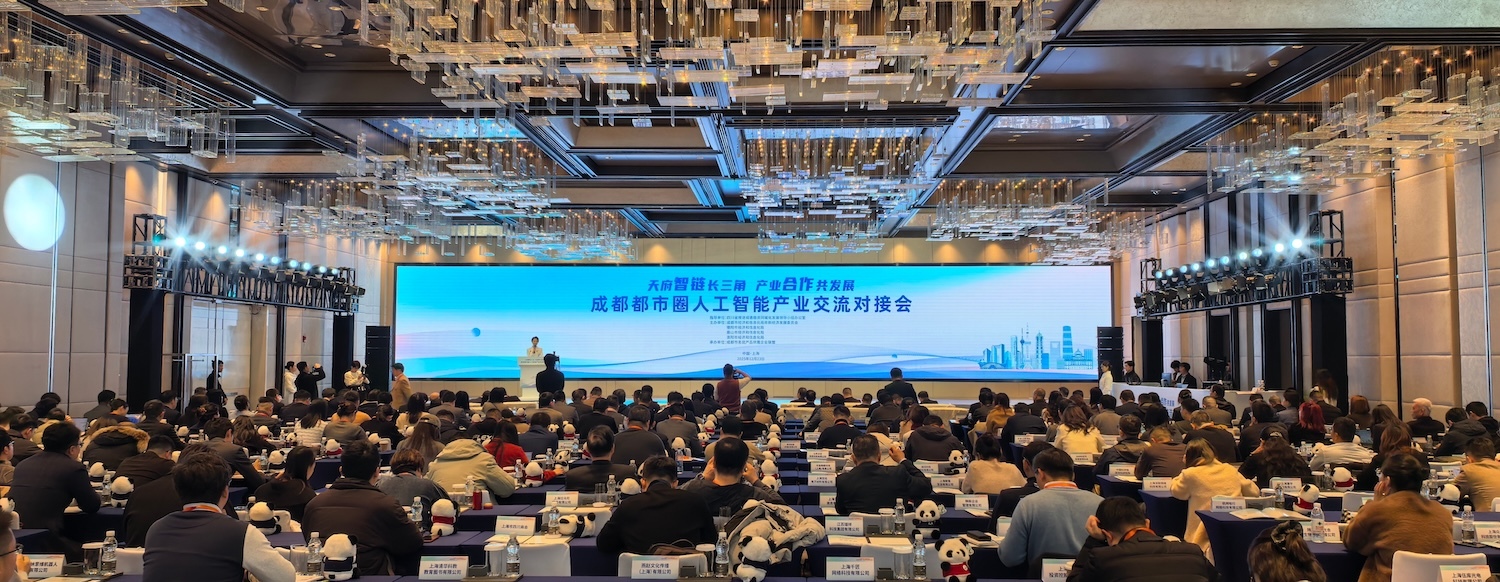
东西AI产业双向奔赴:成都都市圈与长三角沪上“牵手”拓新局
Mei Ri Jing Ji Xin Wen· 2025-12-23 13:56
Group 1 - Chengdu metropolitan area has positioned artificial intelligence as a core engine for cultivating new productive forces, achieving a significant industrial development status nationally, with a total output value of over 1.2 trillion yuan across nine key industrial chains and more than 2,860 cross-city cooperative enterprises [1] - Chengdu has gathered over 1,200 AI-related companies, with a core industry scale expected to reach 150 billion yuan and a growth rate exceeding 35% [1] - The "3+4+1+1" development system for the AI industry in Chengdu was announced, showcasing core advantages in computing power support, track creation, and application scenarios [1] Group 2 - Chengdu metropolitan area is seen as having significant advantages in talent reserves, university resources, and comprehensive costs, which can fill the gaps in technology implementation and application scenarios for enterprises [2] - The integration of local enterprises' strengths in AI algorithms, computing power scheduling, and industry solutions with national platforms' data foundations is expected to create more competitive overall solutions [3] - The resource integration effect generated by the "same city" model in Chengdu is enhancing market space for enterprises and providing more testing grounds for technological innovation and product iteration [3] Group 3 - Chengdu's computing power advantage is highlighted, with the city being one of the eight major hubs for the national "East Data West Computing" initiative, boasting a computing power exceeding 20,000 P [4] - The collaboration between Chengdu and the Yangtze River Delta region is seen as a way to enhance business confidence through efficient services and support for enterprises in the robotics and AI sectors [4] - Chengdu enterprises are not only looking to compete but also to strengthen their supply chains and upgrade their products, transitioning from "Chengdu manufacturing" to "Chengdu intelligent manufacturing" [6] Group 4 - The complementary nature of the Chengdu metropolitan area and the Yangtze River Delta region is emphasized, with the latter providing cutting-edge perspectives and top talent, while Chengdu offers confidence through its industrial policies and manufacturing costs [7] - Chengdu's new forces are leveraging the advantages of the Yangtze River Delta to accelerate integration into the national AI industry landscape, marking a significant cross-regional development in China's AI sector [6][7]