
智能仿生肢体

Search documents
一言千金!马斯克引爆脑机接口
Shen Zhen Shang Bao· 2026-01-08 18:02
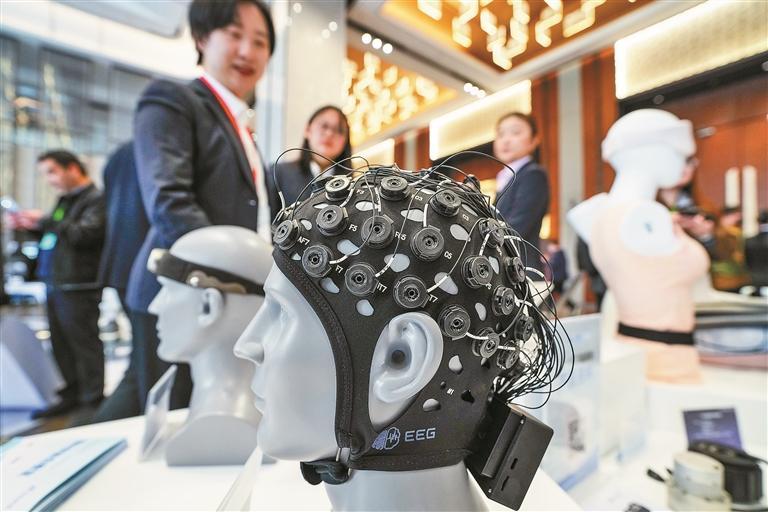
Core Viewpoint - The announcement by Elon Musk regarding Neuralink's plans for large-scale production of brain-machine interface (BMI) devices by 2026 has ignited significant interest in the capital markets, indicating a shift from experimental to industrial-scale applications of this technology [3][5]. Industry Developments - Brain-machine interfaces (BMIs) are categorized into three types: invasive, semi-invasive, and non-invasive, each with varying levels of signal quality and risk [4]. - Neuralink has achieved rapid advancements, including a 1.5-second implantation process and successful trials on both animals and humans, with seven patients receiving implants as of mid-2025 [4][5]. - The Chinese government has shown support for the BMI industry, with policies and plans aimed at fostering innovation and development in this field [8][10]. Market Reaction - Following Musk's announcement, the A-share market saw a surge in BMI-related stocks, with significant gains observed in various companies within this sector [6]. - Strong Brain Technology, a company focused on non-invasive BMI technology, secured approximately 2 billion yuan in funding, highlighting investor confidence in the BMI market [6]. Future Outlook - Experts predict that 2026 could be a pivotal year for BMIs, marking the transition of this technology from laboratory settings to commercial viability [7][10]. - The advancements in BMI technology are expected to lead to a broader range of applications in the medical field, moving from experimental tools to widely available products [10].

20亿!强脑科技再获融资,工程化与量产全面提速
Guan Cha Zhe Wang· 2026-01-08 10:56
Group 1 - The core viewpoint of the news is that Qiangnao Technology, a brain-computer interface company, has completed a financing round of approximately 2 billion yuan, marking the second-largest financing record in the brain-computer interface field globally, after Neuralink [1] - The funds raised will be used to accelerate the research and development of core technologies, extreme engineering breakthroughs, and the mass production of products [1] - The investor lineup for this financing includes prominent institutions such as IDG, Huaden International founded by Intel CEO Chen Liwu, and major companies like Lens Technology and Lingyi Technology [1] Group 2 - Qiangnao Technology aims to help 1 million disabled individuals regain daily life through neural-controlled prosthetics and improve the conditions of 10 million patients suffering from brain diseases like autism and Alzheimer's within the next five to ten years [2] - The company, founded in February 2015, focuses on non-invasive brain-computer interface technology and has achieved significant milestones, including FDA and CE certifications [2] - The industry landscape shows that Neuralink remains the highest-valued company in the brain-computer interface sector, with a valuation of 9 billion USD expected after its Series E financing in 2025 [2] Group 3 - According to a recent report from Kaisheng Securities, the brain-computer interface technology is expected to commercialize by 2026, transitioning from medical necessities to AI applications [3] - Qiangnao Technology has significant potential for expansion in overseas markets, as highlighted by its founder's participation in the China-Korea Innovation and Entrepreneurship Forum [3] - With increased investment in brain science and the launch of the "Brain Plan" in China, the sector is entering a new phase of technological realization and commercial explosion [3]

脑机接口"独角兽"强脑科技斩获20亿融资,全球融资规模仅次于Neuralink!
机器人圈· 2026-01-08 10:13
Core Viewpoint - BrainCo, a leading company in the brain-computer interface (BCI) sector, has successfully completed a financing round of approximately 2 billion RMB, marking it as the second-largest financing in the global BCI market, following Neuralink [2] Financing and Investment - The recent financing attracted a prestigious lineup of investors, including IDG, Huaden International, and major industry players like Lens Technology and Lingyi iTech [2] - BrainCo's financing history shows a consistent increase in capital recognition, with significant rounds including 400 million USD in Series A in 2019 and 30 million USD in Pre-B and 20 million USD in Series B in 2025 [3] - The company is preparing for an IPO, potentially in Hong Kong or mainland China, with a valuation exceeding 1.3 billion USD anticipated for the upcoming round [3] Company Background and Product Development - Founded in February 2015 by Han Bicheng, BrainCo focuses on non-invasive BCI technology, having developed products like smart prosthetics and sleep improvement devices [3][4] - The company has received FDA and CE certifications, making it one of the few globally to achieve large-scale production of BCI products [4] Future Plans and Market Potential - BrainCo aims to assist 1 million individuals with physical disabilities and 10 million patients suffering from Alzheimer's, autism, and insomnia over the next 5 to 10 years [5] - The company is committed to advancing non-invasive BCI solutions for mental health issues like depression and Alzheimer's, aligning with China's increased investment in brain science [5] Industry Landscape - Neuralink remains the highest-valued BCI company globally, with a valuation of 9 billion USD post-E round financing in 2025 [5] - The BCI sector is gaining traction in the capital market, with several A-share companies experiencing significant stock performance related to BCI concepts [6] - Companies like Aihuilong and Kefu Medical are entering the BCI space, indicating a growing interest and investment in this emerging field [6] Investment Opportunities - The BCI industry is in its early commercialization phase, with a focus on thematic investment strategies [6] - There is potential for significant revenue generation in non-invasive BCI products, as well as opportunities in software, hardware, and experimental materials related to BCI [6]

39岁杭州脑科学博士,一把狂揽20个亿
2 1 Shi Ji Jing Ji Bao Dao· 2026-01-08 06:30
Core Insights - Strong Brain Technology, led by Han Bicheng, has secured approximately 2 billion yuan in funding, marking the largest financing in China's brain-computer interface sector [2] - This funding round positions Strong Brain Technology as the second largest globally in the brain-computer interface space, following Neuralink's 650 million USD Series E funding [2] Company Overview - Han Bicheng, the founder of Strong Brain Technology, is a 39-year-old from Mudanjiang, Heilongjiang, with a distinguished academic background, including a bachelor's degree in mechanical engineering from the Korea Advanced Institute of Science and Technology and a PhD from Harvard University [3][4] - The company was established in 2015, and Han chose to return to China to start the business before completing his PhD [5] Technology and Product Development - Strong Brain Technology focuses on non-invasive brain-computer interface technology, which is considered a "non-mainstream" approach compared to the invasive methods predominantly supported by investors [6][8] - The company has developed a "super sensor" capable of detecting neural signals, achieving over 95% accuracy in signal recognition compared to medical-grade EEG devices [8] - Products include smart bionic limbs and brain-computer intelligent sleep devices, with a production milestone of 100,000 high-precision brain-computer interface products reached in 2022 [8] Market Position and Future Goals - The market price for the smart bionic hand is approximately 100,000 yuan, significantly lower than similar foreign products, and allows for immediate use after installation [10] - Strong Brain Technology aims to assist over 6,000 disabled individuals in regaining mobility by 2025, with a long-term vision of helping 1 million individuals with limb disabilities and 10 million patients with Alzheimer's, autism, and insomnia over the next 5 to 10 years [10][12] - The company's valuation reached 9 billion yuan in the 2025 Hurun Global Unicorn List, reflecting its growth and potential in the industry [12]
马斯克带火脑机接口!中国“独角兽”强脑科技完成20亿元融资
Jin Rong Jie· 2026-01-07 04:05
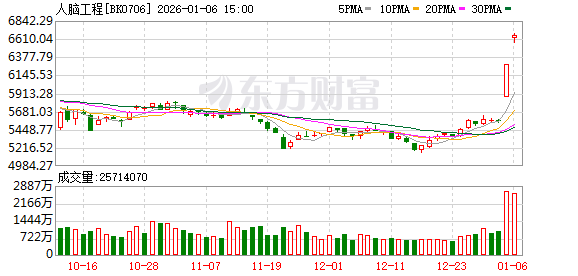
Core Insights - Elon Musk has provided a timeline for mass production of brain-computer interface (BCI) devices, igniting interest in global capital markets, with related indices in A-shares rising over 13% on the first trading day of the year [1] - Strong Brain Technology recently completed a significant financing round of approximately 2 billion RMB, marking the second-largest financing in the global BCI sector after Neuralink [1] - The Chinese government has included BCI technology in its "14th Five-Year Plan," indicating a strong push towards commercialization and innovation in the industry [1][3] Company Overview - Strong Brain Technology was founded in February 2015 and has developed non-invasive BCI technologies, including smart bionic limbs and sleep aids, achieving FDA and CE certifications [2] - The company has a history of substantial financing, including a $400 million Series A round in 2019, and plans for an IPO in Hong Kong or mainland China with a valuation exceeding $1.3 billion [2] Market Dynamics - The Chinese BCI market is projected to exceed 3.8 billion RMB by 2025, with medical health applications accounting for 56%, and is expected to surpass 10 billion RMB by 2030 [3] - The government plans to invest over 50 billion RMB in the BCI industry during the "14th Five-Year Plan," aiming to cultivate 2-3 global leading companies by 2030 [3] Future Development - Strong Brain Technology aims to accelerate research and development in rehabilitation and consumer sectors, with a vision to assist 1 million individuals with physical disabilities and 10 million patients suffering from brain-related conditions over the next 5 to 10 years [4] - The company emphasizes the importance of making BCI technology accessible to the general public, aligning with the "technology for good" philosophy [4] Global Industry Landscape - Neuralink remains the highest-valued BCI company globally, with a valuation of $9 billion following its Series E funding round in 2025 [5] - The BCI technology is expected to achieve commercialization by 2026, with applications expanding from medical needs to AI and robotics [5] - The global BCI market is projected to grow to approximately $12.4 billion by 2034, indicating significant investment potential in both medical and technological sectors [5]
脑机接口,突传重磅!
Zheng Quan Shi Bao· 2026-01-07 03:00
Core Insights - The brain-computer interface (BCI) sector is experiencing significant growth, highlighted by the recent completion of approximately 2 billion yuan financing by Qiangnao Technology, marking it as the second-largest financing in the field globally, after Neuralink [1][2] Industry Overview - The BCI sector has become the hottest investment track in the A-share market since the beginning of 2026, with multiple stocks such as Innovation Medical, Aipeng Medical, and Xiangyu Medical achieving consecutive trading limits [1] - The industry is currently driven by both policy support and technological breakthroughs, with expectations for Neuralink's large-scale production and automated surgical solutions marking a transition from clinical validation to commercial viability [3] Company Highlights - Qiangnao Technology, founded in February 2015, focuses on non-invasive BCI technology and has received FDA and CE certifications, making it one of the largest investors in BCI R&D globally [2] - The company has launched several products, including smart bionic limbs and brain-machine intelligent sleep devices, and has been recognized by TIME magazine as one of the best inventions of the year [2] Recent Developments - On January 6, multiple BCI stocks, including Sanbo Brain Science and Maillande, issued announcements regarding abnormal trading fluctuations, warning investors of potential risks [4][5][6] - Sanbo Brain Science, while experiencing significant stock price increases, clarified that it does not engage in BCI product development, and its revenue from neuro-regulation technology is minimal [4] - Maillande and Xiangyu Medical also reported that their BCI products are still in the R&D phase and have not yet achieved significant sales impact [5][6]



A股密集公告!最火赛道再迎重磅利好!
天天基金网· 2026-01-07 01:09
Core Viewpoint - The brain-computer interface (BCI) sector is experiencing significant growth and investment, highlighted by the recent 2 billion yuan financing of Qiangnao Technology, marking it as the second-largest financing in the field after Neuralink [3][4]. Group 1: Investment and Market Dynamics - Qiangnao Technology, part of the "Hangzhou Six Little Dragons," has completed approximately 2 billion yuan in financing, positioning itself as a major player in the BCI market [3][4]. - The BCI sector has become the hottest investment track in A-shares since the beginning of 2026, with multiple stocks like Innovation Medical, Aipeng Medical, and Xiangyu Medical achieving consecutive trading limit increases [3]. - The market is witnessing a surge in interest, with several BCI-related stocks announcing abnormal trading fluctuations, prompting warnings about investment risks [7]. Group 2: Company Developments - Qiangnao Technology, founded in 2015, focuses on non-invasive BCI technology and has received FDA and CE certifications, making it one of the largest investors in BCI R&D globally [4][5]. - The company has launched several products, including smart bionic limbs and brain-machine sleep aids, and has been recognized by Time magazine as one of the best inventions of the year [4]. - Qiangnao's investor lineup includes prominent institutions such as IDG and various strategic partners, indicating strong market confidence [4]. Group 3: Industry Trends and Future Outlook - The BCI industry is in a high-growth phase driven by policy support and technological breakthroughs, with expectations for large-scale production and automated surgical solutions from companies like Neuralink [6]. - The transition from clinical validation to commercial scalability is underway, suggesting that BCI technology is moving towards becoming widely accessible products rather than just experimental tools [6]. - Companies like Xiangyu Medical and Weisi Medical are focusing on non-invasive BCI technologies, although they currently have limited revenue contributions from these products [8][9].
A股密集公告!脑机接口突传重磅
Zheng Quan Shi Bao Wang· 2026-01-07 00:10
Group 1 - The core viewpoint of the news is that the brain-computer interface (BCI) sector is experiencing significant growth, highlighted by the recent 2 billion yuan financing of Qiangnao Technology, marking it as the second-largest financing in the field after Neuralink [2][3] - The BCI sector has become the hottest investment track in the A-share market since the beginning of 2026, with multiple stocks like Innovation Medical, Aipeng Medical, and Xiangyu Medical achieving consecutive trading limits [2] - Qiangnao Technology is recognized as one of the "Hangzhou Six Little Dragons," focusing on the research and development of BCI products, and has received FDA and CE certifications, making it one of the largest investors in BCI R&D globally [3][4] Group 2 - Qiangnao Technology was founded in February 2015 and has launched several products, including smart bionic limbs and brain-machine intelligent sleep devices [3] - The company has a strong investor lineup, including IDG, Huaden International, and several strategic investors, indicating robust market confidence [3] - The BCI industry is currently in a high-growth phase driven by policy support and technological breakthroughs, with expectations for Neuralink to begin large-scale production in 2026 [4] Group 3 - Several BCI stocks, including Sanbo Brain Science, Maillande, and Xiangyu Medical, have issued announcements regarding abnormal stock trading fluctuations, warning investors of potential risks [5] - Sanbo Brain Science reported a significant stock price increase but clarified that it does not engage in BCI product development, indicating minimal impact on its financial performance [7] - Xiangyu Medical highlighted its focus on non-invasive BCI technology and aims to commercialize its products in over a thousand top-tier hospitals by 2026 [11]
A股,密集公告!脑机接口,突传重磅!
券商中国· 2026-01-06 23:28
Core Viewpoint - The article highlights the rapid growth and investment activity in the brain-computer interface (BCI) sector, particularly focusing on the recent significant financing of Qiangnao Technology, which has raised approximately 2 billion yuan, marking it as the second-largest financing in the BCI field globally after Neuralink [2][3]. Investment Landscape - The BCI sector has emerged as a hot investment area in the A-share market since the beginning of 2026, with multiple stocks such as Innovation Medical, Aipeng Medical, and Xiangyu Medical experiencing consecutive trading gains [2]. - Qiangnao Technology, part of the "Hangzhou Six Little Dragons," has attracted a strong lineup of investors, including IDG and major tech firms, and has received FDA and CE certifications for its products [3][4]. Company Developments - Qiangnao Technology, founded in 2015, focuses on non-invasive BCI technology and has launched several products, including smart bionic limbs and brain-machine sleep aids [3]. - The company has a history of significant funding rounds, including a $400 million Series A round in 2019 and subsequent rounds totaling $30 million and $20 million in 2025 [4]. Market Dynamics - The BCI industry is currently experiencing a dual boost from policy support and technological breakthroughs, with expectations for Neuralink to begin large-scale production of BCI devices in 2026 [4]. - Companies like Sanbo Brain Science, Meilan De, and Xiangyu Medical have issued announcements regarding stock trading volatility, indicating the heightened interest and speculative nature of the market [5][6]. Product and Technology Focus - Xiangyu Medical is concentrating on non-invasive BCI technology and has made significant investments in R&D, with over 60% of its R&D budget directed towards BCI-related projects [7]. - The company aims to integrate BCI technology with its rehabilitation equipment, targeting to cover over 1,000 top-tier hospitals by 2026 [7].

韦尔股份/蓝思科技/领益智造等投资 脑机接口“独角兽”强脑科技完成约20亿元融资
Ju Chao Zi Xun· 2026-01-06 13:48
Core Insights - Qiang Brain Technology has completed approximately 2 billion yuan in financing, marking the second-largest funding round in the global brain-computer interface (BCI) sector, following Neuralink [1] - The investment round included prominent firms such as IDG Capital and Huaden International, as well as strategic investments from companies like Weir Shares and Runze Technology [1] - Qiang Brain Technology is recognized as one of the leading companies in the BCI field, having received FDA and CE certifications for its products and being one of the largest investors in BCI research and development globally [1] Company Overview - Founded in February 2015, Qiang Brain Technology originated from Harvard University's innovation lab and focuses on non-invasive BCI technology [1] - The company has launched several products, including smart bionic limbs and brain-machine intelligent sleep devices [1] - Qiang Brain Technology has undergone multiple funding rounds since 2016 and is considering an IPO in the Hong Kong or A-share market [1] Industry Perspective - Neuralink remains the leading company in the BCI sector with a valuation of 9 billion USD and plans to initiate large-scale production of BCI devices by 2026 [2] - The BCI technology is expected to transition from medical necessity to AI applications, indicating a potential commercialization phase starting in 2026 [2] - The A-share market has seen significant interest in BCI-related stocks, with companies like Innovation Medical and Aipeng Medical experiencing consecutive trading limit increases [2] Market Trends - The BCI market is currently in its early commercialization stage, with a focus on thematic investments [2] - There is a distinction between invasive and non-invasive technology paths, with some invasive products already approved for market release, while non-invasive technologies have a clearer commercialization path [2] - Scarcity in hardware and materials related to electrodes, chips, and membranes presents investment opportunities in the BCI sector [2]
