
智能体应用平台

Search documents
广电绝地反击!揭秘多彩新媒「不烧钱」的AI生存法则
机器之心· 2025-12-24 03:41
Core Insights - The traditional broadcasting industry is facing a profound survival crisis due to increasing external competition, with smart voice device penetration exceeding 68% and short video platforms occupying an average of 2.8 hours of user time daily, leading to a structural shift in user attention [1] - The average ARPU for provincial IPTV users is projected to be below 15 yuan in 2024, a 22% decline compared to three years ago, indicating a significant revenue drop [1] - The essence of user loss and revenue decline stems from the traditional broadcasting service model's inability to meet new user demands for television [1] - National policies are increasingly supportive of the broadcasting industry's intelligent transformation, emphasizing media integration and digital cultural strategies [1] Strategic Choices - The company has chosen to abandon a "big and comprehensive" approach, focusing instead on three core areas to address current challenges: maintaining "entry rights," enhancing "service value," and seeking "new growth" through AIGC tools [4][5] - This pragmatic strategy reflects a typical mindset of budget-constrained operators, prioritizing core business stability while exploring key areas with controlled investments [5] Technical Path - The technical implementation emphasizes a layered architecture and "lightweight" practices, integrating mature external capabilities rather than building a complete AI system from scratch [7] - The architecture focuses on core needs of IPTV, including safety, service, and efficiency, with plans to utilize lightweight models to control costs and develop industry-specific AI models [7] Scene Implementation - The AI practices of the company will be evaluated based on specific scene implementations, focusing on internal efficiency, user service upgrades, and ecosystem expansion [9] - Internally, the company plans to enhance content production efficiency through tools like intelligent posters and coding, aiming for full-process automation [10] - User experience will shift from passive viewing to active usage, with features like natural language commands for content search and tailored services for specific demographics [12][15] Ecosystem Collaboration - The company emphasizes an "internal and external linkage" strategy for ecosystem building, leveraging external resources to quickly establish service capabilities [20] - The approach includes collaborating with major content providers and integrating local services to enhance user engagement and service diversity [20] Value Outlook - The AI transformation is expected to yield not only direct commercial returns but also serve as a practical reference for other industry players, with plans to accumulate valuable data assets for future growth [22] - The initiative aims to establish new standards for intelligent broadcasting, facilitating a shift from content distribution to service operation across local broadcasting entities [22] Conclusion - The intelligent transformation of the broadcasting industry is a systemic change focused on redefining survival space and value, with the company's approach providing a pragmatic path for regional operators seeking to adapt [23][25]


远光软件:世邦私募基金投资者于6月19日调研我司
Zheng Quan Zhi Xing· 2025-06-19 10:36
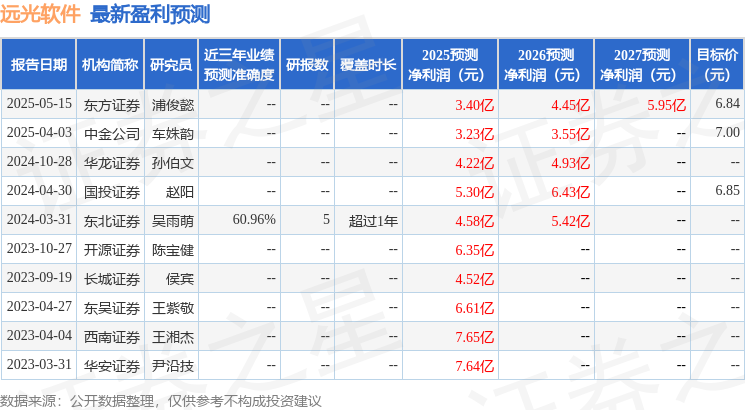
Core Insights - The company is poised to capitalize on three major development opportunities in 2025: the continuous release of digital economy policy dividends, significant momentum for domestic substitution, and the vast market potential of digital platforms for new energy systems [2] Group 1: Development Opportunities - The company aims to leverage the ongoing digital economy policy benefits, enhancing core functions and competitiveness through digital transformation [2] - The domestic substitution trend is gaining traction, with government emphasis on self-innovation and the establishment of a self-controlled industrial supply chain [2] - The digital platform business for new energy systems is expected to grow significantly, driven by the construction of a unified national electricity market and the transition to a carbon emission control mechanism [2] Group 2: Market Expansion - The company has established benchmark projects in various industries outside the electricity sector, including construction, equipment manufacturing, and healthcare, laying a solid foundation for future expansion [3] Group 3: Low-Carbon Business Strategy - The company is developing a comprehensive carbon market service system, offering services such as carbon verification, carbon asset management, and carbon trading [4] Group 4: Artificial Intelligence Initiatives - The company has been researching artificial intelligence since 2015, developing a range of intelligent applications and platforms, including RP robots and smart devices [5] - There is a notable increase in client demand for AI and large model technologies, prompting the company to enhance its AI product development and integration with enterprise management systems [7] Group 5: Impact of Electricity Market Reforms - The deepening of the electricity market is creating complex trading scenarios, necessitating enhanced digital and informational support for market participants [6] Group 6: Financial Performance - The company's Q1 2025 report shows a revenue of 417 million, a year-on-year decrease of 9.47%, while net profit increased by 2.66% to 9.39 million [8] - The company has a debt ratio of 12.03% and a gross margin of 54.39% [8] Group 7: Earnings Forecast - Various institutions have provided earnings forecasts for the company, with projected net profits for 2025 ranging from 340 million to 530 million [9]

远光软件(002063) - 002063远光软件投资者关系管理信息20250604
2025-06-04 09:40
Group 1: AI Business Layout - YG Software began AI technology research in 2015, developing over a thousand RPA robots and various intelligent devices, forming a 3+N business model for AI development [2] - The company focuses on large model technology, releasing products like Yuan Guang Zhi Yan 2.0 and various intelligent applications to enhance DAP product intelligence [2][4] Group 2: Future AI Business Planning - YG Software aims to deepen the integration of AI with enterprise management systems, enhancing digital transformation and intelligent upgrades [4] - Key directions include enriching the AI middle platform, scaling DAP product applications, and expanding AI applications in the power grid sector [4] Group 3: Impact of Electricity Market Reforms - The company identifies significant opportunities in digitalization and information support for market participants due to complex trading scenarios [5] - Key application areas include AI-based power forecasting, load forecasting, and multi-energy collaborative trading decisions [6] Group 4: Customer Demand for AI and Large Models - There is a notable increase in customer interest in AI technologies, particularly in the integration of large models with specific business scenarios [6] - YG Software plans to enhance R&D investment in AI technologies and products, focusing on embedded intelligence applications [6] Group 5: AI Business Revenue Classification - The decision to separately classify AI business revenue is driven by increased customer focus and significant growth potential in this area [6] Group 6: Personnel Changes - The overall personnel scale is expected to remain stable, with a focus on attracting key talent to support major projects and technology advancements [7] Group 7: Profit Distribution and Cash Flow - The company plans to balance profit distribution with sustainable development, considering strategic planning and external financing conditions [7] - Operating cash flow improved significantly, with a year-on-year increase of 45,105.98 million yuan and an 18.5% increase in revenue collection rate [7]