智能建造—MiC技术

Search documents
从“忧居”到“优居”:北京探路城市更新新模式
Zheng Quan Ri Bao· 2026-02-11 16:28
Core Insights - The successful completion of the 28th building in Beijing's Xicheng District represents a significant milestone in urban renewal and reflects a shift in the real estate industry from large-scale expansion to quality improvement [1][11] - The project utilized advanced construction technology, specifically Modular Integrated Construction (MiC), which enhanced building efficiency by approximately 75% compared to traditional methods [3][9] - Financial innovations, such as the "personal housing renovation loan" and the "four-link office" service system, have been implemented to address the challenges of financing and property rights during the renovation process [5][6] Urban Renewal and Housing Quality - The 28th building project is a pilot for the "original demolition and reconstruction" model, which aims to meet both the quality and speed requirements of urban renewal in densely populated areas [3][4] - The project has transformed the living conditions of 54 households, moving them from "worrying about housing" to "enjoying quality housing" [1][2] - The focus on creating "good houses" aligns with national policies aimed at improving living standards and addressing structural housing supply issues [10][11] Financial Innovations - The "four-link office" system allows for seamless processing of property rights and mortgage registrations, eliminating the "vacuum period" that previously hindered financing for renovation projects [5][6] - The introduction of specialized loans for housing renovation is designed to accommodate the financial needs of residents, particularly the elderly, who may have limited cash flow [6][7] - Future projects may benefit from the standardization of financial products and processes to facilitate broader implementation of similar urban renewal initiatives [7][8] Construction Technology - The use of MiC technology not only accelerated construction but also minimized environmental impact by reducing construction waste and noise pollution [3][9] - Enhanced sound insulation and the installation of modern amenities, such as elevators, have significantly improved the living conditions in the renovated building [9][10] - The project serves as a model for integrating advanced construction techniques with urban renewal efforts, promoting a shift towards high-quality housing development [11][12]
半年回迁,“咋这么快!” 揭秘京城核心区老楼极速“重生”密码
Zhong Guo Zheng Quan Bao· 2026-02-09 15:02
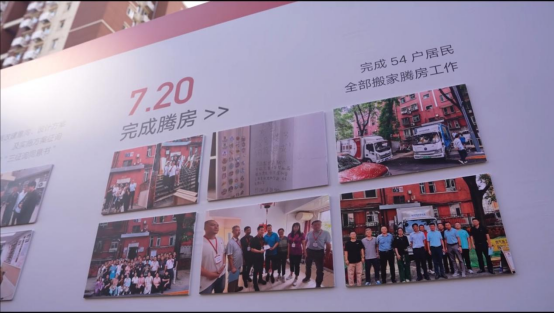
Core Insights - The article highlights the rapid transformation of a dilapidated residential building in Beijing's Xicheng District, showcasing the efficiency of urban renewal projects in China, particularly through the use of advanced construction technologies and streamlined approval processes [1][2][3]. Group 1: Project Overview - The 28th building in Sanlihe District, built in 1978, underwent significant renovations due to its deteriorating condition, which included issues like blocked pipes, leaks, and lack of elevators, prompting strong resident demand for reconstruction [2][3]. - The project commenced on September 5, 2025, and remarkably completed the main structure within 46 days, allowing residents to move back into their new homes just six months after vacating the old building [2][3]. Group 2: Approval Process - The project implemented a fully online approval process, achieving project registration and site selection within 24 hours, and completing multi-regulatory consultations in 48 hours, resulting in a 90% reduction in overall approval time compared to standard timelines [3]. - The project served as a benchmark for rapid urban renewal, allowing residents to receive their property certificates simultaneously with their keys, thus streamlining the transition process [3]. Group 3: Construction Technology - The construction utilized the "MiC" (Modular Integrated Construction) technology, which allowed for 90% of the building's construction to be completed in a factory setting, significantly reducing on-site construction time by approximately 75% compared to traditional methods [5][6]. - This innovative approach not only minimized construction waste by 75% but also reduced material loss by about 25% and carbon emissions by approximately 30%, while enhancing sound insulation by 80% [6]. Group 4: Future Implications - The successful implementation of the MiC technology in this project is expected to have broader applications in urban renewal across Beijing and other major cities, promoting a model that ensures residents not only have access to housing but also improved living conditions [6][7]. - The project exemplifies a new pathway for urban renewal, demonstrating how modern construction techniques can effectively address the challenges of aging infrastructure in densely populated urban areas [7].
新春走基层 | 半年回迁,“咋这么快!” 揭秘京城核心区老楼极速“重生”密码
Zhong Guo Zheng Quan Bao· 2026-02-09 15:01
Core Viewpoint - The rapid transformation of the dilapidated 28th building in Sanlihe District, Beijing, showcases the efficiency of urban renewal processes in China, emphasizing the use of advanced construction technologies and streamlined approval procedures [1][4][9] Group 1: Project Overview - The 28th building, constructed in 1978, faced numerous structural issues, including cracked walls, aging pipelines, and lack of elevators, prompting strong resident demand for renovation [2][5] - The project commenced on September 5, 2025, and remarkably completed the entire construction process in just six months, from resident relocation to moving back into new homes [2][5] Group 2: Approval Process - The project implemented a fully online approval process, achieving project registration and site selection within 24 hours, and completing multi-regulatory consultations in 48 hours, resulting in a 90% reduction in overall approval time compared to promised timelines [4][9] Group 3: Construction Technology - The project utilized the "intelligent construction - MiC technology," which allows for modular construction, significantly reducing construction time by approximately 75% compared to traditional methods [7][9] - This technology also minimizes construction waste by 75%, reduces material loss by about 25%, and lowers carbon emissions by approximately 30%, while enhancing sound insulation performance by 80% [7][9] Group 4: Resident Experience - Residents reported significant improvements in living conditions, including new heating systems, larger kitchens, and the installation of smart home systems, which enhance convenience and comfort [6][7] - The project not only provided new homes but also ensured that residents received their property certificates simultaneously with their keys, setting a precedent for future urban renewal projects [4][5]