智能汽车光纤通信解决方案

Search documents
武汉打造“光车融合”全国示范标杆
Chang Jiang Ri Bao· 2026-01-19 00:43
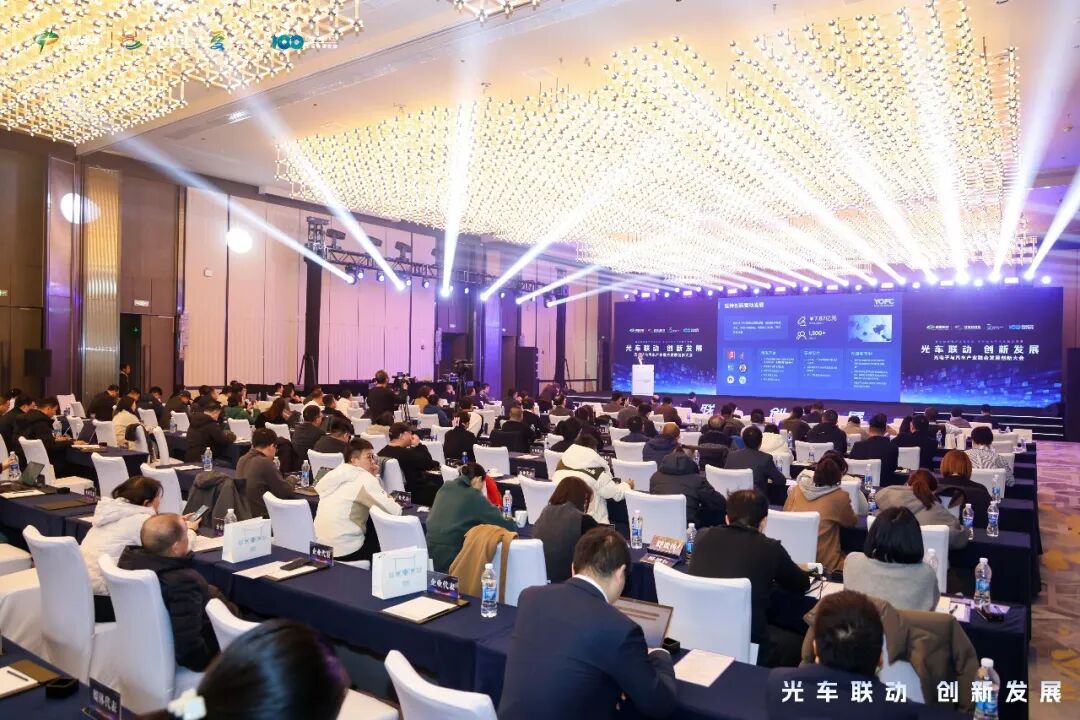
Core Insights - The "Light and Vehicle" dialogue in Wuhan emphasizes the integration of optoelectronics and the automotive industry, marking a significant step in promoting intelligent and connected vehicles in the region [1][2] Group 1: Industry Integration - The automotive industry is characterized by fusion development, integrating technologies like communication, optoelectronics, and artificial intelligence to enhance competitiveness [2] - Wuhan is home to the "Optics Valley" and "Automobile Valley," creating a unique environment for the convergence of these two industries, with a focus on building a trillion-yuan industry cluster centered around "light, chip, screen, terminal, and network" [2] - The initiative aims to establish unified industry standards and create a collaborative ecosystem to drive innovation and development [1][6] Group 2: Technological Advancements - Wuhan has made breakthroughs in core technologies, such as the development of a domestically produced automotive-grade high-performance MCU chip, expected to be mass-produced by 2026 [4] - The transition from copper to fiber optics in automotive applications is anticipated, with fiber optics offering advantages in bandwidth, weight, and electromagnetic interference resistance [5] - Companies like Haiwei Technology are advancing in the smart cockpit sector, integrating high-quality display technologies into vehicles, enhancing user experience [5] Group 3: Challenges and Solutions - The integration path faces challenges, including a lack of successful cross-industry experiences, difficulties in technology alignment, and the absence of standardized testing and certification systems [3] - To address these issues, the establishment of collaborative innovation platforms and supply chain integration is essential for fostering a sustainable industrial ecosystem [6] Group 4: Economic Impact and Future Outlook - The economic benefits from the "fiber optics in vehicles" initiative are projected to reach the billion-yuan level, significantly impacting the upstream and downstream industries [6] - The potential for technology spillover into other sectors, such as robotics and low-altitude economy, is highlighted, showcasing the automotive industry's capacity for cost reduction and scalability [6] - The internationalization of the industry is crucial, with Chinese smart components already leading in various fields, positioning them for global competitiveness through the "light and vehicle" integration [6][7]
重要倡议,武汉发起!
Chang Jiang Ri Bao· 2026-01-19 00:43
Core Viewpoint - The "Light and Vehicle" dialogue in Wuhan emphasizes the integration of optoelectronics and the automotive industry, marking a significant step in promoting the deep fusion of these two key sectors in the context of intelligent and connected vehicles [1][3]. Group 1: Industry Integration - The initiative aims to create a development blueprint, focus on key innovations, build an open ecosystem, unify industry standards, and establish demonstration benchmarks, highlighting Wuhan's strategy to leverage its strengths in both optoelectronics and automotive sectors [3][5]. - The automotive industry is seen as a hallmark of integrated development, with the fusion of communication, optoelectronics, and artificial intelligence being crucial for China's automotive sector to surpass its competitors [5][9]. - Wuhan has established a trillion-yuan industry cluster centered around "light, chip, screen, terminal, and network," positioning itself as a global leader in optical fiber and cable manufacturing [5][7]. Group 2: Technological Advancements - Wuhan's industry is making strides in core technologies, with the establishment of Wuhan Binary Semiconductor Co., which is on the verge of mass production of a domestically developed automotive-grade MCU chip, expected to be on vehicles by 2026 [10][11]. - The transition from copper to fiber optics in automotive applications is anticipated, with fiber optics offering advantages in bandwidth, weight, and electromagnetic interference resistance, making it ideal for next-generation vehicle networks [10][11]. - Companies like Longfei and Dongfeng are collaborating on smart automotive optical communication solutions, demonstrating the reliability of these technologies through extensive road tests [11]. Group 3: Ecosystem Development - The initiative for "light-vehicle fusion" is just the beginning; a sustainable industrial ecosystem must be built to deepen this integration, addressing technical links, vehicle standards, and certification issues [12][14]. - Standardization is identified as a cornerstone for high-quality industry development, with participants committing to collaboratively advance standard-setting efforts [12]. - The potential economic benefits from the integration of fiber optics into vehicles are projected to reach billions, significantly enhancing the synergy across the supply chain [12][14]. Group 4: Future Outlook - The automotive sector's components can be adapted for use in robotics and other fields, indicating a broader application of technologies developed through "light-vehicle fusion" [14]. - The internationalization of these innovations is crucial, as Chinese smart components are already leading in various fields, and the integration could yield globally competitive optical devices [14]. - The presence of a complete upstream and downstream industrial chain in Wuhan is attracting interest from companies looking to establish a foothold in this promising market [14].