智能空气炸锅

Search documents
前泽宝创始人再创业,深耕北美AI高端烹饪,首年营收破两千万美元、毛利超60%|早起看早期
36氪· 2026-01-19 00:07
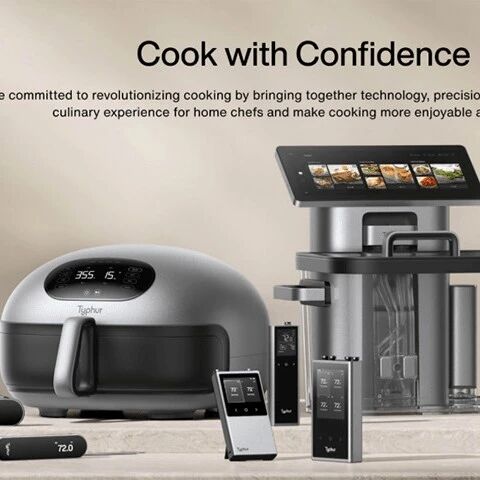
Core Viewpoint - The article discusses the emergence of Tiger One Technology, a Chinese startup focused on "cooking science," which is rapidly gaining traction in the North American high-end kitchen appliance market, leveraging technological innovation to reshape traditional categories [5][6][17]. Company Overview - Tiger One Technology was founded in 2021 by a team with extensive backgrounds in cross-border e-commerce and hardware development, including members from leading companies like DJI and Huawei [7]. - The company has filed over 200 patents, with more than 100 being invention patents, indicating a strong focus on innovation [7]. Product Innovation - The company's primary innovation is its precise temperature control technology, which is considered crucial for modern cooking. This technology includes a wireless temperature probe that allows real-time temperature monitoring and data transmission [8]. - Tiger One's first product, a smart oven featuring this technology, achieved over $20 million in revenue in its first year and experienced a growth rate of 300% to 400% in the second year [6]. Product Portfolio - The product lineup includes a smart air fryer priced at $499, which received the "Best Recommendation" from America's Test Kitchen for 2024 and is the top seller in the high-end category on Amazon [11]. - The company has optimized its second-generation air fryer, reducing the Bill of Materials (BOM) cost by 30% while increasing the gross margin to over 60% [11]. Target Market - Tiger One Technology targets middle-class and above households in North America, focusing on their specific cooking preferences and the high cost of cooking failures [11][12]. - The product design and pricing strategy are tailored to address the pain points of this demographic, ensuring simplicity and success in cooking [12]. Ecosystem Development - The company aims to build a smart cooking ecosystem that integrates hardware, an app, a cloud platform, and a content community. The app features an AI Chef that generates customized recipes based on voice or image inputs [13]. - The app has accumulated hundreds of thousands of registered users and millions of cooking instances, providing valuable data for product development and personalized services [15]. Market Expansion - After establishing a presence on Amazon, Tiger One is rapidly expanding into offline high-end retail channels, with expectations that offline sales will account for 20% of total sales next year [16]. - The company is committed to a high R&D personnel ratio of over 50% and aims to create a "cooking science" technology foundation, integrating hardware and software for a cohesive user experience [16]. Future Vision - Tiger One Technology aspires to become a leader in AI-driven smart cooking ecosystems, ultimately evolving into a service provider for global households with smart cooking robots [16]. - The company's approach demonstrates that the next phase of Chinese companies going global will belong to those that can genuinely innovate to solve core user problems and build sustainable ecosystems [17].

前泽宝创始人再创业,深耕北美AI高端烹饪,首年营收破两千万美元、毛利超60%|早期项目
3 6 Ke· 2026-01-15 01:21
Core Insights - The article highlights the emergence of Tiger One Technology, a Chinese startup focusing on "cooking science," which is rapidly gaining traction in the North American high-end kitchen appliance market, showcasing the potential of technology-driven innovation in traditional categories [1][7]. Company Overview - Tiger One Technology was founded in 2021, with a founding team that has a strong background in cross-border e-commerce and hardware development. The founder, Sun Caijin, has over a decade of experience in consumer electronics [1]. - The company has focused on research and development in its first three years, with over 50% of its workforce dedicated to R&D, and has applied for more than 200 patents, including over 100 invention patents [1]. Product Innovation - The company has developed a core wireless temperature probe technology, launching the world's first smart oven equipped with this probe, which allows for real-time temperature control and data transmission in high-temperature environments [2]. - The wireless probe can transmit data up to 900 meters in open environments, significantly outperforming competitors by tenfold, and is designed for independent use without a smartphone, enhancing user privacy and convenience [4]. Product Line and Market Strategy - Based on its temperature control technology, Tiger One has expanded its product line to include smart air fryers and smart ovens. The air fryer, priced at $499, has been recognized as the best recommendation by America's Test Kitchen for 2024 and is the top seller in the high-end category on Amazon [5]. - The company targets middle-class and above households in North America, focusing on simplifying the cooking process to ensure successful outcomes, addressing the specific pain points of this demographic [5]. Ecosystem Development - Tiger One aims to build a smart cooking ecosystem that integrates hardware, an app, a cloud platform, and a content community. The app features an AI Chef that generates customized recipes based on voice or image inputs, with hundreds of thousands of registered users and millions of cooking instances recorded [7]. - The company plans to transition from one-time hardware sales to ongoing user engagement and revenue through subscription-based recipes, health advice, and consumable accessories [7]. Market Expansion - After establishing a presence on Amazon, Tiger One is rapidly expanding into offline high-end retail channels such as Costco and Williams Sonoma, with expectations that offline sales will account for 20% of total sales next year [7]. - The company is leveraging its high R&D personnel ratio and self-research capabilities to create a "cooking science" technology foundation, aiming to become a leader in AI-driven smart cooking ecosystems and ultimately evolve into a smart cooking robot service for global households [7].