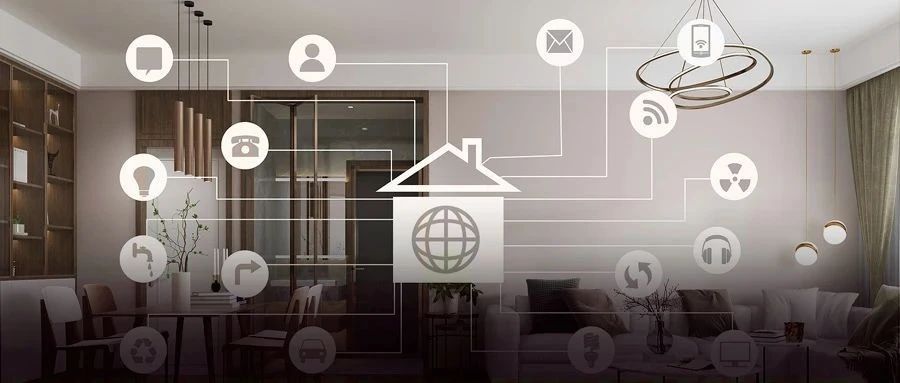
智能烤箱

Search documents
智能、悦己、减负!苏宁易购发布2026年春节消费洞察
Sou Hu Cai Jing· 2026-02-25 07:35
Core Insights - The new round of national subsidy policies, combined with the peak consumption season during the Spring Festival, has significantly boosted the home appliance and 3C product market [1] Group 1: Consumer Trends - From February 15 to 23, foot traffic in stores nationwide increased by 78%, with sales of first-level energy/water-efficient appliances accounting for 92.8% of total sales [1] - Sales of wearable devices such as smartwatches and smart glasses surged by 62% compared to previous periods, indicating a shift towards smart, trendy, and scenario-based consumption [1] - Young consumers are becoming the main drivers of growth in home appliance consumption, seeking comprehensive solutions that cater to specific life scenarios rather than just basic functionality [3] Group 2: Smart Home Appliances - AI-integrated home appliances are becoming the top choice for Spring Festival purchases, with consumers prioritizing smart features that enhance convenience and efficiency [3][5] - Smart refrigerators with independent temperature control and self-cleaning features are gaining popularity, reflecting a willingness to invest in higher-priced, more functional products [3] - The sales proportion of smart home appliances has reached 55% this year, transitioning from optional to essential items for consumers [5] Group 3: Emotional and Experiential Consumption - Products that provide emotional value and enhance life experiences, such as high-end smartphones and smart imaging devices, are emerging as new growth points in the market [5] - Over 70% of sales in mid-to-high-end smartphones are priced above 3000 yuan, indicating a trend towards "self-gratifying" consumption among younger generations [5] - Young consumers are increasingly bringing technology back to their hometowns, driving demand for smart home appliances in rural areas [6] Group 4: Market Growth in Rural Areas - The trend of young consumers returning home for the Spring Festival has led to increased demand for smart appliances like washing machines and smart ovens in rural markets [6] - Sales of large-capacity refrigerators and washing-drying sets grew by 95%, while sales of robotic vacuum cleaners and smart ovens increased by 67% during the holiday period [6] - The ongoing penetration of retail channels like Suning is facilitating the transition of rural households from basic to smart appliances [6]



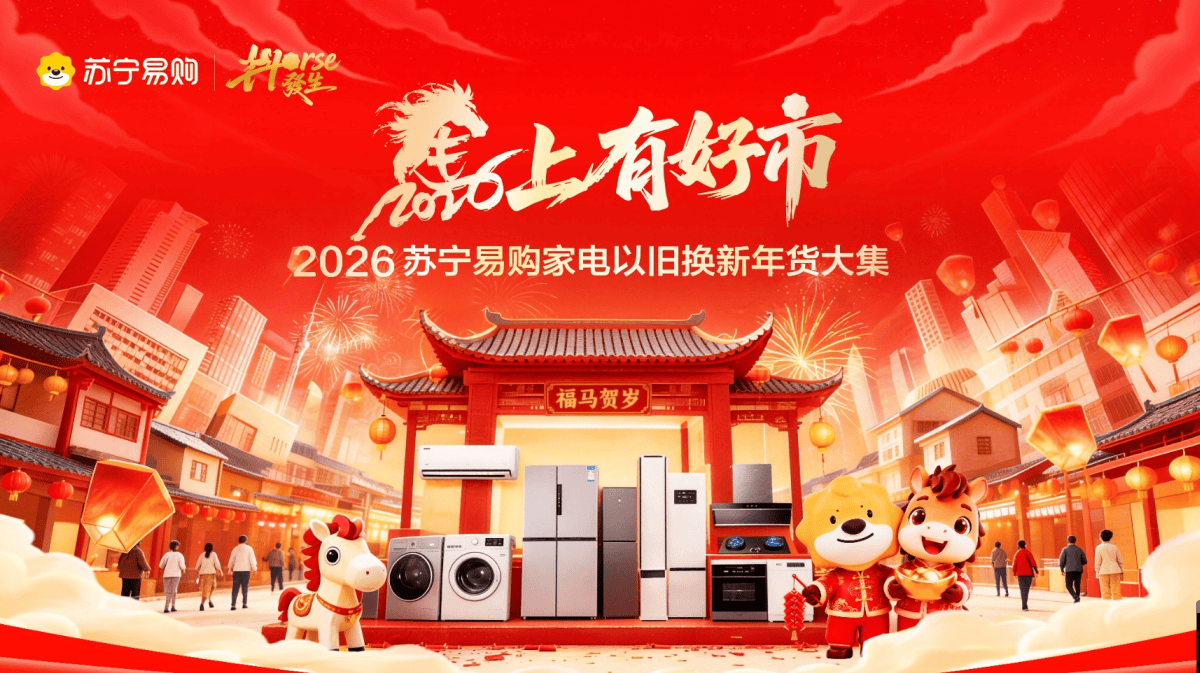
春节消费新IP!苏宁易购“马上有好市”热力开张
Sou Hu Cai Jing· 2026-01-30 09:16
Core Insights - The upcoming Spring Festival is driving an increase in offline retail activities, with Suning.com launching the "马上有好市" (Good Market Coming Soon) event, featuring over a thousand themed activities across stores and communities to blend traditional customs with smart home appliance experiences [1][6] - The initiative aims to create an immersive shopping environment that connects traditional festival elements with cutting-edge technology, enhancing consumer engagement and promoting a higher quality of smart living [1][6] Group 1: Event Activities - Suning.com is organizing a non-heritage market area in Hangzhou, allowing children to experience traditional food-making, such as pounding rice cakes, using smart appliances for precise cooking [3] - The "Frozen Refrigerator" challenge showcases the advantages of modern refrigeration technology, demonstrating how smart refrigerators can preserve food quality for months [3] - A calligraphy experience event will be held at the Fuzhou Max Baolong store, where children can learn to write Spring Festival couplets under the guidance of calligraphy masters, integrating cultural education with technology [4] Group 2: Community Engagement - Suning.com is implementing a "Spring Festival Replacement Service Station" in key urban areas, offering services like appliance exchanges and demonstrations of efficiency appliances to meet consumer needs during the year-end cleaning [6] - The company is also providing various community services, including free health check-ups and mobile phone repairs, to enhance customer convenience and engagement [6] Group 3: Market Trends - Analysts note that as consumer preferences evolve, the competitive edge in offline retail is shifting from price to experience, with Suning.com effectively integrating traditional customs and regional culture with smart appliances [6] - This strategy not only helps in building a differentiated advantage but also transforms stores into new urban lifestyle landmarks, moving beyond mere transaction points [6]
前泽宝创始人再创业,深耕北美AI高端烹饪,首年营收破两千万美元、毛利超60%|早起看早期
36氪· 2026-01-19 00:07
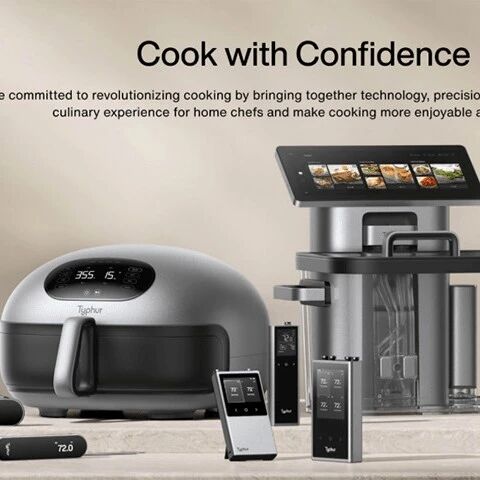
Core Viewpoint - The article discusses the emergence of Tiger One Technology, a Chinese startup focused on "cooking science," which is rapidly gaining traction in the North American high-end kitchen appliance market, leveraging technological innovation to reshape traditional categories [5][6][17]. Company Overview - Tiger One Technology was founded in 2021 by a team with extensive backgrounds in cross-border e-commerce and hardware development, including members from leading companies like DJI and Huawei [7]. - The company has filed over 200 patents, with more than 100 being invention patents, indicating a strong focus on innovation [7]. Product Innovation - The company's primary innovation is its precise temperature control technology, which is considered crucial for modern cooking. This technology includes a wireless temperature probe that allows real-time temperature monitoring and data transmission [8]. - Tiger One's first product, a smart oven featuring this technology, achieved over $20 million in revenue in its first year and experienced a growth rate of 300% to 400% in the second year [6]. Product Portfolio - The product lineup includes a smart air fryer priced at $499, which received the "Best Recommendation" from America's Test Kitchen for 2024 and is the top seller in the high-end category on Amazon [11]. - The company has optimized its second-generation air fryer, reducing the Bill of Materials (BOM) cost by 30% while increasing the gross margin to over 60% [11]. Target Market - Tiger One Technology targets middle-class and above households in North America, focusing on their specific cooking preferences and the high cost of cooking failures [11][12]. - The product design and pricing strategy are tailored to address the pain points of this demographic, ensuring simplicity and success in cooking [12]. Ecosystem Development - The company aims to build a smart cooking ecosystem that integrates hardware, an app, a cloud platform, and a content community. The app features an AI Chef that generates customized recipes based on voice or image inputs [13]. - The app has accumulated hundreds of thousands of registered users and millions of cooking instances, providing valuable data for product development and personalized services [15]. Market Expansion - After establishing a presence on Amazon, Tiger One is rapidly expanding into offline high-end retail channels, with expectations that offline sales will account for 20% of total sales next year [16]. - The company is committed to a high R&D personnel ratio of over 50% and aims to create a "cooking science" technology foundation, integrating hardware and software for a cohesive user experience [16]. Future Vision - Tiger One Technology aspires to become a leader in AI-driven smart cooking ecosystems, ultimately evolving into a service provider for global households with smart cooking robots [16]. - The company's approach demonstrates that the next phase of Chinese companies going global will belong to those that can genuinely innovate to solve core user problems and build sustainable ecosystems [17].
前泽宝创始人再创业,深耕北美AI高端烹饪,首年营收破两千万美元、毛利超60%|早期项目
3 6 Ke· 2026-01-15 01:21
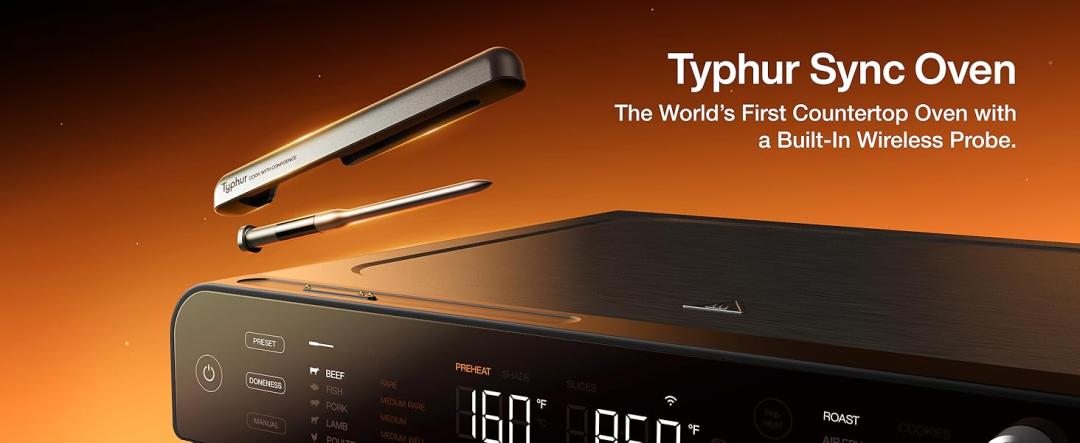
Core Insights - The article highlights the emergence of Tiger One Technology, a Chinese startup focusing on "cooking science," which is rapidly gaining traction in the North American high-end kitchen appliance market, showcasing the potential of technology-driven innovation in traditional categories [1][7]. Company Overview - Tiger One Technology was founded in 2021, with a founding team that has a strong background in cross-border e-commerce and hardware development. The founder, Sun Caijin, has over a decade of experience in consumer electronics [1]. - The company has focused on research and development in its first three years, with over 50% of its workforce dedicated to R&D, and has applied for more than 200 patents, including over 100 invention patents [1]. Product Innovation - The company has developed a core wireless temperature probe technology, launching the world's first smart oven equipped with this probe, which allows for real-time temperature control and data transmission in high-temperature environments [2]. - The wireless probe can transmit data up to 900 meters in open environments, significantly outperforming competitors by tenfold, and is designed for independent use without a smartphone, enhancing user privacy and convenience [4]. Product Line and Market Strategy - Based on its temperature control technology, Tiger One has expanded its product line to include smart air fryers and smart ovens. The air fryer, priced at $499, has been recognized as the best recommendation by America's Test Kitchen for 2024 and is the top seller in the high-end category on Amazon [5]. - The company targets middle-class and above households in North America, focusing on simplifying the cooking process to ensure successful outcomes, addressing the specific pain points of this demographic [5]. Ecosystem Development - Tiger One aims to build a smart cooking ecosystem that integrates hardware, an app, a cloud platform, and a content community. The app features an AI Chef that generates customized recipes based on voice or image inputs, with hundreds of thousands of registered users and millions of cooking instances recorded [7]. - The company plans to transition from one-time hardware sales to ongoing user engagement and revenue through subscription-based recipes, health advice, and consumable accessories [7]. Market Expansion - After establishing a presence on Amazon, Tiger One is rapidly expanding into offline high-end retail channels such as Costco and Williams Sonoma, with expectations that offline sales will account for 20% of total sales next year [7]. - The company is leveraging its high R&D personnel ratio and self-research capabilities to create a "cooking science" technology foundation, aiming to become a leader in AI-driven smart cooking ecosystems and ultimately evolve into a smart cooking robot service for global households [7].

今年营收增长超过300% 虎一科技2026年目标营收再翻番
Zheng Quan Shi Bao Wang· 2025-12-23 14:19
Core Insights - Tiger One Technology achieved revenue of $20 million last year, with projections to reach $70 million to $80 million by 2025, representing a growth of over 300% year-on-year, and aims to double revenue again in 2026 [1] - The company focuses on "culinary science" as its core product philosophy, aiming to standardize cooking processes through data, similar to chemical experiments, optimizing taste and nutrition by precisely controlling key parameters [1] - The main product is a high-end air fryer, which is priced competitively globally and can cook 32 pieces of chicken wings or pizza in 12 minutes without preheating, currently ranking first in sales on Amazon for high-end air fryers [1] Product Development - The wireless temperature probe product is designed for precise temperature control and signal transmission in high-temperature enclosed environments, with a transmission distance of over 900 meters in open spaces and over 200 meters in closed spaces, outperforming competitors [2] - The smart oven, based on wireless probe technology, will be launched in 2025, expected to quickly capture market share due to its advanced features compared to existing products [2] - The company is focused on reducing hardware costs through technological iterations and improving marketing efficiency with an AI-driven advertising system, which is expected to lower marketing costs to about 23% of total expenses [2] Market Strategy - The company has established an "online-first, offline-accelerated" channel strategy, maintaining high ratings above 4.5 on platforms like Amazon, while rapidly expanding into high-end retail channels offline since 2025 [3] - North America remains a core market, with plans to enter the Australian offline market by the end of 2025, targeting hundreds of stores, while also advancing in the European market [3]
2025年中国AI家电行业发展白皮书 | 36氪研究院
36氪· 2025-03-19 13:07
Group 1 - The core viewpoint of the article emphasizes the transformative impact of AI large models, particularly DeepSeek, on the home appliance industry, enabling a shift towards intelligent and proactive services in smart home devices [1][15][24]. - The evolution of AI home appliances is categorized into three main stages: the voice interaction era ("hearing"), the perception decision era ("seeing"), and the autonomous action era ("doing"). The industry is currently in the second stage, characterized by significant breakthroughs in AI visual technology [2][16][27]. - The current "seeing" stage is marked by three revolutions in user experience, technology restructuring, and scene evolution, leading to a shift from passive response to proactive service [4][17][35]. Group 2 - User experience has evolved from operating appliances to having needs met seamlessly, driven by advancements in spatial, temporal, and emotional dimensions of interaction [5][36][39]. - Technological upgrades in AI appliances involve the integration of multimodal perception, cloud-edge collaboration, and adaptive optimization, enhancing autonomous decision-making capabilities [5][41][45]. - Scene evolution is facilitated by AI technology, enabling data intelligence and deep collaboration among devices, transitioning from isolated operation to interconnected smart scene ecosystems [5][48][49]. Group 3 - Haier Smart Home exemplifies the integration of AI technology, particularly through its "AI Eye," which enhances appliance functionality and creates a new standard for smart homes [6][58]. - The "AI Eye" technology allows appliances to possess proactive observational capabilities, enabling them to recognize user needs and environmental conditions, thus transitioning from passive to active service [7][59]. - Haier's comprehensive smart home solutions, such as the "1+3+5+N" model, illustrate the interconnectedness of various appliances, allowing for seamless collaboration across different home scenarios [5][50][60]. Group 4 - Future AI home appliances are expected to achieve full-scene autonomous collaboration and ubiquitous intelligence, reshaping lifestyles through a highly coordinated smart ecosystem [8][18]. - The integration of household robots is anticipated to enhance the capabilities of AI appliances, enabling them to perform complex tasks autonomously and redefine household management [8][32][33].