
智能通关边检快捷通道

Search documents
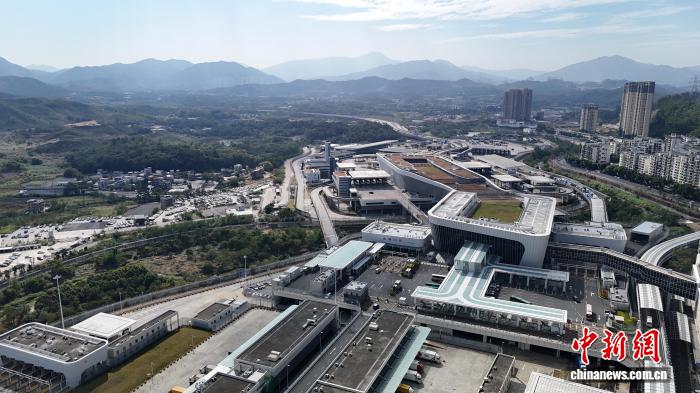
深圳莲塘口岸年度出入境人次首破3000万
Zhong Guo Xin Wen Wang· 2025-12-25 03:23
Core Insights - The Shenzhen Lian Tang Port has seen its annual inbound and outbound passenger numbers exceed 30 million for the first time, marking a year-on-year increase of over 15% [1][2]. Group 1: Passenger Traffic Growth - The Lian Tang border inspection station reported that as of December 24, the number of people checked has surpassed 30 million, indicating a significant growth in cross-border travel [1]. - The port serves as a crucial passage for Hong Kong residents traveling to mainland cities like Shenzhen, Guangzhou, Zhuhai, and Zhongshan for cultural experiences and culinary exploration [4]. Group 2: Technological Advancements in Border Control - The implementation of smart passageways and facial recognition technology has enhanced the efficiency of border crossings, making the process more convenient for travelers [2][5]. - Various personalized services have been introduced, including priority checks for cross-border students and streamlined processes for group tours, which have attracted over 100,000 teams for tourism, education, and trade exchanges [4]. Group 3: Economic and Tourism Impact - The Lian Tang Port is positioned as a key hub for cross-border tourism, benefiting from its strategic location and the ongoing initiatives to boost consumption in Shenzhen [2][4]. - The port's ability to handle a high volume of travelers has been supported by measures such as dedicated fast lanes and online entry forms for foreign visitors, facilitating smoother operations [4].

进一步发挥口岸枢纽作用
Jing Ji Ri Bao· 2025-08-20 23:11
Core Viewpoint - China has become one of the countries with the highest port clearance efficiency in the world, continuously optimizing border inspection and implementing smart clearance channels during the 14th Five-Year Plan period [1] Group 1: Port Development and Efficiency - The construction of ports in China has shown significant results, with an optimized layout of open ports and accelerated construction of key corridors such as the China-Europe Railway Express and the China-Laos Railway [2] - The application of new technologies like IoT, big data, and AI has led to rapid inspection and release of goods, significantly shortening clearance times and reducing costs [2] - The business environment at ports has improved, with the "single window" function becoming more refined, making it easier for companies to operate and lowering institutional transaction costs [2] Group 2: Challenges and Shortcomings - Despite advancements, some ports still face challenges such as outdated infrastructure and uneven development across regions, particularly between eastern and western areas [2] - There is a need for better information sharing and business collaboration across regions and departments to enhance the hub role of port economies [2] Group 3: Reform and Innovation - The establishment of mechanisms for integrated development of ports, industries, and cities is being promoted, along with reforms to simplify approval processes and improve clearance convenience [3] - Investment in traditional infrastructure is necessary to enhance port throughput and service levels, especially in important inland ports [3] Group 4: Differentiated Development Strategies - Ports are encouraged to focus on their unique geographical advantages to create differentiated development patterns, such as enhancing international competitiveness in coastal ports and promoting regional economic integration through border ports [4] - Inland ports should strengthen connectivity with their hinterlands, fostering deep integration in industry, logistics, information sharing, and talent development [4]