口岸物流

Search documents
2025年内蒙古陆路口岸货运量达1.32亿吨 蝉联全国第一
Nei Meng Gu Ri Bao· 2026-01-16 09:37
Core Insights - Inner Mongolia's land port cargo volume is expected to reach a historical high of 132 million tons by 2025, continuing its leadership in the nation after surpassing 100 million tons in 2023 and 2024 [1] - The region has 14 land ports and ranks first in the country for the number of inbound and outbound transportation vehicles, being the only province to achieve cross-border passage for eight vehicle types [1] Infrastructure Development - Continuous optimization and upgrading of infrastructure, with 12 road ports having established 53 inbound and 36 outbound cargo channels, and 41 inbound and 41 outbound passenger inspection channels, significantly enhancing traffic capacity [1] - The second cross-border railway between China and Mongolia, the Gankimoudou-Gashusuhaitou railway, is set to commence construction on May 14, 2025, injecting new momentum into cross-border logistics [1] Port Opening Expansion - The Arxan port will be open year-round starting September 2025, becoming the fourth international land port in Inner Mongolia, while the Uligqi port will officially open in December 2025, increasing the total number of open ports to 20 [1] Smart Port Construction - Achievements in smart port construction include being the first to implement unmanned intelligent cross-border transport, the first to apply intelligent vehicle and personnel verification systems, and the first to launch a digital one-stop fast track [2] - The experience from Manzhouli and Gankimoudou in smart port construction has been recognized as a model for national smart port development [2] Customs Facilitation - The first 5G unmanned heavy truck cross-border transport model was successfully trialed at the Ceke port, significantly improving cross-border transport efficiency [2] - The first "fast customs clearance system" was implemented at the Gankimoudou port, further reducing clearance times and lowering costs for enterprises [2] Port Functionality Expansion - The first international logistics transfer area for hazardous chemicals in the region has been established at the Erenhot port, filling a gap in specialized logistics for hazardous and explosive materials in Inner Mongolia [2]
2025年内蒙古陆路口岸货运量达1.32亿吨
Xin Lang Cai Jing· 2026-01-15 18:26
Core Insights - Inner Mongolia's land port cargo volume is projected to reach a historical high of 132 million tons by 2025, continuing its leadership in the nation after surpassing 100 million tons in 2023 and 2024 [1][2] - The region currently has 14 land ports and ranks first in the country for the number of inbound and outbound transportation vehicles, being the only province to achieve cross-border passage for eight vehicle types [1] - The development of land ports will focus on infrastructure, openness, smart technology, customs efficiency, and functional expansion [1] Infrastructure Development - Inner Mongolia has optimized its infrastructure with 12 road ports, establishing 53 inbound and 36 outbound cargo channels, and 41 inbound and 41 outbound passenger inspection channels, significantly enhancing traffic capacity [1] - A new cross-border railway between China and Mongolia, the Gankimoudou-Gashusuhaitou railway, is set to commence construction on May 14, 2025, adding new momentum to cross-border logistics [1] Expansion of Port Opening - The Alshan port will be open year-round starting September 2025, becoming the fourth year-round international land port in Inner Mongolia [2] - By December 2025, the Uligqi port will also be officially opened, increasing the total number of open ports in Inner Mongolia to 20, further enhancing the border opening layout [2] Smart Port Construction - Inner Mongolia has achieved "three national firsts" in smart port construction, including the implementation of unmanned intelligent cross-border transport, the application of intelligent vehicle and personnel verification systems, and the launch of a "digital one-stop fast track" [2] - The experiences from Manzhouli and Gankimoudou in smart port construction have been selected as typical cases for national smart port development, providing a model for the country [2] Customs Facilitation - The first nationwide trial of 5G unmanned heavy truck cross-border transport has been successfully conducted at the Ceke port, significantly improving cross-border transport efficiency [2] - The first "fast customs clearance system" has been implemented at the Gankimoudou port, further reducing clearance times and lowering costs for enterprises [2] Port Function Expansion - The first international logistics transfer area for hazardous chemicals has been established at the Erenhot port, filling a gap in specialized logistics for hazardous and explosive materials in Inner Mongolia, providing safe and professional support for related industries [2]
智慧口岸建设赋能内蒙古外贸进出口提质增效
Xin Hua Wang· 2026-01-15 13:40
Core Insights - The article highlights significant advancements in the construction of smart ports in Inner Mongolia, aiming for breakthroughs by 2025, including the implementation of unmanned intelligent cross-border transport and automated inspection systems to enhance customs efficiency [1] Group 1: Smart Port Developments - The Gankimiao Road Port has established a dedicated unmanned cross-border transport channel, resulting in a more than 60% increase in customs clearance efficiency [1] - The Manzhouli Railway Port has integrated "5G + IoT" technology, reducing the inspection time for entire trains to under 1 minute and doubling the daily loading capacity [1] - The Ceke Port has successfully trialed 5G unmanned heavy truck cross-border transport, with each truck's customs clearance time reduced to 3 minutes [1] Group 2: Trade Volume and Infrastructure - Inner Mongolia has 20 open ports, including 14 land ports and 6 air ports, with a projected cargo volume of 132 million tons by 2025, representing an 8.45% year-on-year growth, consistently exceeding 100 million tons for three consecutive years [1] - The number of inbound and outbound transport vehicles is expected to reach 2.47 million (trains and aircraft) [1]
连续3年突破亿吨大关 内蒙古陆路口岸货运量居全国第一
Zhong Guo Xin Wen Wang· 2026-01-15 12:34
Core Insights - Inner Mongolia's land port cargo volume reached 132 million tons in 2025, marking an 8.3% year-on-year increase, and maintaining its position as the top land port in China for three consecutive years [1][2] Group 1: Cargo Volume and Growth - The cargo volume at Inner Mongolia's land ports has shown strong growth, achieving 132 million tons in 2025, which is a significant increase of 8.3% compared to the previous year [1] - Inner Mongolia has maintained a cargo volume exceeding 100 million tons for three consecutive years, solidifying its status as the leading land port in the country [1] Group 2: Infrastructure Developments - The Alashankou port passed national acceptance in September 2025, becoming the fourth year-round international land port in Inner Mongolia [1] - The Uligai port officially opened for customs clearance in December 2025, increasing the number of open ports in Inner Mongolia to 20, indicating significant progress in the region's port development [1] Group 3: Cross-Border Connectivity - The construction of the Gankimoudou-Gashusuhaitou cross-border railway commenced in 2025, representing the second new cross-border railway between China and Mongolia in 70 years, which will enhance regional connectivity [1] Group 4: Smart Port Initiatives - Inner Mongolia has made substantial progress in smart port construction, with the Gankimoudou port's AGV cross-border transport model recognized as a best practice in China-SCO digital economy cooperation [2] - The Ceke port successfully trialed the country's first 5G unmanned heavy truck cross-border transport model [2] - The first "border inspection fast clearance system" pilot project received approval from the National Immigration Administration and is being constructed at the Gankimoudou port [2]
2026年第一天的劳动者剪影
Xin Lang Cai Jing· 2026-01-02 05:02
Group 1 - The article highlights the dedication of various workers on the first day of 2026, showcasing their contributions to different sectors, including maritime navigation, agriculture, and tourism [1][2][3]. - The maritime sector is represented by Yao Gaole, who leads a team at the Tianjin Navigation Center, focusing on the development of domestic AIS systems to enhance maritime safety [4][5]. - In agriculture, Zhang Jinlin operates a smart greenhouse in Yunnan, producing 2 million roses annually with a revenue exceeding 5 million yuan, emphasizing the continuous operation of his farm to meet market demand [6][7]. Group 2 - The tourism sector is represented by Li Keliang, who is preparing for the opening of the Ocean Ice and Snow Kingdom in Liaoning, aiming to enhance visitor experience through improved facilities and attractions [8][9]. - The logistics and customs sector is illustrated by Bai Defu, who oversees operations at the Haikou New Port, ensuring efficient cargo processing as part of Hainan's free trade port initiative [10][11].


霍尔果斯口岸今年前11月进出口货运量持续增长
Xin Hua Wang· 2025-12-28 08:28
Group 1 - The core point of the article highlights the continuous growth in import and export cargo volume at the Horgos port, a key hub for China's westward opening, with a total cargo volume of 42.44 million tons from January to November this year, representing a year-on-year increase of 1.4% [1] - The export of automobiles from Horgos port reached 396,000 units, showing a year-on-year increase of 4.6% [1] - The implementation of the "smart railway port + local rapid customs clearance" model at the Horgos railway port, along with the "road port + local direct access" and "self-driving export vehicle rapid customs clearance" models at the road port, has significantly improved cargo clearance efficiency, allowing for 24-hour customs clearance [1]
同江口岸活力与效能双提升
Xin Lang Cai Jing· 2025-12-24 22:54
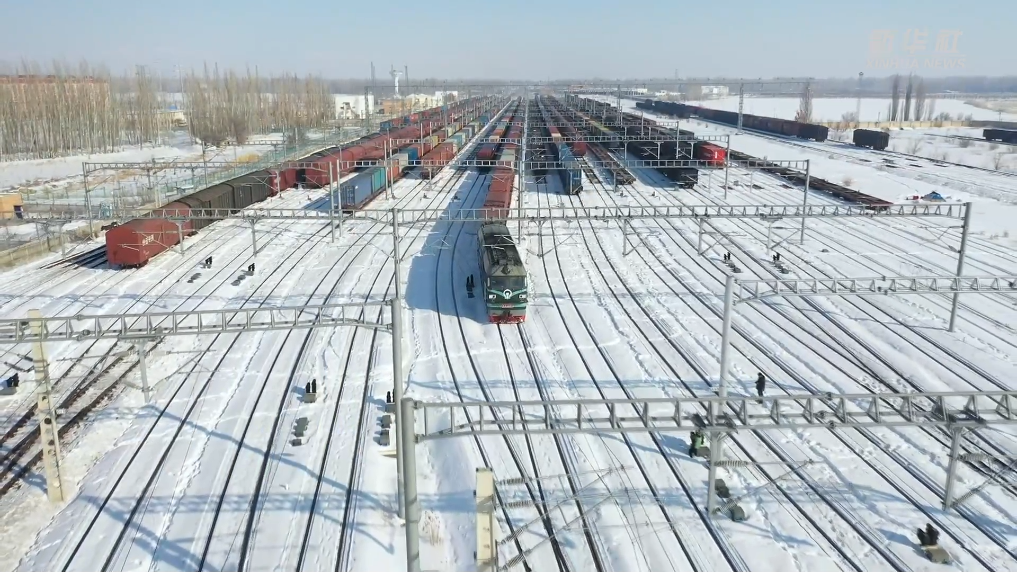
Core Insights - The opening of the floating ice channel from the Tongjiang waterway port to Russia's Nizhny Novgorod port enables seamless winter cross-border transportation, enhancing Tongjiang's role as a core hub for China-Russia trade [1] Group 1: Infrastructure Development - The Tongjiang city has established a four-season customs clearance network, leveraging the first cross-river railway bridge between China and Russia [1] - The introduction of intelligent regulatory systems has significantly improved operational efficiency, reducing the time for single train operations from 4.5 hours to 30 minutes, an efficiency increase of 89% [1] - The annual cargo volume at the railway port has exceeded 6 million tons ahead of schedule, setting a new record, with the time for customs clearance of China-Europe freight trains reduced to 2 hours [1] Group 2: Economic and Trade Expansion - The local customs have implemented a 24/7 consultation hotline, answering an average of 20 inquiries per month, and have introduced policies to support businesses, including tax incentives and RCEP rules [2] - The establishment of the first cold chain bonded warehouse in Jiamusi is expected to alleviate financial burdens on companies through tax deferral policies [2] - The successful entry of local technology company Hezhe Yuanpeng into the Russian market with snowmobiles highlights the expanding economic cooperation [2] Group 3: Cross-Border Cooperation - At the 34th Harbin Trade Fair, Tongjiang signed six cross-border cooperation projects, achieving on-site sales of 300,000 yuan [2] - The import of Belarusian canned beef and traditional Chinese medicine has opened new trade routes for agricultural products and medicinal materials between China and Russia, with a 64% year-on-year increase in waterway port throughput [2] - The "9610" cross-border e-commerce model has achieved rapid customs clearance, with packages reaching overseas consumers in six days, further enhancing trade efficiency [2]
绥芬河口岸货运量突破千万吨
Xin Lang Cai Jing· 2025-12-22 21:26
Core Insights - The cargo throughput at the Suifenhe port has exceeded 10 million tons, reaching 10.015 million tons as of December 17, with imports at 8.772 million tons and exports at 1.243 million tons, highlighting its role as a vital international logistics channel [2][3] Group 1: Port Operations - The Suifenhe railway port is experiencing a surge in activity, with freight trains transporting imported coal efficiently, showcasing a busy and effective logistics environment [2] - The implementation of a single-window system allows customs declarations to be completed digitally, significantly reducing the clearance time for perishable goods from days to hours or even minutes, with daily cargo volumes reaching up to 400 tons [2] Group 2: Technological and System Innovations - The rapid development of the port is driven by technological empowerment and institutional innovation, including a "green channel" for fruit and vegetable exports that offers prioritized inspection services [2][3] - The adoption of a "cloud issuance" model has fully digitized inspection and quarantine processes, greatly enhancing clearance efficiency [2] - The railway port leverages a digital port system to strengthen information sharing between customs and businesses, facilitating real-time data exchange [2][3]

满洲里公路口岸实现俄罗斯农产品进口零的突破
Xin Lang Cai Jing· 2025-12-20 07:54
Core Viewpoint - The successful entry of two trucks carrying 41.76 tons of Russian oats and buckwheat into China marks a significant milestone for the Manzhouli port, establishing a new key channel for the China-Russia "New Land Grain Corridor" project [1] Group 1 - The Manzhouli Customs announced the import of Russian agricultural products has achieved a "zero breakthrough" [1] - The imported goods included 41.76 tons of oats and buckwheat from Russia [1] - This event is part of the broader initiative to enhance agricultural trade between China and Russia [1]

全疆第三!塔城地区国资国企改革答卷亮眼
Sou Hu Cai Jing· 2025-11-27 07:59
Core Insights - The Xinjiang Tacheng region's State-owned Assets Supervision and Administration Commission (SASAC) has significantly enhanced the operational efficiency and core competitiveness of state-owned enterprises (SOEs) through reform initiatives [1][2] Group 1: Financial Performance - As of the end of October, the total assets of state-owned enterprises in the Tacheng region reached 81.794 billion yuan, a year-on-year increase of 0.6% [1] - The operating revenue for the same period was 11.389 billion yuan, reflecting a year-on-year growth of 33.3% [1] - Tax contributions amounted to 576 million yuan, showing a substantial year-on-year increase of 132.6% [1] Group 2: Reform and Structural Optimization - The region has completed 197 reform measures with a completion rate of 97.9%, ranking third in the entire Xinjiang region [1] - A modern industrial system comprising "5+2" sectors, including modern agriculture, clean energy, port logistics, mineral development, cultural tourism integration, and urban services, has been established [2][5] - The SASAC has implemented six special governance actions to optimize enterprise structure, resulting in the reduction of 17 redundant legal entities and the adjustment of nine underperforming management personnel [5] Group 3: Strategic Initiatives and Future Plans - The region aims to transform resource endowments into tangible development advantages by engaging in comprehensive cooperation with central enterprises, regional enterprises, and high-quality market players from outside Xinjiang [2] - Future plans include the cultivation of 3 to 5 state-owned enterprises with core competitiveness, referred to as "Tacheng State-owned Enterprise Benchmarks" [5] - The SASAC emphasizes the importance of modern enterprise systems and talent retention to enhance the role of SOEs in economic growth, industrial innovation, and social welfare [5]