智能高端新能源汽车

Search documents
向“智”向“新”成为增长新引擎 中国汽车工业正从“规模引领”迈向“技术引领”
Yang Shi Wang· 2025-11-22 02:32
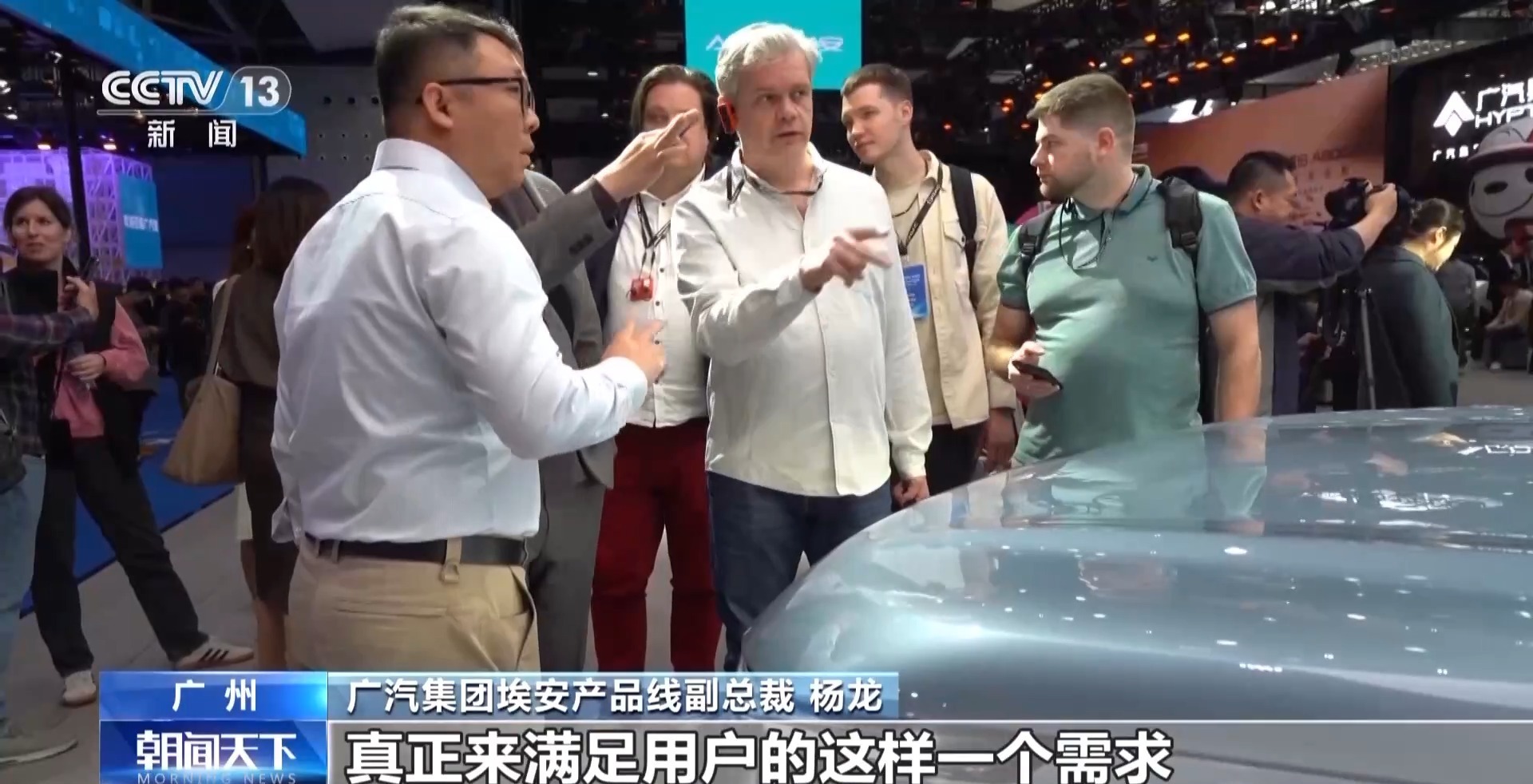
Core Insights - The 2025 Guangzhou International Auto Show is showcasing over 1,000 vehicles, with more than 60% being new energy vehicles, indicating a significant shift towards electric mobility in China's automotive market [1][3] - The new tax policy for new energy vehicles, effective January 1, 2026, will halve the purchase tax and raise the technical standards for subsidy-eligible models, prompting automakers to focus on high-value models [1] - The integration of AI technology across the automotive industry is driving innovation, with a notable collaboration between Huawei and GAC to launch a high-end smart new energy vehicle in the first half of next year [3][5] Industry Trends - China's new energy vehicle market penetration has surpassed 50%, marking a transition from "catching up" to "leading" in the global automotive industry, with a focus on technological leadership [5][11] - Chinese automakers are increasingly expanding into international markets, with exports accounting for 55% of Jiangqi Group's business during the 14th Five-Year Plan, and plans to deepen international engagement in the upcoming 15th Five-Year Plan [5][9] - The automotive industry is moving from merely exporting products to exporting entire supply chains, with a focus on creating globally adaptable vehicle models [7][9] Export Dynamics - New energy and high-end smart vehicles are becoming the mainstay of exports, gaining rapid recognition in markets such as Europe, Southeast Asia, and Latin America [11] - The push for global presence is not just about brand recognition but also about enhancing the influence of Chinese manufacturing on a global scale [9][11]

视频丨布局2026年汽车市场 中国车企加速拓展海外市场
Yang Shi Xin Wen· 2025-11-22 01:22
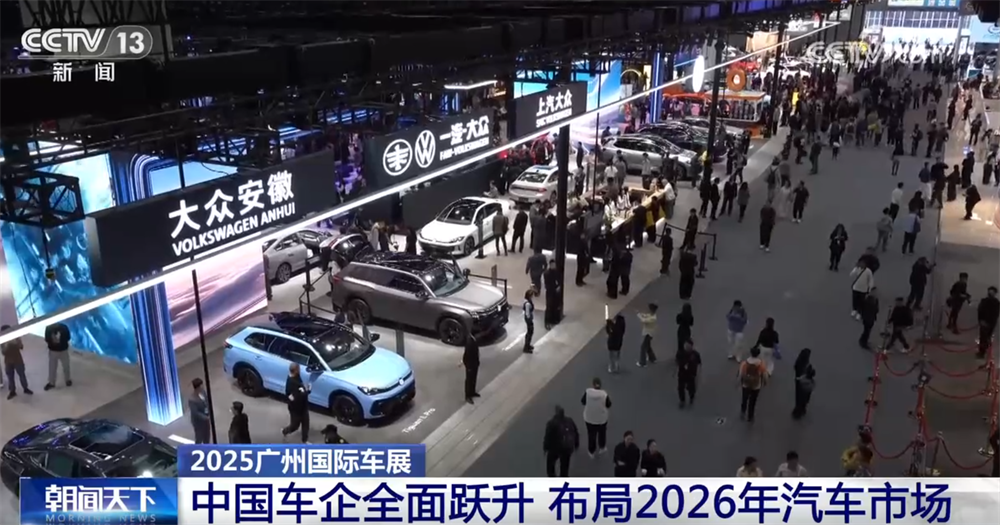
Core Insights - The 2025 Guangzhou International Auto Show is showcasing over 1,000 vehicles, with more than 60% being new energy vehicles, indicating a significant shift towards electrification in the automotive industry [1] - A new tax policy for new energy vehicles will take effect on January 1, reducing purchase tax by half and raising technical thresholds for subsidy-eligible models, prompting automakers to focus on high-value models [1] - The automotive industry is experiencing a transformation driven by technological advancements and user experience improvements, moving away from reliance on subsidies [3] Industry Trends - Smart technology is emerging as a new growth engine for the automotive sector, with a notable collaboration between Huawei and GAC to launch a high-end smart electric vehicle in the first half of next year [5] - The penetration rate of new energy vehicles in China is expected to exceed 50% by 2025, marking a shift from "catching up" to "leading" in the global automotive landscape [7] - Chinese automakers are increasingly focusing on international markets, with exports accounting for approximately 55% of Jiangqi Group's business during the current five-year plan [7] Global Expansion - The Chinese automotive industry is transitioning from merely exporting products to exporting entire supply chains, reflecting a new phase of globalization [9] - The concept of "one model, multiple versions" for global markets is gaining traction among automakers, indicating a strategic approach to internationalization [9] - High-end smart vehicles and new energy models are becoming the main export drivers, with growing recognition in markets such as Europe, Southeast Asia, and Latin America [13]