
人工智能大模型

Search documents
中东动荡!“黑天鹅”起飞,全球股市重挫!A股优势在哪?
券商中国· 2026-03-07 23:36
Core Viewpoint - The article discusses the resilience of Chinese assets amidst global market volatility, emphasizing the stability and advantages of China's economy in a turbulent world [2][5][6]. Group 1: Market Performance - Global stock markets have shown mixed reactions to geopolitical tensions, with major indices in Germany, France, the UK, South Korea, and Japan experiencing significant declines, while China's Shanghai Composite Index saw a minor drop of less than 1% [1]. - The A-share market has remained relatively stable, with the Shanghai Composite Index closing at 4124.19 points, down 0.93%, and the Shenzhen Component Index down 2.22% [4]. Group 2: Economic Strength - China's economy has exceeded market expectations, achieving a total economic output surpassing 140 trillion yuan during the 14th Five-Year Plan period, with an average annual growth rate of 5.4%, leading among major global economies [5]. - The country maintains its position as the world's second-largest economy and consumer market, with a complete industrial system and a large skilled workforce, contributing to a robust domestic demand market [5][6]. Group 3: Investment Outlook - The article highlights that Chinese assets possess strong physical attributes, making them attractive during times of global instability, with low valuations in the A-share market and a focus on shareholder returns [2][6]. - The investment philosophy of buying quality assets at reasonable prices remains unchanged despite historical events, as illustrated by Warren Buffett's investment principles [2][6].


计算机行业GenAI系列(二十七):Token高速增长的背后:应用突破,与算力同享加速发展机会
GF SECURITIES· 2026-03-01 07:43
Investment Rating - The industry investment rating is "Buy" [4] Core Insights - The report highlights a significant increase in the weekly token usage of Chinese AI large models, surpassing that of the US for the first time, indicating a shift from "technology catch-up" to "application landing" [16][17] - The performance of domestic AI large models has improved significantly, with models like GLM-5 and MiniMax M2.5 closing the gap with international leaders, showcasing strong cost-performance advantages [30][35] - The rapid adoption of AI-assisted programming tools is driving token consumption, with companies like Anthropic experiencing substantial revenue growth due to high demand in software development scenarios [45][50] Summary by Sections Section 1: Token Usage Growth - From February 16 to February 22, 2026, the weekly token usage of Chinese AI large models reached 5.16 trillion, a 127% increase over three weeks, while US models dropped to 2.7 trillion [16][17] - The market for enterprise-level large models in China is showing a clear trend towards concentration, with the top three models accounting for 71.8% of daily usage by the second half of 2025 [17] Section 2: Performance and Cost-Effectiveness of Domestic Models - Domestic models like GLM-5, Qwen-3.5, and MiniMax M2.5 have entered the global top tier, with GLM-5 recognized as a benchmark in the open-source category [30][34] - The cost of API calls for domestic models is significantly lower than that of international counterparts, enhancing their attractiveness to developers and enterprises [24][35] Section 3: Coding and Agent Development - The report emphasizes that AI models like Claude from Anthropic dominate the coding space, with a 54% market share in AI coding tools, leading to a surge in revenue from $1 billion at the beginning of 2025 to $14 billion by February 2026 [45][49] - Domestic AI coding tools are rapidly evolving, with companies like ByteDance and Alibaba developing products that automate the entire software development process [50][52] Section 4: Investment Opportunities - The report suggests focusing on three investment dimensions: computing power (e.g., Cambrian, Inspur), tool software (e.g., Eazy Information, Star Ring Technology), and model and vertical applications (e.g., Zhiyuan, MiniMax, and others) [8][9]




机器人对未来有什么影响?
Sou Hu Cai Jing· 2026-02-27 02:02
Core Insights - The article emphasizes the transformative impact of robotics technology on society, projecting a global market size exceeding $68 billion in 2024 and growing at a compound annual growth rate (CAGR) of 18.5% to reach $80.5 billion by 2025, with robots performing increasingly complex tasks by 2026 [1][3]. Group 1: Evolution of Robotics - Robotics is transitioning from being mere automated tools to becoming intelligent partners, driven by breakthroughs in embodied AI, which allows for natural language interaction and complex task reasoning [3][4]. - The performance of robots, such as the "Xiao Gai" showcased during the Spring Festival, illustrates their ability to autonomously recognize environments and make decisions, marking a significant step towards self-evolution [4]. Group 2: Labor Market Transformation - Robotics is fundamentally reshaping the global labor structure, particularly in manufacturing, logistics, and hazardous industries, where robots are taking over high-risk tasks, significantly reducing human casualties [6]. - The service industry is witnessing a democratization of robotics, with over 1.2 million humanoid robots shipped globally in 2025, addressing labor shortages in elder care and healthcare through emotional interaction capabilities [7]. - A new paradigm of "human-robot collaboration" is emerging, creating new job roles such as robot trainers and ethics reviewers, shifting the focus from human versus machine to human plus machine [8]. Group 3: Ethical and Social Challenges - The rapid advancement of robotics raises significant ethical and social challenges, including privacy and security risks associated with data collection by robots equipped with multimodal perception systems [10]. - Algorithmic bias and decision-making responsibility are critical issues, especially when autonomous robots make choices in emergencies, necessitating a transparent ethical framework for algorithm accountability [10]. - The proliferation of robotics may exacerbate the digital divide, with wealthier individuals and nations benefiting first, highlighting the need for equitable technology distribution mechanisms [10]. Group 4: Future Outlook - Looking ahead to 2026-2030, three core trends in robotics are anticipated: self-evolution of embodied intelligence, decentralized group collaboration through blockchain, and deep integration of brain-machine interfaces [11]. - Future cities are envisioned as "robot-friendly," where multiple humanoid robots collaborate on large-scale tasks, while in homes, robots will evolve into intelligent companions that understand human needs [11].


2025商业航天报告:中国商业航天行业发展研究报告
Sou Hu Cai Jing· 2026-02-26 08:28
Core Insights - The report highlights that China's commercial space industry is entering a period of rapid development, driven by accelerated construction of space-based networks and the rise of private enterprises as key engines of growth [1][2]. Group 1: Industry Overview - The global space economy is projected to reach $415 billion by 2024, with commercial space contributing approximately 70% of this revenue, establishing itself as the dominant force in the industry [1]. - The emergence of private companies, exemplified by SpaceX, has led to a significant transformation in the space sector, shifting from government-led initiatives to market-driven activities [1][12]. Group 2: Policy Support - China's commercial space development has been significantly bolstered by clear and robust policy guidance since 2014, encouraging private capital participation and designating commercial space as a "strategic emerging industry" [2][23]. - Multiple provinces, including Beijing, Shanghai, and Guangdong, have introduced specialized action plans to foster regional commercial space industry clusters, enhancing the overall ecosystem [2][25]. Group 3: Technological Advancements - Key technological breakthroughs, particularly in reusable rocket technology, are essential for reducing launch costs and expanding market opportunities [3]. - Companies like Blue Arrow Aerospace and Galactic Glory are making significant progress in critical technology areas, such as liquid oxygen-methane engines and vertical landing recovery systems [3]. Group 4: Future Trends - The integration of commercial space with cutting-edge information technologies is expanding application boundaries, with AI models being utilized for satellite image analysis, enhancing data processing efficiency [4]. - A vision for a seamless information network integrating air, space, land, and sea is emerging, with satellite communication playing a crucial role in bridging the digital divide [4]. Group 5: Challenges Ahead - Despite the promising outlook, challenges remain, including the need for reliable rocket recovery, management of large satellite constellations, and addressing space debris [5]. - The commercial space sector faces high investment costs and long cycles, with economies of scale yet to fully materialize, placing ongoing pressure on companies [5].


苏州工业园区2025年度高质量发展总结暨作风建设大会召开
Su Zhou Ri Bao· 2026-02-26 00:49
Group 1 - The core message emphasizes the successful completion of the previous year's goals and the commitment to high-quality development in the Suzhou Industrial Park, aiming to establish a world-class high-tech zone by 2025 [1][2] - In the past year, the park achieved a GDP of 416.3 billion yuan, a growth of 5.5%, and an industrial output value of 736.2 billion yuan, growing by 6.1%, contributing 15% to the city's economy [1] - The total import and export volume exceeded 800 billion yuan for the first time, marking a growth of 20.8%, with actual foreign investment reaching 1.92 billion USD, indicating a strong performance in foreign trade and investment [1] Group 2 - The park is focusing on high-tech innovation to stimulate new growth, with initiatives in integrated circuits, artificial intelligence, and biomedicine, leading to a significant number of new specialized enterprises and public listings [2] - Urban development projects such as the "Suzhou Eye" Ferris wheel and the Suzhou Contemporary Art Museum are progressing, enhancing the livability and work environment in the area [2] - The park aims to achieve a GDP exceeding 500 billion yuan and an industrial output surpassing 1 trillion yuan by the end of the 14th Five-Year Plan, with a target GDP growth of over 5.5% for the year [2][3] Group 3 - The park plans to enhance its business environment by focusing on institutional innovation, meeting enterprise needs, and improving government services [3] - There is an emphasis on leveraging the advantages of China-Singapore cooperation and deepening reforms in the free trade zone to convert policy benefits into development momentum [3] - Continuous improvement in service quality and urban space development is prioritized to create a modern, international city model [3]
中银国际:AI大模型演进路径逐渐清晰 算力或供不应求
Zhi Tong Cai Jing· 2026-02-25 06:17
Group 1 - The core viewpoint is that major AI models both domestically and internationally are set to complete significant upgrades around the Spring Festival in 2026, indicating a robust demand for advanced models and a potential growth in computing power hardware [1][2]. Group 2 - Domestic AI models are undergoing intensive updates, with several releases from companies such as Zhiyuan, ByteDance, and Alibaba between January 27 and February 16, 2026 [2]. - Internationally, major model updates include OpenAI's GPT-5.3-Codex, Anthropic's Claude Opus 4.6, and Google's Gemini 3.1 Pro, all released in February 2026, showcasing enhanced capabilities [2]. Group 3 - The enhancement of model capabilities is leading to the emergence of intelligent agents and multimodal applications, with tools like OpenClaw evolving from simple chatbots to sophisticated office assistants [3]. - ByteDance's SeeDance 2.0 has significantly improved video generation efficiency, increasing the usable rate from 20% to 90%, which may drive the animation and film industries towards large-scale development [3]. Group 4 - The price adjustment by Zhiyuan for its GLM Coding Plan, including a 30% or more increase in subscription prices, reflects a growing market demand and indicates a supply bottleneck in computing power, suggesting ongoing benefits for the computing power industry [4].
智谱、MiniMax市值双双冲破3000亿港元 市场在疯抢什么?
Xin Lang Cai Jing· 2026-02-22 07:37
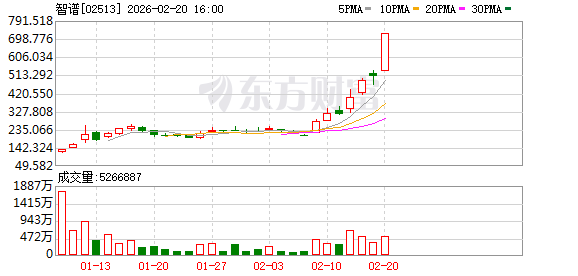
Core Viewpoint - The market is experiencing a surge in valuations for AI companies, particularly for Zhipu and MiniMax, despite both being in a loss-making position and having extremely high price-to-sales ratios compared to established players like OpenAI [3][7][18]. Company Performance - Zhipu's stock rose over 42% on February 20, 2026, with a market capitalization exceeding HKD 323.2 billion, marking a cumulative increase of over 220% in February and 523% since its IPO [2][3]. - MiniMax also saw a strong performance, closing up over 14% on the same day, with a market cap surpassing HKD 304.2 billion and a cumulative increase of 487.88% since its listing [2][3]. - Both companies have surpassed the market caps of major firms like Ctrip and Kuaishou, approaching the valuations of Pop Mart and Baidu [6][7]. Financial Metrics - Both Zhipu and MiniMax are currently operating at significant losses, with Zhipu reporting a cumulative loss of approximately RMB 6.238 billion from 2022 to mid-2025, while MiniMax's revenue grew by 174.76% to USD 53.44 million in the first nine months of 2025, but it still faced a net loss of USD 512 million (approximately RMB 3.605 billion) [7][13]. - The price-to-sales ratio for both companies is over 700 times, significantly higher than OpenAI's 65 times [3][7]. Market Dynamics - The recent enthusiasm in the market is attributed to technological advancements and product breakthroughs from both companies, such as Zhipu's GLM-5 and MiniMax's M2.5 models, which have shown improved performance metrics [8][9]. - Zhipu's GLM-5 model has been noted for its significant performance improvements in programming tasks, while MiniMax's M2.5 has become popular in the open-source AI community [9][10]. Competitive Landscape - The competitive environment is intense, with both companies facing challenges from established global players like OpenAI, Claude, and Gemini [18]. - The market's valuation of these companies is influenced by their perceived potential and the scarcity of AI investment opportunities in the Hong Kong market [18][20]. Future Outlook - The transition of AI from simple Q&A to more complex tasks, such as code reconstruction and document generation, is expected to increase token consumption significantly, which could drive future demand for their services [17]. - However, the sustainability of their business models remains uncertain, particularly for MiniMax, which derives over 70% of its revenue from overseas markets [18].
智船遇智港!我国首次实现集装箱船舶全流程无人化作业
Ke Ji Ri Bao· 2026-02-21 12:10
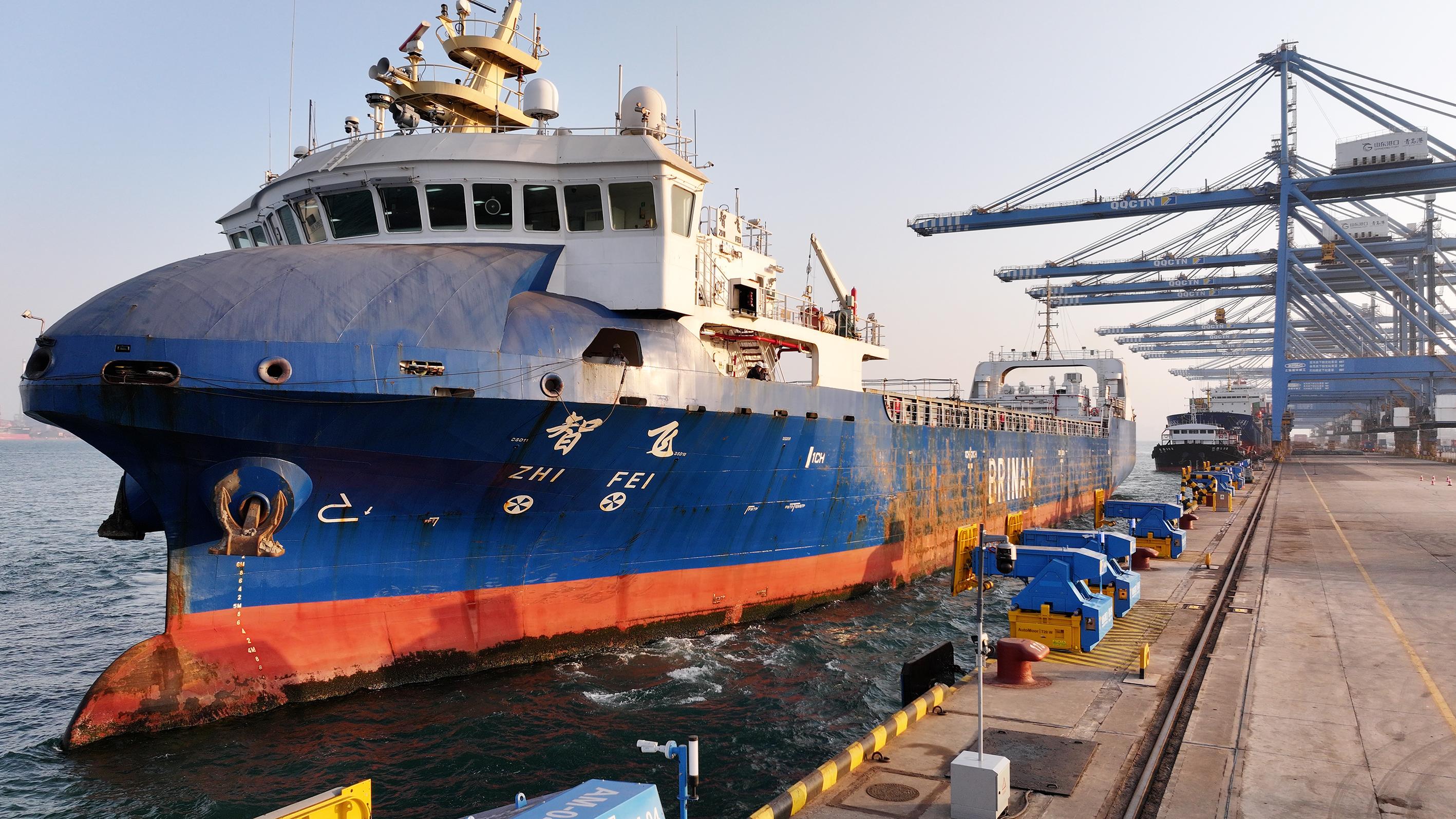
Core Viewpoint - The "Zhifei" vessel, China's first intelligent navigation container ship for commercial operation, successfully completed fully autonomous docking and unloading at the automated terminal in Qingdao Port, marking a significant advancement in maritime automation technology [1][4]. Group 1: Autonomous Navigation - The "Zhifei" ship utilized an unmanned autonomous navigation mode to accurately enter the docking area at Qingdao Port [3]. - It is one of the world's earliest vessels equipped with autonomous navigation capabilities and is the first in China designed for commercial transport [4]. Group 2: Automated Docking and Operations - Upon precise positioning, the vacuum automatic mooring system at Qingdao Port secured the vessel without human intervention in just 30 seconds, enhancing safety and reducing docking time [5]. - The terminal's intelligent control systems (A-TOS and A-ECS) operated with millisecond-level response times to coordinate automated cranes and guided vehicles for efficient unloading operations [5]. Group 3: Technological Integration - Qingdao Port has integrated advanced artificial intelligence models to upgrade algorithms and computing power, introducing new functionalities such as single crane operations and container exchange, which continuously improve operational efficiency [8].
7天狂飙超250%!AI大模型,彻底爆发!
证券时报· 2026-02-20 12:32
Core Viewpoint - The article highlights the significant rise in the stock prices and market valuations of major AI model companies, particularly Zhiyu and MiniMax, driven by advancements in their AI models and new financing rounds in the industry [1][5][10]. Group 1: Stock Performance - Zhiyu, known as the "first global AI model stock," saw its stock price increase by over 42% on the first trading day of the Year of the Horse, with a market capitalization exceeding 320 billion HKD [1]. - Since February 9, Zhiyu's stock has surged over 250% over seven trading days, while MiniMax's stock has risen over 110% in the same period [1][5]. - As of February 20, Zhiyu's cumulative increase in February is over 220%, and MiniMax's is over 105% [5]. Group 2: Model Developments - Zhiyu recently launched its flagship model GLM-5, designed for complex system engineering and long-range agent tasks, achieving performance levels comparable to top international models [6]. - GLM-5 ranks fourth globally and first among open-source models, marking a significant achievement for domestic models [6]. - MiniMax introduced its latest flagship programming model, MiniMax M2.5, which is designed for agent scenarios and competes with leading international models [8]. Group 3: Financing and Valuation - OpenAI is expected to raise over 100 billion USD in its latest financing round, potentially increasing its valuation to over 850 billion USD, a 70% increase from the end of last year [3][10]. - The domestic AI model company Kimi has seen its valuation double in its latest financing round, indicating strong investor interest [3][10]. - World Labs, founded by AI pioneer Fei-Fei Li, completed a new financing round of 1 billion USD, focusing on enhancing spatial intelligence through world models [11]. Group 4: Market Trends and Future Outlook - The article notes a competitive landscape in the global AI model sector, with major companies investing heavily to capture consumer markets [10]. - The integration of AI with robotics is expected to drive significant growth in the coming years, with predictions of a substantial increase in market demand for embodied intelligence [9]. - The Chinese AI market is projected to grow from 93.7 billion CNY in 2022 to 160.7 billion CNY in 2024, with a compound annual growth rate of 31% [11].

三大AI大模型股齐创新高,智谱2月以来累计涨幅达220.51%
Bei Jing Ri Bao Ke Hu Duan· 2026-02-20 11:09
Market Overview - On February 20, the first trading day after the Spring Festival, Hong Kong's three major indices collectively fell, with the Hang Seng Index down 1.10% to 26,413.35 points, the Hang Seng China Enterprises Index down 1.22% to 8,959.56 points, and the Hang Seng Tech Index down 2.91% to 5,211.50 points. However, the Hang Seng Biotechnology Index rose 0.96% [1][2]. Company Performance - Alibaba's stock dropped 4.91% to HKD 147.1 per share on February 20, amidst a general decline in tech stocks, with Baidu down 6.25%, JD Health down 6.27%, and Bilibili down 5.28% [3][5]. - Despite the drop, Jefferies issued a positive report on Alibaba's AI model "Qianwen," noting it facilitated over 130 million orders, with about half coming from county-level markets [5]. AI Sector Highlights - Three newly listed AI model stocks continued to rise, with MINIMAX-WP up 14.52%, Zhizhu up 42.72%, and Haizhi Technology Group up 28.42%. Zhizhu's cumulative increase in February reached 220.51%, while MINIMAX-WP's was 105.07% [7]. - As of February 20, Zhizhu's market capitalization reached HKD 323.2 billion, while MINIMAX-WP's was HKD 304.2 billion, and Haizhi Technology Group's was HKD 61.7 billion [7]. Cambridge Technology Update - Cambridge Technology's stock fell 5.81% to HKD 64.05 per share. The company addressed rumors regarding delays from its largest client, Cisco, and stated that its performance forecast for 2025 indicates a net profit increase of 51.19% to 66.79% [9]. - The company also reported that foreign exchange losses due to the depreciation of the Hong Kong dollar against the US dollar would impact its fourth-quarter performance but would not alter the overall positive profit forecast [9]. Gold Market Initiatives - The Hong Kong Financial Services and the Treasury Bureau aims to establish Hong Kong as an international gold trading center, targeting over 2,000 tons of gold storage within three years [10]. - The bureau plans to promote the establishment of gold refining facilities and has signed a memorandum of cooperation with Shenzhen's financial management bureau to support gold merchants in refining gold for trade in Hong Kong [10].
