暮野

Search documents
【重磅深度】看好2026年无人矿卡渗透加速
东吴汽车黄细里团队· 2026-03-02 13:51
Investment Highlights - Policy support is catalyzing the deployment of unmanned mining trucks, accelerating penetration in the RoboX niche market. The mining industry faces challenges such as frequent accidents, harsh working environments, aging labor force, and declining economic efficiency, with safety being a fundamental requirement. To reduce accident rates, national policies are promoting automation in mines, aiming for at least 60% of coal mine production capacity to be intelligent by 2026, thereby accelerating the application of autonomous driving technology in mining transportation [2][6]. Unmanned Mining Trucks as a Priority Application - Open-pit coal mines are the ideal scenario for unmanned mining trucks due to clear functional area divisions and fixed routes. In 2023, the domestic mining truck ownership is approximately 100,000 units, with an annual demand of about 30,000 units for open-pit coal mines. The potential total demand for unmanned mining trucks in domestic open-pit coal mines producing over 10 million tons annually is estimated at around 21,000 units. According to Frost & Sullivan, the market size for unmanned mining trucks in China is expected to reach 30.1 billion yuan by 2030 [3][6][39]. Key Players in the Unmanned Mining Truck Market - The current players in the domestic unmanned mining truck market include manufacturers, solution providers, and IT companies, with autonomous driving solution providers being the core players. Notable companies include Yikong Zhijia, Xidi Zhijia, and Huaituo Intelligent. Yikong Zhijia has a significant penetration advantage in large open-pit coal mines. In the overseas market, Caterpillar and Komatsu dominate, but domestic technology has a competitive edge [3][4][39]. Economic Efficiency of Unmanned Mining Trucks - The average transportation cost for unmanned mining trucks under a buyout scheme is 3.53 yuan/km, while under a subscription scheme, it is 3.55 yuan/km. This represents a 16% efficiency improvement compared to manned trucks at the same cost [3][6]. Market Growth and Projections - The domestic unmanned mining truck market is expected to grow rapidly, with a compound annual growth rate of 41% from 2026 to 2030, reaching a market size of 30.1 billion yuan by 2030. The penetration rate of unmanned mining trucks is projected to increase significantly, from 1.1% in 2021 to 16.1% in 2025, and further to 55.4% by 2030 [39][40]. Technological Advancements and Solutions - The unmanned mining truck system is based on multi-source data fusion, including central cloud, regional cloud, roadside, and vehicle-end data. The system consists of an intelligent cloud control platform, vehicle-end autonomous driving system, collaborative operation system, and related infrastructure, enabling environmental perception, fusion positioning, control decision-making, and collaborative operations [25][28]. Competitive Landscape - The competitive landscape in the domestic unmanned mining truck market is characterized by a concentration of major players. In 2024, the leading manufacturers include Lingong and Tongli, with market shares of 30% and 29%, respectively. The solution provider market is dominated by Yikong, Huaituo, Taga, and Xidi, which together account for 80% of the market share [46][47].


中国L4无人车收入第一名,冲刺港股IPO了
3 6 Ke· 2025-06-26 09:44
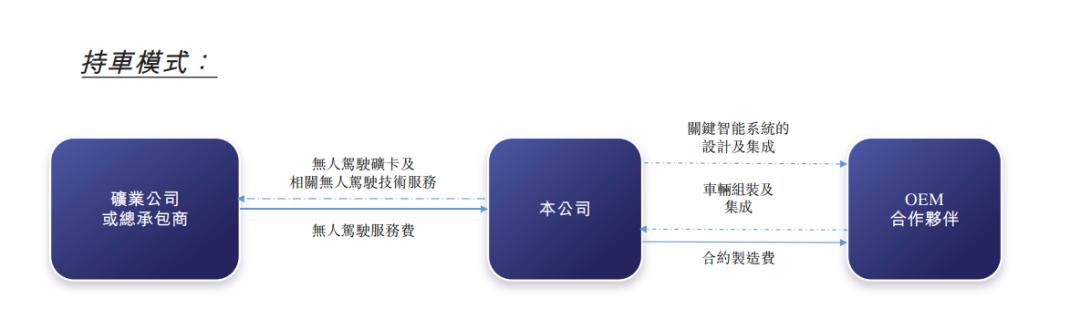
Core Viewpoint - Yikong Zhijia, a leading L4 autonomous driving company, has submitted its IPO application to the Hong Kong Stock Exchange, aiming to capitalize on its significant market share in the autonomous mining vehicle sector, which is projected to grow rapidly in the coming years [1][32]. Company Overview - Yikong Zhijia, headquartered in Fujian, is recognized as the world's largest L4 autonomous driving solution provider, focusing on mining operations [2]. - The company has developed two main business models: TaaS (vehicle ownership) and ATaaS (non-vehicle ownership), providing clients with flexible options for deploying autonomous mining trucks [4][6]. Market Position - Yikong Zhijia holds an 18.2% market share in China's L4 autonomous driving sector, making it the market leader, ahead of competitors like Lobo and Pony.ai [1][10]. - The company has deployed over 1,400 autonomous mining trucks, with a significant presence in major mining operations across China [10]. Financial Performance - Yikong Zhijia's revenue has shown substantial growth, with projections of 970 million RMB for 2024, reflecting a compound annual growth rate (CAGR) of 305.8% from previous years [14][19]. - The company has maintained a high customer retention rate of 100% over the past three years, although it has also reported net losses during this period [10][21]. Technology and Solutions - The core technology behind Yikong Zhijia's solutions includes advanced hardware for autonomous driving systems and a comprehensive software platform for real-time monitoring and decision-making in mining operations [6][8]. - The company has introduced a new digital management solution called "Muye," which integrates with its existing offerings to optimize mining operations through AI algorithms [8]. Market Outlook - The market for autonomous mining solutions in China is expected to grow significantly, with projections estimating revenues of approximately 20 billion RMB by 2024 and 301 billion RMB by 2030, representing a CAGR of 57.4% [35][38]. - Globally, the market for autonomous mining solutions is anticipated to increase from 700 million USD in 2024 to 8.1 billion USD by 2030, with a CAGR of 51.0% [38]. Leadership and Team - Yikong Zhijia's leadership team comprises experienced professionals from various sectors, including gaming and automotive, which has contributed to the company's innovative approach and successful fundraising efforts [29][30]. Competitive Landscape - The company faces competition from other players in the autonomous mining sector, including a notable competitor backed by Huawei, which is also pursuing advancements in this field [40][42].