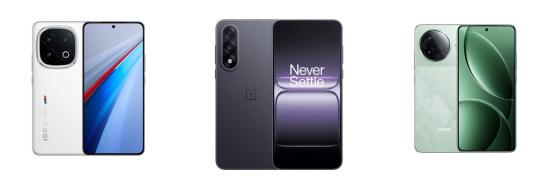
曲面屏手机

Search documents
\"非洲手机之王\"传音控股赴港IPO:机会与挑战并存
Xin Lang Cai Jing· 2025-12-14 14:07
Core Viewpoint - Transsion Holdings, known as the "King of African Phones," is facing significant challenges in the African smartphone market due to increasing competition and changing market dynamics, prompting the company to file for an IPO in Hong Kong [1][7]. Market Performance - Transsion Holdings maintains a leading market share of 51% in the African smartphone market, but this has declined by 5 percentage points year-on-year to 47% in Q1 2025 [1][8]. - The company's revenue for the first three quarters of 2025 was 49.543 billion yuan, a decrease of 3.33% year-on-year, while net profit dropped by 44.97% to 2.148 billion yuan [2][8]. - Smartphone sales in Africa fell from 104 million units in 2024 to 41.865 million units in the first half of 2025, representing an 18.9% decline [2][8]. - Revenue from the African market turned negative, decreasing by 4.45% year-on-year to 9.651 billion yuan in the first half of 2025 [2][8]. Regional Performance - Revenue in the Asia-Pacific market increased from 21 billion yuan in 2023 to 24.442 billion yuan in 2024, but plummeted to 10.41 billion yuan in the first half of 2025, a decline of 19.56% [3][8]. - Revenue from the Middle East, Latin America, Central Europe, and Eastern Europe in the first half of 2025 was 2.683 billion yuan, 2.437 billion yuan, and 911 million yuan, reflecting declines of 19.79%, 27%, and 59.59% respectively [3][8]. Strategic Initiatives - The company is accelerating its high-end strategy and diversification efforts, with its Infinix brand entering the $300 - $599 price range and launching high-end products [4][9]. - The proportion of mid-to-high-end models priced above $200 increased from 4.74% in 2017 to 14.04% in 2024 [4][9]. - Despite these efforts, the gross profit margin decreased to 19.47% in the first three quarters of 2025, down by 2.12 percentage points year-on-year [4][9]. Financial Position - As of September 2025, the company had cash reserves of 25.201 billion yuan, significantly exceeding its short-term debt of 1.558 billion yuan, raising questions about the necessity of the IPO for fundraising [5][10]. Conclusion - Transsion Holdings is at a critical juncture, needing to protect its core African market while its high-end and diversification strategies require more time and resources to yield results [6][11]. - The upcoming IPO may provide new funding and enhance international influence, but balancing short-term performance pressures with long-term strategic investments will be a key challenge for management [6][11].



曲面屏:一场注定消退的 “炫技” 狂欢(念念有余)
Zheng Quan Shi Bao Wang· 2025-09-25 14:05
Core Insights - The smartphone industry is witnessing a shift from curved screens to flat screens, indicating a return to practical design preferences over aesthetic trends [1][2] - The rise of curved screens began with Samsung's Galaxy S6 edge in 2015, which set a trend among Android flagship models, associating curved screens with high-end positioning [1][2] - The high production costs and limited supply of curved screens contributed to their initial popularity, allowing manufacturers to create a sense of scarcity and justify higher pricing [2] Industry Trends - The trend towards curved screens was closely linked to the industry's pursuit of high screen-to-body ratios, with manufacturers adopting various design innovations to minimize bezels [1] - However, the actual benefits of curved screens have been questioned, as issues like color distortion and uncomfortable grip have diminished user experience [1][2] - The decline of curved screens began with the 2024 MWC, where Samsung's Galaxy S24 Ultra was introduced with a flat screen, prompting other manufacturers like Huawei, OPPO, and Xiaomi to follow suit [2] Market Dynamics - Curved screens face challenges such as high repair costs and low resale value, indicating limited market acceptance [2] - The initial dominance of curved screens was partly due to a lack of innovation in other smartphone components, making screen design a key differentiator for manufacturers [2] - Apple's consistent avoidance of curved screens highlights a different approach focused on simplicity and user-friendliness, emphasizing continuous optimization of flat screen technology [3] Future Outlook - The competition surrounding curved screens may have ended, but the smartphone industry is expected to continue innovating, with a hope for future developments to align more closely with genuine user needs rather than mere aesthetic enhancements [3]
曲面屏手机,且用且珍惜?
3 6 Ke· 2025-07-21 03:15
Core Viewpoint - The trend of curved screen smartphones is declining, with a significant shift back to flat screen designs in the mid to high-end market, particularly among brands like OPPO, iQOO, and Xiaomi [1][2][26]. Group 1: Historical Context of Curved Screens - The first curved screen smartphones were Samsung's Galaxy Round and LG's G Flex, which were more conceptual than commercially successful [3][7]. - Samsung's Note Edge in 2014 marked a significant moment for curved screens, leading to the popularization of the dual-curved design with the S6 Edge [11][12]. - The success of the S6 and S7 Edge established curved screens as a high-end feature, influencing other manufacturers to adopt similar designs [13][19]. Group 2: Issues with Curved Screens - Curved screens have inherent issues such as accidental touches, display edge problems, and increased fragility, which have led to customer complaints [20][28]. - Despite their aesthetic appeal, the practical drawbacks have made flat screens more favorable among consumers [26][30]. Group 3: Economic Considerations - The cost of manufacturing curved screens remains higher than flat screens, impacting repair costs; for example, the repair cost for OPPO Find X7 Ultra's curved screen is ¥1690, while the flat screen of X8 Ultra is ¥1490 [30][32]. - Advances in screen packaging technology allow flat screens to achieve narrow bezels, making them visually appealing without the need for curves [32]. Group 4: Design Trends and Market Shifts - The shift back to flat screens is partly driven by a design language that mimics Apple's aesthetic, emphasizing flat screens and right-angled frames [34]. - The cyclical nature of design trends in the smartphone industry suggests that both flat and curved screens will continue to have their advocates, but the current market favors flat screens for commercial reasons [35].