
多元化布局

Search documents
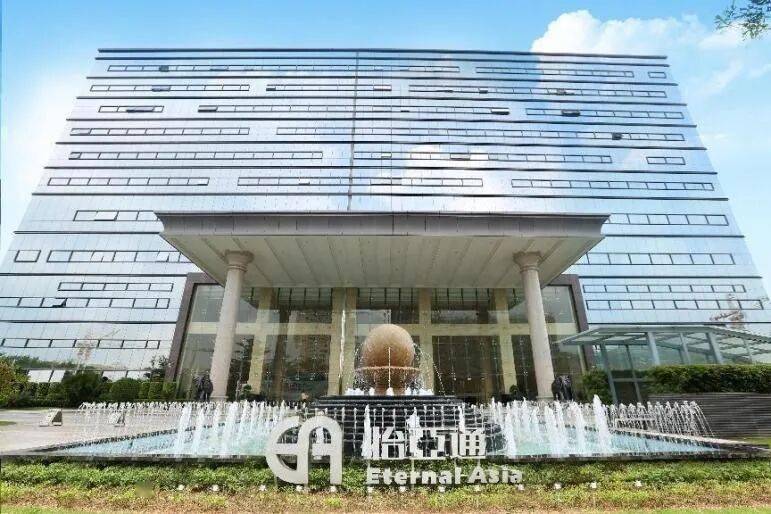
创始人离场,酒业版图濒危:怡亚通的转型困局与破局之路
Sou Hu Cai Jing· 2026-02-26 05:55
Core Insights - The resignation of founder Zhou Guohui marks the end of an era for Yiatong, a company valued at 90 billion yuan, indicating a significant shift in corporate governance and revealing underlying operational challenges [1][10] - Yiatong is projected to transition from profit to loss by 2025, with expected net losses ranging from 200 million to 300 million yuan, and revenue declining from a peak of 94.4 billion yuan to 77.6 billion yuan in 2024, continuing to decrease at a double-digit rate [1][6] Company Strategy and Transition - The new management under Chairman Chen Weimin is shifting the strategic focus towards core supply chain services and technology sectors, signaling a departure from the previously emphasized liquor business [7][10] - Yiatong has already begun to retract its liquor business, with 12 subsidiaries in the "Secret Brewing" sector excluded from consolidation in the first half of 2023, reflecting a clear intention to divest non-core assets [7][9] Liquor Business Performance - Yiatong's liquor business, once a significant growth driver with sales exceeding 7 billion yuan at its peak, has seen a dramatic decline, with revenue plummeting from 6.371 billion yuan in 2020 to 3.302 billion yuan in 2023, a drop of over 50% [6][8] - The liquor segment's struggles have not only reduced overall revenue but have also increased financial strain, with the company's debt ratio rising to 80.49% and short-term loans reaching 17.918 billion yuan by September 2025 [6][8] Future Outlook - The liquor business is likely to become marginalized rather than completely abandoned, as Yiatong may retain its distribution of well-known liquor brands to maintain cash flow, despite no longer being a strategic focus [9][10] - The transition from a diversified expansion strategy to a focus on core competencies is seen as a necessary step for Yiatong to overcome its current financial difficulties and achieve sustainable growth [10][11]


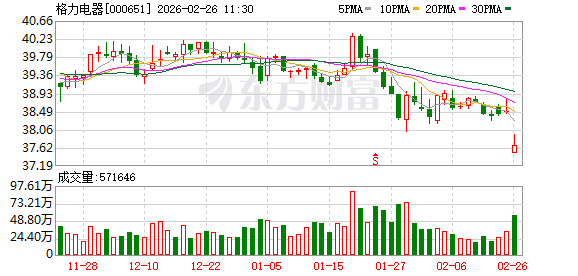
格力电器公告:公司第一大股东,拟减持
Nan Fang Du Shi Bao· 2026-02-26 05:16
Group 1 - Gree Electric Appliances' largest shareholder, Zhuhai Mingjun Investment Partnership, plans to reduce its stake by up to 2% through block trading to repay bank loans [1][3] - The reduction will not change the company's control or affect its governance structure and operations [1][3] - The company emphasizes that the share reduction will be conducted through block trading to minimize market impact and protect the interests of small investors [3] Group 2 - Gree Electric Appliances has received positive ratings from multiple securities institutions, indicating strong market confidence [4] - The company reported a 259.71% year-on-year increase in net cash flow from operating activities for the first three quarters of 2025, supporting its technological innovation and market expansion [4] - Gree has shifted its export structure significantly, with self-owned brands now accounting for over 70% of exports, moving away from OEM business [4] Group 3 - Gree Electric Appliances announced a cash dividend of 10 yuan per 10 shares, totaling approximately 5.585 billion yuan, as part of its mid-year profit distribution [5] - Since its listing, the company has distributed over 177.6 billion yuan in dividends, with significant returns to shareholders since 2012 [5]


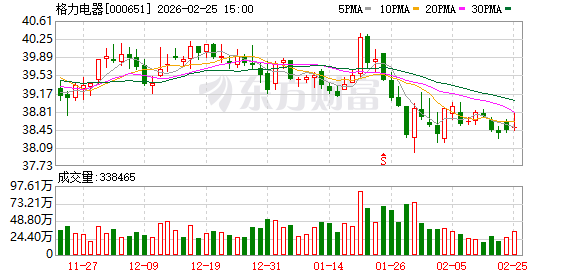
格力第一大股东拟减持!原因披露
Nan Fang Du Shi Bao· 2026-02-26 04:42
Group 1 - The largest shareholder of Gree Electric Appliances, Zhuhai Mingjun Investment Partnership, plans to reduce its stake by up to 2% of the total share capital through block trading to repay bank loans [2][5] - Gree Electric emphasizes that this reduction will not lead to a change in control or affect the company's governance structure and operations [5][6] - The company maintains a stable governance structure and is well-positioned to handle normal capital operations, reflecting a mature financial management strategy [6] Group 2 - Gree Electric is actively promoting diversification and digital transformation, with several securities institutions rating the company as "buy," "increase," and "recommend" [8] - The company reported a 259.71% year-on-year increase in net cash flow from operating activities for the first three quarters of 2025, supporting technological innovation and market expansion [8] - Gree Electric has shifted its export structure significantly, with self-owned brands now accounting for over 70% of exports, moving away from OEM business [8] Group 3 - Gree Electric announced a cash dividend of 10 yuan per 10 shares to all shareholders, totaling approximately 5.585 billion yuan, with cumulative dividends exceeding 177.6 billion yuan since its listing [9]
业绩承压 涪陵榨菜5个月内两换主帅
Bei Jing Shang Bao· 2026-02-25 16:13
Core Viewpoint - The frequent changes in the management team of Fuling Mustard Pickle have raised investor concerns, particularly as the company faces performance growth challenges and declining sales of its core product [1][4]. Management Changes - Fuling Mustard Pickle has replaced its general manager twice within five months, with the latest change occurring on February 13, when Xia Qiangwei was appointed as the new general manager, replacing Gao Xiang, who had held the position for less than five months [1][2]. - Xia Qiangwei, the new general manager, has no prior experience in the consumer goods industry, having spent his career in various government roles [2][3]. - The company has undergone multiple rounds of management adjustments in recent years, including the resignation of key executives [3]. Performance Challenges - The company is experiencing revenue fluctuations, with reported revenues of 2.45 billion yuan and 2.387 billion yuan for 2023 and 2024, respectively, reflecting year-on-year declines of 3.86% and 2.56% [4]. - The net profit attributable to the parent company also decreased, with figures of 827 million yuan and 799 million yuan for the same years, showing declines of 8.04% and 3.29% [4]. Core Product Sales Decline - The sales volume of the core product, mustard pickle, has been slowly declining, with annual sales dropping from 117,800 tons in 2022 to 111,400 tons in 2024 [6]. - In the first half of 2025, sales of mustard pickle decreased by 1% to 59,300 tons [6]. Diversification Efforts - In response to declining core product sales, the company has attempted to diversify its product offerings by introducing other side dishes, but these have not yet significantly contributed to revenue [6][7]. - The company planned to acquire a 51% stake in Sichuan Weizimei Food Technology Co., but the acquisition was terminated due to changes in external conditions and disagreements on key commercial terms [7]. Market Conditions - The mustard pickle industry is facing saturation, and the company has struggled to establish a second growth curve despite years of diversification efforts [7]. - The aging distribution channels and insufficient penetration into emerging consumer scenarios pose additional challenges for the company [7].

格力第一大股东珠海明骏拟减持不超2%股份用于偿还银行贷款
Nan Fang Du Shi Bao· 2026-02-25 13:57
Core Viewpoint - Gree Electric Appliances' largest shareholder, Zhuhai Mingjun Investment Partnership, plans to reduce its stake by up to 2% through block trading to repay bank loans, which will not affect the company's control or governance structure [2][4]. Group 1: Shareholder Actions - Zhuhai Mingjun intends to sell no more than 111,702,774 shares, representing 2% of the total share capital, within three months after 15 trading days from the announcement [4]. - The reduction in shares will be conducted through block trading rather than centralized bidding to minimize market impact and protect small investors [5]. Group 2: Company Stability and Governance - Gree Electric emphasizes that the share reduction will not lead to a change in control or affect the company's governance structure and ongoing operations [4][5]. - The company maintains a stable governance structure and is well-positioned to manage normal capital operations [5]. Group 3: Financial Performance - Gree Electric reported a 259.71% year-on-year increase in net cash flow from operating activities for the first three quarters of 2025, indicating strong financial health [5]. - The company has invested significantly in core technology, achieving international leadership in 50 self-developed technologies and filing nearly 140,000 patents [5]. Group 4: Market Position and Strategy - Gree Electric has shifted its export structure, with self-owned brands now accounting for over 70% of exports, moving away from OEM business [6]. - The company has made significant progress in overseas markets, winning multiple large-scale project bids in Europe and Southeast Asia [6]. Group 5: Shareholder Returns - Gree Electric announced a cash dividend of 10 yuan per 10 shares, totaling approximately 5.585 billion yuan, with cumulative dividends exceeding 177.6 billion yuan since its listing [6].
“非洲手机之王”传音净利腰斩、市值缩水超六成
Xin Lang Cai Jing· 2026-02-25 11:38
Core Viewpoint - Shenzhen Transsion Holdings Limited, known as the "King of African Mobile Phones," reported a significant decline in core profit indicators for the fiscal year 2025, with net profit attributable to the parent company halving, alongside a continuous drop in stock price, leading to a market value reduction of over 60% from its historical peak [2][4]. Financial Performance - In 2025, Transsion achieved revenue of 65.623 billion yuan, a decrease of 4.50% from 68.715 billion yuan in the previous year [2]. - The operating profit fell sharply by 51.25% to 3.204 billion yuan, while total profit decreased by 52.00% to 3.205 billion yuan [2]. - The net profit attributable to the parent company was 2.584 billion yuan, reflecting a year-on-year decline of 53.43%, with the net profit after deducting non-recurring gains and losses at 1.968 billion yuan, down 56.66% [2][3]. - Basic earnings per share dropped from 4.90 yuan to 2.26 yuan, a decline of 53.88%, and the weighted average return on net assets decreased from 28.35% to 12.75%, a reduction of 15.60 percentage points [3]. Market and Competitive Landscape - The company attributed the significant decline in performance to increased market competition and rising supply chain costs, particularly in component prices, which affected revenue and gross margin [3]. - Transsion has increased its investment in product research and development, leading to higher R&D expenses, and has also ramped up marketing and brand promotion efforts, resulting in increased sales expenses [3]. - Despite attempts to diversify into electric vehicle-related businesses and strengthen its core markets in Africa, new ventures have not yet generated substantial revenue, while the core mobile phone business faces pressure from both costs and competition [4]. Stock Performance - As of February 25, the stock price of Transsion closed at 58.25 yuan per share, with a total market value of 67.057 billion yuan, representing a decline of over 130 billion yuan from its peak in February 2021, a reduction of 66.5% [4]. - Compared to the peak of 179.17 yuan in April 2024, the stock has fallen by over 67%, with a year-to-date decline of 35.56% [4]. Legal and Regulatory Challenges - In 2025, Transsion faces multiple patent infringement lawsuits, highlighting risks related to intellectual property that may introduce new uncertainties for the company's operations and development [6].
亚博科技控股午后涨逾27% 近期附属TGX与香港黄金交易所订立技术服务协议
Xin Lang Cai Jing· 2026-02-23 05:25
Core Viewpoint - Yabo Technology Holdings (08279) has seen a significant stock price increase of 26.79%, currently trading at 0.355 HKD, with a transaction volume of 15.6449 million HKD following the announcement of a technical service agreement with the Hong Kong Gold Exchange [1] Group 1 - The agreement involves Yabo's subsidiary, TGX Technology Limited, providing various technical services to the Hong Kong Gold Exchange [1] - TGX is tasked with designing, developing, operating, and maintaining a secure and stable electronic trading, clearing, and settlement platform, along with related services [1] - The board believes that this agreement will leverage the group's professional advantages, effectively integrate cooperative resources, and promote the construction of an internationally leading precious metals trading platform [1] Group 2 - The initiative aims to further expand the group's service offerings into the precious metals sector, achieving diversification and value enhancement [1]
伊朗错判中国?对我们态度反复,本想卡中国能源,却没看清自己处境
Sou Hu Cai Jing· 2026-02-17 17:08
Core Viewpoint - The article discusses Iran's complex relationship with China and the West, highlighting Iran's attempts to leverage its oil exports to China as a bargaining chip while facing internal and external pressures [1][3][11]. Group 1: Iran's Strategy and Miscalculations - Iran relies heavily on China for 80% of its oil exports but is simultaneously trying to engage with Western countries, which is seen as a strategic miscalculation [1][3]. - The Iranian leadership appears to be using a "moral coercion" strategy, believing that by positioning itself as a defender of China against the U.S., it can extract concessions from China [3][5]. - There is a significant disconnect between the Iranian leadership's perception of its importance to China and the reality of China's diversified partnerships in the Middle East, which diminishes Iran's leverage [11][13]. Group 2: Internal Dynamics and Economic Challenges - Iran's internal political landscape is fragmented, with hardliners seeking to gain political capital through anti-American rhetoric while pragmatists aim for economic recovery but lack influence [5][10]. - The Iranian economy is in dire straits, with rampant inflation and currency devaluation leading to public discontent, which complicates the government's ability to negotiate effectively [8][10]. - Ordinary Iranians are more concerned with immediate economic survival than geopolitical strategies, indicating a disconnect between the elite's ambitions and the public's needs [5][10]. Group 3: Military and Strategic Context - The U.S. has increased its military presence in the region, showcasing a readiness to respond to Iranian provocations, which puts additional pressure on Iran [7][15]. - Iran's military capabilities are outdated compared to modern warfare standards, creating a significant gap in defense capabilities against U.S. forces [8][10]. - The ongoing tensions and military posturing suggest that while direct conflict has not yet erupted, the situation remains volatile and precarious [15][20]. Group 4: Diplomatic Relations and Future Outlook - Recent diplomatic efforts between the U.S. and Iran have been characterized as deadlocked, with Iran facing demands that threaten its regime's legitimacy [15][16]. - China's support for Iran is limited, as it prioritizes its own strategic interests and does not intend to be drawn into Iran's conflicts, highlighting a potential shift in Iran's expectations [16][18]. - The article concludes that Iran's attempts to manipulate its relationship with China and the U.S. may backfire, leading to further isolation and economic hardship [20].

2026年全球及中国锂电铜箔行业产业链图谱、发展现状、出货量、竞争格局及未来发展趋势研判:规模迈入百万吨级,超薄化主导升级方向[图]
Chan Ye Xin Xi Wang· 2026-02-17 01:47
Core Viewpoint - The lithium battery copper foil industry is crucial for lithium-ion battery performance, accounting for approximately 5%-10% of total battery costs, with a tightly linked supply chain in China that influences costs, supply, and demand [1][5][6]. Group 1: Industry Overview - Lithium battery copper foil is a core material for the negative electrode current collector in lithium-ion batteries, impacting energy density, cycle life, and safety [2][7]. - The global lithium-ion battery shipment volume is projected to reach 2,280.5 GWh by 2025, with expectations to exceed 3,016 GWh in 2026, driven by the growth of the electric vehicle market [1][6]. - China's lithium battery industry is leading globally, with a projected 2025 shipment volume of 1,888.6 GWh, accounting for 82.8% of global shipments [8]. Group 2: Market Dynamics - The copper foil industry is experiencing rapid growth, with domestic shipments expected to reach 940,000 tons in 2025, a year-on-year increase of over 36% [8][9]. - The market is shifting towards ultra-thin copper foil products, with 5μm and below gaining significant traction due to their advantages in energy density and cost savings [9][10]. Group 3: Competitive Landscape - The competitive landscape is becoming increasingly concentrated, with the top 10 companies expected to account for nearly 80% of shipments by 2025, reflecting a trend of resource consolidation towards leading firms [10][11]. - Key players in the industry include DeFu Technology, Longdian Huaxin, and Jiayuan Technology, which dominate the market due to their technological and production capabilities [10][11]. Group 4: Future Trends - The industry is expected to focus on three core directions: continued emphasis on ultra-thin products, deepening supply chain integration, and diversification strategies to enhance resilience against market fluctuations [10][12][13]. - Companies will increasingly pursue global expansion and product diversification to mitigate risks and tap into new profit growth areas [13].



杰瑞股份市值突破千亿元大关
Da Zhong Ri Bao· 2026-02-13 01:56
Core Viewpoint - Jerry Holdings (002353) has officially surpassed a market capitalization of 100 billion yuan, marking a new stage in its development and positioning it among the top listed companies in Yantai [1] Group 1: Company Development - The company has achieved significant growth in its core oil and gas industry while focusing on new industries to accelerate the construction of a "second growth curve" [1] - Jerry Holdings has made breakthroughs in areas such as data center power supply and natural gas business, while also promoting the deep implementation of its internationalization strategy [1] Group 2: Market Recognition - The market views the company's market capitalization surpassing 100 billion yuan as a recognition of its diversified layout and international capabilities [1] - The increase in market value is attributed to both the favorable cycle in the traditional oil and gas industry and investor confidence in its renewable energy transformation strategy [1]
