机器人的眼睛

Search documents
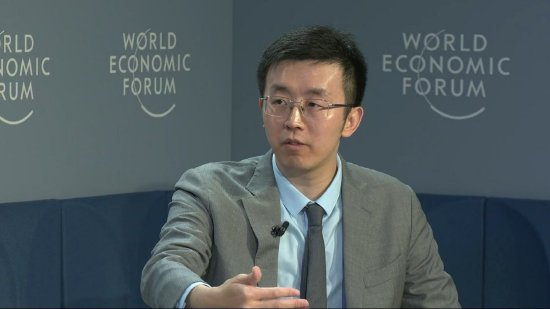
对话梅卡曼德创始人兼CEO邵天兰:当 AI 进入物理世界,部署能力成为真正的护城河
Xin Lang Cai Jing· 2026-02-06 16:50
Group 1 - The discussion at the World Economic Forum is shifting towards how AI can be integrated into the physical world and create scalable industrial capabilities, with a focus on concepts like "Physical AI" and "Embodied AI" [3][32] - The CEO of Mech-Mind Robotics emphasizes that the value of robots lies not in their human-like appearance but in their ability to adapt to complex physical environments, complete real tasks, and achieve rapid deployment at low costs [3][4][32] - Mech-Mind Robotics aims to enhance robots' perception, understanding, and decision-making capabilities to reduce reliance on extensive engineering adjustments, thereby improving deployment speed and cost-effectiveness [4][34] Group 2 - The company has chosen a restrained approach by defining its boundaries clearly, focusing on providing the "eyes, brain, and hands" of robots rather than complete systems or production lines [5][35] - Mech-Mind's clients span various industries, including automotive, battery, photovoltaic, 3C, and logistics, indicating a broad applicability of their technology [6][36] - The company believes that the common needs across different industries, such as perception, recognition, and safety execution, are often underestimated [6][36] Group 3 - The CEO outlines a three-phase development path for Mech-Mind: short-term growth in manufacturing and logistics, mid-term expansion into service industries, and long-term potential for home-use robots [7][28] - The company has achieved significant sales growth, moving from selling approximately 1,000 units in the first four years to over 10,000 units annually in recent times [20][49] - Mech-Mind focuses on standardized products rather than customized solutions, leveraging extensive real-world data to enhance AI capabilities [49][50] Group 4 - The company does not believe in a "full-stack" approach, arguing that no single company can excel in all aspects of robotics, which could dilute resources and core competencies [25][54] - The CEO expresses skepticism about the feasibility of creating highly complex robotic hands that mimic human dexterity, advocating instead for robots designed to complete specific tasks efficiently [26][55] - Mech-Mind's strategy emphasizes the importance of having a unique skill set or competitive edge in key areas, rather than merely assembling components [27][56]

走向领先的中国企业,如何完成“盲降”?
财富FORTUNE· 2025-11-18 13:05
Core Viewpoint - The article discusses the challenges and opportunities faced by Chinese companies in the AI sector, likening their journey to a "blind landing" in aviation, where they must rely on their internal metrics and indicators to navigate an uncertain landscape [1]. Group 1: AI and Robotics Industry Insights - The robotics industry is currently in its early stages, facing significant trade-offs between short-term results and long-term generality. Companies are often tempted to sacrifice versatility for immediate gains, which can lead to a narrow focus on specific applications [4]. - The application scenarios for robots are fragmented, making it difficult for companies to develop general-purpose robots that can adapt without extensive customization. This fragmentation is seen as a challenge that many companies struggle to overcome [4]. - The CEO of Meikaman, Shao Tianlan, emphasizes the importance of maintaining a focus on generality in robot development, despite the temptation to pursue short-term achievements [4]. Group 2: Market Opportunities and Challenges - The upstream opportunities in the energy sector are highlighted as critical, with the energy supply chain being the foundation for various technologies, including AI and data centers. The competition for resources, particularly in upstream non-ferrous metals, is a focal point for innovation [5]. - Chinese companies are noted for their strong performance in the AI field, with some Western investors believing they hold a significant short-term advantage. However, caution is advised regarding the sustainability of this advantage, as it depends on whether the competition is based on cost or time [5]. - The importance of innovation within the value chain is stressed, with a recommendation for companies to move towards higher value-added areas to maintain their competitive edge [5]. Group 3: Internationalization and Competitive Landscape - The article notes a shift in the internationalization of Chinese companies, which are now focusing on their own products and solutions rather than merely replicating others' businesses [6]. - The concept of "engineer dividends" is discussed, with Chinese companies leveraging their accumulated capabilities to expand into Southeast Asia, the Middle East, and South America, showcasing their competitiveness on a global scale [6].