
极狐阿尔法 S5

Search documents
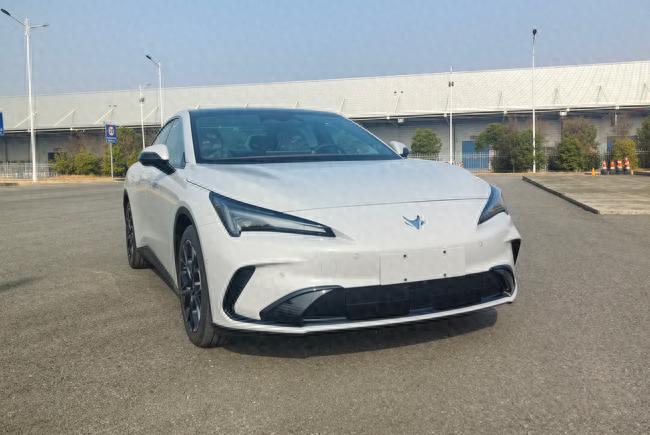
新款极狐阿尔法 S5 申报:新增增程版,外观细节调整
Xin Lang Cai Jing· 2026-01-11 13:24
Core Viewpoint - The new Arcfox Alpha S5 has undergone significant adjustments in exterior design and power configuration, as announced by the Ministry of Industry and Information Technology [1]. Design Changes - The front bumper has been redesigned, removing the black decorative panel connected to the headlight group, adopting a "C" shape for better recognition [5]. - The rear of the vehicle retains the through-type taillights but features a newly designed rear bumper for a sportier visual effect [5]. - The new model maintains the same front and rear bumper styles as optional configurations [5]. Dimensions - The new Arcfox Alpha S5 measures 4886 mm in length, 1930 mm in width, and 1480 mm in height, with a wheelbase of 2900 mm. The length has slightly increased compared to the current model, while other dimensions remain unchanged [17]. Powertrain Information - The new Arcfox Alpha S5 continues to offer both high and low power pure electric versions, with maximum power outputs of 185 kW and 200 kW, respectively, consistent with the current model [25]. - A new range-extended power version has been introduced, featuring a 1.5-liter range extender with a maximum power of 77 kW, while the driving motor matches the high-power version of the pure electric model at 200 kW [25]. - The official price range for the pure electric model is set between 127,800 yuan and 177,800 yuan [25].

智能汽车系列报告(七):首批L3级自动驾驶车型获准入
Shanghai Aijian Securities· 2025-12-23 12:15
Investment Rating - The report assigns an "Outperform" rating for the automotive industry, particularly focusing on the advancements in L3 autonomous driving technology [3]. Core Insights - The approval of the first batch of L3 autonomous driving vehicles in China marks a significant transition from testing to commercial application, with the responsibility for driving during system activation shifting to the vehicle manufacturers or system suppliers [3][4]. - The L3 level is expected to enhance the value chain within the automotive industry, as it requires advanced perception, computing power, and system integration, leading to increased value per vehicle in components such as cameras, LiDAR, and high-performance driving chips [3][10]. - The report highlights a shift in market focus from L2 penetration rates to the reliability of L3 technology, indicating a new phase characterized by engineering implementation and regulatory oversight [4][7]. Summary by Sections Event Overview - On December 15, the Ministry of Industry and Information Technology officially announced the approval of the first batch of L3 autonomous driving vehicles, specifically the Arcfox Alpha S5 and Changan Deep Blue SL03, for trial operations in designated areas of Beijing and Chongqing [4][10]. Policy Insights - The L3 regulations stipulate that the responsibility during system activation lies with the vehicle manufacturers or system suppliers, addressing the ambiguity present in L2 systems where the driver is the sole responsible party [15][22]. Technical Aspects - The report discusses the technological requirements for L3 autonomous driving, emphasizing the need for enhanced sensor configurations, data transmission capabilities, and computing power, which are critical for the successful deployment of L3 vehicles [23][24]. - The anticipated increase in the number of cameras and the integration of LiDAR technology are expected to significantly elevate the value of components in L3 vehicles, with projections indicating a doubling of the value of high-frequency connectors and chips [25][26]. Global Comparison - The report notes the differentiated progress in L3 development across countries, with Germany leading in legislation and responsibility clarity, while the U.S. focuses on L4 commercial applications, and Japan adopts a more conservative approach [31][34]. Investment Recommendations - The report suggests that companies with leading smart technology, system engineering capabilities, and strong supply chain management are likely to benefit from the commercialization of L3 autonomous driving. Recommended companies include Xpeng Motors, Li Auto, Xiaomi, and Changan Automobile, along with component suppliers like Horizon Robotics and Baolong Technology [3][31].

