柜子

Search documents
专家共读报告丨李志坚:传统产业“永不落幕”,是经济基本盘
Nan Fang Du Shi Bao· 2026-01-26 04:16
Core Viewpoint - The Guangdong government emphasizes the construction of a stronger modern industrial system and the development of robust traditional industry clusters that are "never-ending" [2] Group 1: Traditional Industries - Traditional industries in Guangdong, such as electronics, home appliances, furniture, clothing, and food, form the economic foundation [5] - These industries are characterized by complete supply chains, responsive market reach, and significant employment capacity [5] Group 2: Challenges and Future Directions - Current challenges for these industries are not merely about overcapacity but involve their positioning within the global value chain [6] - The future competitiveness of these industries should derive from deep understanding of demand, integration of technology, and collaborative efficiency across the supply chain [6] - For example, the home appliance industry should focus on providing smart home solutions rather than just manufacturing appliances [6] Group 3: Pathways to Transformation - The report highlights "intelligent, green, and integrated" approaches as pathways for transformation [7] - Intelligent transformation involves connecting data across design, production, supply chain, and sales through industrial internet platforms [7] - Green transformation is becoming a competitive advantage, addressing both international trade carbon barriers and domestic consumer preferences for eco-friendly products [7] - Integrated transformation blurs the lines between manufacturing and services, allowing products to serve as platforms for services and cultural experiences [7] Group 4: Ecosystem for Industry Clusters - The "never-ending" industry clusters represent a symbiotic ecosystem that requires addressing practical obstacles such as directing innovation resources effectively and ensuring funding reaches small and medium enterprises [8] - Leading enterprises must take responsibility for driving upgrades among supporting companies through technology standards and shared orders [8] - The role of industry associations is crucial in collective technology development, brand building, and maintaining industry order [8] - The upgrade of traditional industries is a gradual process that respects industry laws and captures market signals, relying on continuous improvements in technology, organization, and talent [8]


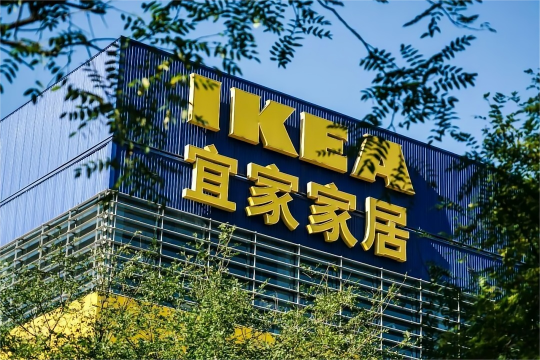
宜家“7店连关”上热搜!销售额一年蒸发近10亿,未来将开小型门店
新浪财经· 2026-01-08 10:08
Core Viewpoint - IKEA China is closing seven stores, including its largest store in Asia, to optimize costs and improve efficiency, while planning to open over ten smaller stores in the next two years [3][6][7]. Store Closure and Strategy - The closure of seven stores represents nearly 20% of IKEA China's total 41 stores, with the aim to enhance space efficiency and focus resources on consumer-centric channels [3][10]. - The company emphasizes that the closures are part of a proactive transformation rather than an indication of inability to operate [6][7]. Sales Performance - IKEA China's sales have declined significantly, with a drop of nearly 30% from its peak sales of 15.77 billion yuan in 2019 to 11.15 billion yuan in the 2024 fiscal year [10][12]. - The sales growth rate for IKEA China fell from 17% in 2021 to 6.5% in 2023, lagging behind emerging markets like India and Southeast Asia [10]. Digital and Online Strategy - IKEA is shifting focus to online retail channels, including partnerships with platforms like JD.com to enhance delivery services and customer interaction through digital tools [8][10]. - The company plans to invest in digitalization and store experience improvements to better engage consumers [8]. Market Challenges - The home furnishing industry is facing significant challenges, with competitors like Meike Meijia and Red Star Macalline also experiencing financial difficulties [14]. - Experts suggest that the shift towards online shopping and the pressure on profit margins in the standardized home furnishing sector are contributing to IKEA's store closures [14][12].

宜家“7店连关”上热搜! 销售额一年蒸发近10亿,未来将开小型门店
Xin Lang Cai Jing· 2026-01-08 10:04
Core Viewpoint - IKEA China is closing seven stores, including its largest store in Asia located in Shanghai Baoshan, as part of a strategic adjustment to enhance efficiency and focus on consumer-centric channels. This closure represents nearly 20% of its total 41 stores in China, highlighting significant operational challenges faced by the company [2][3][4]. Group 1: Store Closures and Strategic Adjustments - IKEA China will cease operations at seven locations starting February 2, 2026, including stores in Shanghai, Guangzhou, Tianjin, Nantong, Xuzhou, Ningbo, and Harbin [2][3]. - The company aims to improve space efficiency and redirect resources towards more consumer-focused channels, planning to open over ten smaller stores in the next two years [4][15]. - The closures are part of a broader strategy to adapt to the rapidly changing retail environment, with a focus on optimizing business structure and enhancing online and offline integration [4][17]. Group 2: Financial Performance and Market Challenges - Since 2022, IKEA has been closing multiple stores, with sales growth in the China region declining from 17% to 6.5% between fiscal years 2021 and 2023, significantly lower than emerging markets like India and Southeast Asia [7][18]. - In fiscal year 2024, IKEA China's revenue dropped to 11.15 billion yuan, a decrease of nearly 1 billion yuan from the previous year and a nearly 30% decline from its peak of 15.77 billion yuan in 2019 [7][18]. - The global revenue for IKEA's parent company Ingka Group fell by 5.5% to 41.864 billion euros, with net profit down 46.5% [7][18]. Group 3: Consumer Feedback and Product Quality Issues - There has been a surge in complaints regarding product quality and after-sales service, with customers reporting issues such as defective furniture and inadequate support for returns [8][19]. - Complaints on platforms like Black Cat Complaints and Xiaohongshu highlight dissatisfaction with product durability and service response times, indicating a potential decline in consumer trust [19][20]. Group 4: Industry Context and Expert Opinions - The furniture retail industry is facing significant challenges, with competitors like Meike Meijia and Red Star Macalline also reporting substantial losses and store closures [10][21]. - Experts suggest that the shift towards online shopping and the high operational costs of large physical stores are major factors contributing to IKEA's current predicament [10][21]. - The ongoing pressure on profit margins in the standardized furniture sector, combined with declining consumer interest in IKEA's offerings, has led to the necessity of store closures as a last resort [10][21].