
绿色化

Search documents
苏子孟:《协会第六届理事会工作报告》
工程机械杂志· 2026-03-30 09:33
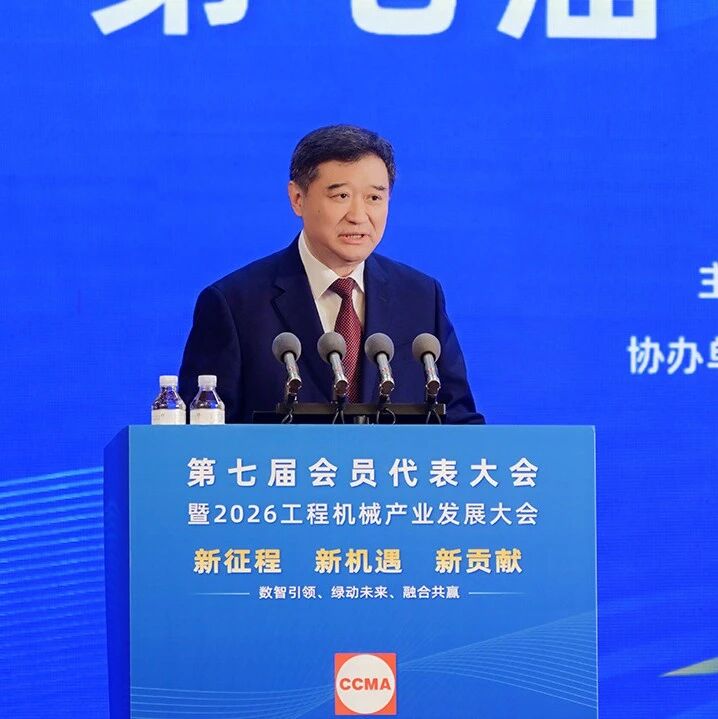
Core Viewpoint - The report emphasizes the significant achievements and ongoing transformation within the Chinese construction machinery industry, highlighting the integration of technology, international expansion, and a shift towards high-quality, sustainable development. Group 1: Achievements of the Sixth Council - The sixth council has focused on high-quality development, enhancing global service capabilities, and improving the quality of research, manufacturing, and service levels in the construction machinery industry [3][4]. - The industry has made substantial progress in technological innovation, with a notable increase in R&D investment and the establishment of a robust innovation system [4][5]. - The export value of construction machinery products surged from $20.96 billion in 2020 to $60.169 billion in 2025, reflecting a strong upward trend [6]. Group 2: Industry Transformation - The construction machinery industry has undergone a historic shift towards intelligent and green transformation, with digital technologies being integrated into various operational aspects [7]. - The market share of electric construction machinery has significantly increased, with electric loaders expected to reach nearly 25% and electric forklifts over 77% by 2025 [7]. - The industry has optimized its structure, enhancing the production capacity of high-end machinery and fostering collaboration among state-owned, private, and foreign enterprises [8]. Group 3: Association's Strengthening and Services - The association has strengthened its internal governance and enhanced its service capabilities, ensuring effective representation of member interests and timely feedback to government bodies [9][10]. - The association has actively participated in policy research and has provided statistical data to support government decision-making [13][14]. - A comprehensive service system has been established to meet member needs, including policy consulting, standardization, and technology quality services [19][21]. Group 4: Future Directions and Recommendations - The association aims to develop the "15th Five-Year Plan" for the construction machinery industry, focusing on technological innovation and addressing core technical challenges [26][29]. - Emphasis will be placed on international cooperation and aligning industry standards with global practices to enhance competitiveness [28][30]. - The association will continue to strengthen its governance and service levels, ensuring alignment with national strategies and industry needs [31][32].

海尔智家年报犯低级错误三日仍未改 毛利率净利率双降单季扣非大降45%
Chang Jiang Shang Bao· 2026-03-29 23:40
Core Viewpoint - Haier Smart Home's annual report for 2025 has sparked controversy due to formatting errors and disappointing fourth-quarter performance, which fell below market expectations [1][12][14] Financial Performance - In 2025, Haier Smart Home achieved revenue of approximately 302.3 billion yuan, marking a 5.71% year-on-year increase, and a net profit attributable to shareholders of 19.55 billion yuan, up 4.39% year-on-year [1][4] - The fourth quarter saw a decline in revenue to 68.29 billion yuan, a decrease of 6.72% year-on-year and 11.95% quarter-on-quarter, marking the first quarterly revenue drop since Q4 2021 [5][6] - The net profit for Q4 was 2.18 billion yuan, down 39.15% year-on-year, and the non-recurring net profit fell by 45.14% [5][6] R&D and Dividends - R&D investment in 2025 was 10.72 billion yuan, the lowest in three years, reflecting a decrease of 571 million yuan year-on-year [2][11] - Despite reduced R&D spending, the company announced a cash dividend of 10.755 billion yuan for 2025, with a payout ratio of 55%, the highest since 2005 [2][11] Share Buyback - The company plans to repurchase shares worth no less than 3 billion yuan and no more than 6 billion yuan for an employee stock ownership plan [3][6] Market Reaction - Following the disappointing fourth-quarter results, Haier Smart Home's stock price fell approximately 7% in the A-share market and 8.15% in the H-share market, with a closing decline of around 4% [6]


兴业银行2025年年报:资负结构优化,净息差保持韧性
和讯· 2026-03-28 08:34
Core Viewpoint - In 2025, under the "14th Five-Year Plan," the banking industry faces significant challenges, yet Industrial Bank has demonstrated resilience and growth, achieving positive revenue and net profit growth for two consecutive years, showcasing a "bottoming out and recovery" trend [1] Financial Performance - In 2025, Industrial Bank's operating income reached 212.74 billion yuan, a year-on-year increase of 0.24%, while net profit attributable to shareholders was 77.47 billion yuan, up 0.34% year-on-year [1] - The bank's net fee and commission income was 25.89 billion yuan, reflecting a 7.45% increase, reversing a previous downward trend [1] - The total assets under management of the bank's five asset management subsidiaries reached 3.65 trillion yuan, growing by 26.07% compared to the beginning of the year [1] Risk Management - The bank's risk costs have decreased, with new non-performing loans peaking and impairment provisions down by 4.26% year-on-year [2] - As of the end of 2025, the non-performing loan ratio was 1.08%, stable compared to previous periods, while the attention loan ratio decreased by 0.02 percentage points to 1.69% [2] - In the real estate sector, the bank's corporate real estate financing balance decreased by 53.3 billion yuan, and new non-performing loans in this area have declined year-on-year [2] Asset and Liability Management - Industrial Bank has adopted a dual approach to asset and liability management, focusing on optimizing asset structure and reducing costs on the liability side to maintain net interest margin resilience [3][5] - By the end of 2025, the total loan amount reached 5.95 trillion yuan, with significant growth in green loans (up 19.05%), technology loans (up 18.47%), and medium to long-term loans in manufacturing (up 14.91%) [4] - The bank's total deposits reached 5.93 trillion yuan, with retail deposits exceeding 1.8 trillion yuan, enhancing the stability of low-cost deposits [5] Strategic Upgrades - Industrial Bank has transitioned from "three cards" to "four cards," expanding its strategic focus to include technology finance, green finance, wealth banking, and investment banking [7][8] - The bank's customer base has significantly increased, with corporate clients rising from 930,000 to 1.67 million and retail clients from 79.56 million to 115 million [7] - The bank aims to enhance its core advantages by focusing on digitalization, green initiatives, internationalization, and comprehensive services, positioning itself as a leading value bank [8]


中集环科(301559):25Q4新签订单环比高增
HTSC· 2026-03-25 08:09
Investment Rating - The investment rating for the company is maintained at "Buy" with a target price of RMB 17.91 [6]. Core Insights - The company reported a revenue of RMB 2.389 billion for 2025, a year-on-year decrease of 28.65%, and a net profit attributable to shareholders of RMB 113 million, down 62.91% year-on-year [1][11]. - In Q4 2025, the company achieved a revenue of RMB 639 million, which represents a year-on-year decrease of 35.78% but a quarter-on-quarter increase of 19.00% [1]. - The company signed new orders worth RMB 2.664 billion in 2025, with Q4 new orders reaching RMB 1.051 billion, a quarter-on-quarter increase of 96.8%, indicating a potential recovery in demand for tank containers [4]. Business Segment Summary - The tank container business generated RMB 1.790 billion in revenue for 2025, a decline of 34.89% year-on-year, primarily due to insufficient operations in the downstream chemical industry and weak logistics demand [2]. - The medical equipment components segment saw revenue of RMB 253 million, reflecting a steady growth of 5.02% year-on-year [2]. - The aftermarket business generated RMB 148 million in revenue, with a slight increase of 0.22% year-on-year [2]. Financial Performance Summary - The company's gross margin for 2025 was 14.00%, down 2.67 percentage points year-on-year, attributed to weak demand in the tank container industry and increased competition [3]. - The total expense ratio for 2025 was 9.21%, an increase of 4.63 percentage points year-on-year, driven by higher foreign exchange losses and financial expenses [3]. - The company forecasts a net profit of RMB 316.83 million for 2026, representing a significant recovery of 181.08% year-on-year [9].
中篇・实战篇:十大核心新材料赛道产业化全景拆解
材料汇· 2026-03-23 14:00
Core Insights - The article discusses the development trends and industrialization progress of key new materials in China, focusing on three main categories: fortress materials, sovereign materials, and fusion materials [2][4]. Fortress Materials Track - Fortress materials are essential for national security, supporting major strategic projects and defense applications, with a focus on reliability and performance under extreme conditions [9]. - High-temperature alloys are critical for aerospace engines, with a global market expected to reach $12.44 billion by 2024 and $19.11 billion by 2031, reflecting a CAGR of 6.4%. The Chinese market is projected to grow from 28 billion yuan in 2024 to 54.4 billion yuan by 2031, with a CAGR of around 10% [12]. - The domestic high-temperature alloy market is currently 40% reliant on imports, with a supply gap exceeding 30,000 tons. The aerospace sector accounts for 55% of downstream applications [12][13]. - The global market for ceramic matrix composites (CMC) is expected to exceed $4 billion by 2025 and reach $25 billion by 2031, with a CAGR of 11% from 2021 to 2031 [21]. - The SiC fiber market is projected to grow from $250 million in 2017 to $3.587 billion by 2026, with a CAGR of 34.4% [22]. Sovereign Materials Track - Sovereign materials are crucial for high-end manufacturing and reducing dependency on foreign technology, characterized by high technical barriers and significant potential for domestic substitution [33]. - The global semiconductor photoresist market is expected to grow from $10.8 billion in 2024 to $11.4 billion in 2025, with a semiconductor photoresist market of approximately $2.4 billion [36]. - The domestic market for OLED organic materials is projected to reach approximately 5.7 billion yuan in 2024, with a year-on-year growth of 31% [48]. - The domestic market share of OLED terminal materials has increased from 1% in 2022 to 11% in 2024, indicating strong growth [50]. Fusion Materials Track - Fusion materials represent future industrial high points, with applications in humanoid robots and other advanced technologies [6]. - Diamond-copper composite materials are essential for AI chip cooling, with the global market expected to reach $160 million by 2024 and $350 million by 2031, reflecting a CAGR of 12% [68]. - The domestic market for diamond-copper composites is projected to grow from 1.28 billion yuan in 2024 to 1.41 billion yuan in 2025 [68].
中远海控2025年实现营业收入2195.04亿元
Zheng Quan Ri Bao Wang· 2026-03-20 05:49
Core Insights - COSCO Shipping Holdings Co., Ltd. reported a revenue of 219.5 billion yuan and a net profit of approximately 35.2 billion yuan for the year 2025, with a significant focus on container shipping and terminal operations [1][2] Financial Performance - In 2025, COSCO achieved an EBIT of 45.0 billion yuan and a net profit attributable to shareholders of about 30.9 billion yuan [1] - The container shipping business handled a cargo volume of 27.4 million TEUs, marking a year-on-year increase of 5.76%, generating revenue of 210.7 billion yuan with a gross margin of 19.44% [1] - The terminal business reported a total throughput of 153 million TEUs, up 6.22% year-on-year, with a revenue of 12.0 billion yuan and a gross margin of 25.91% [1] Capital Structure and Returns - By the end of 2025, the company's debt-to-asset ratio decreased to 41.42%, down approximately 1.28 percentage points from the previous year [1] - The cash and cash equivalents balance reached 150.9 billion yuan, and the company announced a cash dividend of 0.44 yuan per share, expected to distribute around 50% of the net profit attributable to shareholders for the year [1] Strategic Initiatives - COSCO has executed four rounds of share buybacks, totaling 866 million shares and over 9.8 billion yuan in buyback amounts [2] - The company aims to establish a global digital supply chain operation and investment platform centered on container shipping, integrating shipping, port, and logistics services [2] - COSCO maintains a fleet of 590 container ships with a capacity of approximately 3.6 million TEUs, leading the industry with a 75% share of owned and chartered vessels [2] Future Outlook - For 2026, COSCO anticipates increased complexity and uncertainty in the container shipping market, focusing on global and scalable development while enhancing digital, green, and integrated operations [3] - The company aims to leverage digital capabilities to optimize service efficiency and operational performance, striving to create a resilient and timely transportation service network for customers [3]

2026取暖电器行业简析报告
MCR嘉世咨询· 2026-03-16 01:40
Investment Rating - The report provides a positive investment outlook for the heating appliance industry, highlighting robust growth potential driven by policy support and consumer demand [4]. Core Insights - The heating appliance industry in China is projected to maintain steady growth from 2021 to 2025, with market size increasing from 328 billion to 770 billion yuan, reflecting a compound annual growth rate (CAGR) of approximately 29.1% [4][20]. - The industry has evolved through four stages: initial development, rapid growth, accelerated upgrading, and high-quality development, transitioning from basic heating functions to smart, energy-efficient, and scenario-based solutions [4][9]. - The market is increasingly driven by both policy initiatives promoting clean heating and rising consumer demand, particularly in non-central heating regions of southern China [4][21]. Market Overview - The heating appliance market is categorized into three main segments: electric heating, gas heating, and auxiliary integrated heating devices [4][8]. - Key product categories experiencing significant growth include baseboard/convection heaters, PTC heaters, and air-source heat pump heating machines, while traditional products like electric oil heaters are losing market share [4][20]. Industry Growth Drivers - Policy support for clean heating and energy efficiency standards, along with consumer demand awakening in southern regions, are key growth drivers [4][21]. - By 2025, smart heating products are expected to account for 47.6% of total sales, indicating a shift towards more advanced and user-friendly heating solutions [4][23]. Technological Innovations - The industry has seen a technological evolution from basic heating technologies to smart and green solutions, with AI control and IoT integration becoming mainstream [24][25]. - New materials like graphene and carbon fiber are being increasingly utilized, enhancing energy efficiency and reducing product weight [26][28]. Export Landscape - China is the largest exporter of heating appliances globally, with significant growth in exports to the EU, Japan, and ASEAN countries [32]. - In 2025, the export volume of electric heating appliances is expected to reach 10.615 million units, with a year-on-year growth of 6.18% [32]. Industry Structure - The industry value chain is characterized by a strong collaboration between upstream raw material suppliers, midstream manufacturers, and downstream sales channels, with profits skewed towards midstream brands and downstream channels [33][34]. - The market concentration is increasing, with the top five brands' market share rising from 58% in 2021 to 76% in 2025 [40]. Consumer Trends - Consumer preferences are shifting from basic heating needs to a demand for comfort, safety, and smart features, with a notable increase in the popularity of high-end and energy-efficient products [49]. - The market is witnessing a diversification of usage scenarios, with portable and waterproof products gaining traction in various environments [49].

【“十五五”开好局起好步】加快建设制造强国 壮大实体经济根基
中汽协会数据· 2026-03-02 04:23
Core Viewpoint - The article emphasizes the importance of advancing the manufacturing sector in China, focusing on high-end, intelligent, and green development as essential for economic growth and modernization [1][6][10]. Group 1: Manufacturing Development - The manufacturing industry is highlighted as a crucial pillar of the national economy, with a call for maintaining a reasonable proportion of manufacturing in the economy [3][6]. - The Luoyang Bearing Group has developed a 10-ton bearing for producing super-large, heavy-duty ring forgings, filling a gap in this field in China [1][3]. - The company has diversified its product range to over 30,000 specifications across nine categories, with high-end bearing products accounting for 70% of its output [3]. Group 2: Technological Innovation - The Luoyang Bearing Group is undergoing a comprehensive digital transformation and focusing on independent innovation to meet major national needs and advance the bearing industry [4][6]. - The article mentions the implementation of AI in manufacturing, with projects aimed at enhancing production efficiency and quality through automation [10][12]. - Various regions are launching initiatives to support technological upgrades and digital transformation in traditional manufacturing sectors, with plans for thousands of high-level technology renovation projects [10][12]. Group 3: Collaborative Efforts - The article discusses collaborative efforts among regions, such as the Beijing-Tianjin-Hebei area, to develop the Beidou space-time industry, aiming for a scale of over 200 billion yuan by 2027 [12]. - Jiangsu province plans to support the establishment of innovation alliances in high-end manufacturing and advanced materials to tackle technological challenges [12]. - The focus is on creating competitive advanced manufacturing clusters to support high-quality economic development [13].
开工看开局丨成本降,效率反而高
Xin Lang Cai Jing· 2026-02-28 00:40
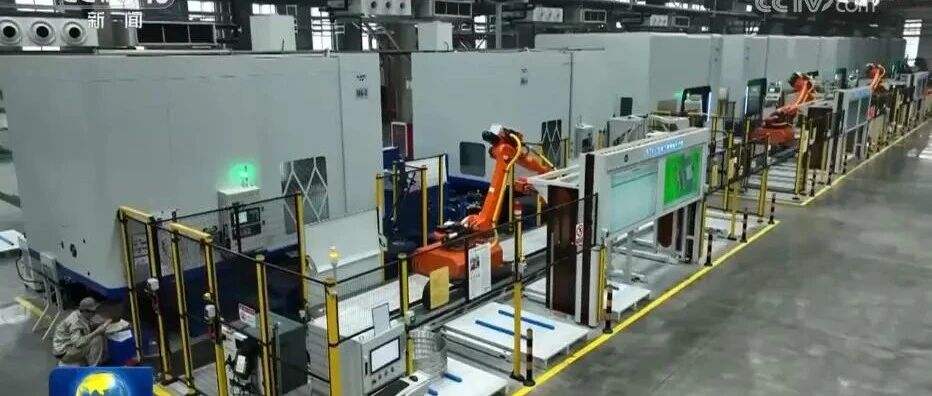
Core Viewpoint - The article highlights the transformation of Fushun New Steel Co., Ltd. through the automation and modernization of its steel production processes, particularly with the introduction of new high-capacity blast furnaces, which align with national policies for green and intelligent manufacturing [1][2]. Group 1: Automation and Efficiency - The newly constructed 1400 cubic meter blast furnace operates with full automation, allowing workers to control the entire production process from a control room, significantly reducing the need for manual labor [1]. - The new blast furnace has resulted in a production cost reduction of 70 yuan per ton of iron, alongside a substantial increase in production efficiency due to the automated processes [1]. Group 2: Environmental Impact - The new high furnace meets ultra-low emission standards, achieving a 15% reduction in carbon emissions, contributing to the company's green transformation efforts [1]. Group 3: Construction Innovations - The construction of the blast furnace utilizes modular prefabrication techniques, which have shortened the construction period from 18-20 months to 15 months, enhancing efficiency in the building process [2]. Group 4: Industry Development - Fushun City is actively promoting the resumption of 203 projects, including 168 ongoing projects related to Fushun New Steel's blast furnace, to optimize and upgrade the industrial structure [3].
固本强基,做实做强实体经济
Xin Lang Cai Jing· 2026-02-27 23:36
Core Viewpoint - The emphasis on strengthening the real economy as the foundation for a strong nation is highlighted, with a focus on technological and industrial innovation to enhance competitiveness and sustainability [2][5][10]. Group 1: Real Economy Development - The importance of the real economy as the foundation of a major country is reiterated, with a call to focus on its development [1][2]. - In 2025, the contribution rate of industrial added value to economic growth reached 35%, with manufacturing added value maintaining the world's highest position for 16 consecutive years [5]. - The revenue of Luoyang Bearing Group exceeded 6 billion yuan in 2025, with products widely used in various sectors including new energy vehicles [4][5]. Group 2: Technological and Industrial Innovation - The integration of technological innovation and industrial innovation is emphasized as crucial for enhancing the real economy [7][8]. - The launch of the "land aircraft" by Guangdong Huitian Aerospace Technology Company represents a significant step in low-altitude economic development [6][7]. - The establishment of a comprehensive support system for the transformation of scientific research achievements into market products is underway, addressing challenges in the innovation chain [8]. Group 3: Smart, Green, and Integrated Development - The shift towards smart, green, and integrated development is identified as essential for the modernization of the industrial system [9][10]. - The production precision and stability at Benxi Steel's cold-rolled plant have significantly improved due to digital transformation, with automotive steel sales increasing by 49.2% year-on-year [9][11]. - Hydrogen metallurgy projects in Hebei are expected to reduce carbon emissions by over 50% compared to traditional methods, showcasing the integration of environmental sustainability in industrial practices [11].