
标准必要专利(SEP)

Search documents
达尼:出海时代,我们不能再用“专利受害者”叙事了
Guan Cha Zhe Wang· 2025-11-27 01:17
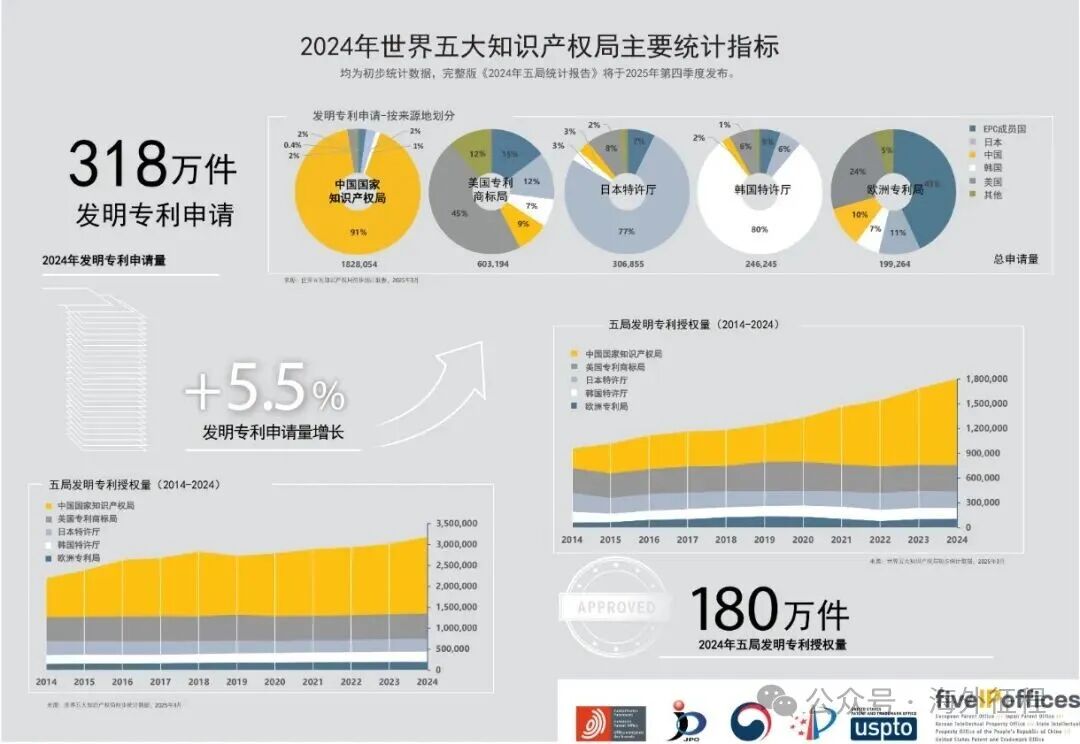
Core Viewpoint - The article discusses the evolving landscape of intellectual property (IP) in the context of China's increasing patent applications and the implications of EU's demands for technology transfer from China, highlighting a shift from being perceived as a victim of IP infringement to becoming a proactive participant in the global IP system [1][10]. Group 1: Patent Application Trends - In 2024, China submitted 20,081 patent applications to the European Patent Office (EPO), marking a 0.5% increase from 2023, and reflecting a nearly 400% growth over the past decade [4][5][22]. - The number of domestic applicants in China is 91%, while only 9% are from abroad, indicating a strong domestic focus compared to other countries like the US and Japan, which have higher foreign applicant percentages [2][4]. - Despite challenges such as trade wars and the pandemic, China's patent application growth has remained robust, with a notable increase of 29.2% during the peak of the trade war [5][6]. Group 2: Competitive Positioning - Chinese companies are increasingly recognized as active participants in the global IP landscape, with major firms like Huawei leading in patent applications, ranking second globally in 2024 with 4,322 applications [22][23]. - The article emphasizes that the rapid growth of Chinese patent applications in Europe suggests a potential shift in the global patent landscape, with China poised to surpass Japan and Germany in the near future [8][9]. - The competitive dynamics are shifting, with European companies feeling threatened by China's rapid advancements in technology and patenting, indicating a need for a new narrative around IP that emphasizes cooperation rather than conflict [12][36]. Group 3: Strategic Implications - The article suggests that China should embrace a new narrative around IP, positioning itself as a defender and supporter of global IP norms, which could enhance its international reputation and facilitate smoother market entry for Chinese companies abroad [10][38]. - The need for Chinese companies to protect their technological advantages while navigating international markets is highlighted, particularly in regions like Southeast Asia and India, where technology transfer demands are prevalent [32][36]. - Establishing a positive image in the IP domain is crucial for Chinese firms to maintain their competitive edge and foster a conducive business environment for overseas expansion [17][38].

推动标准必要专利许可实施 助力新质生产力发展——“标准必要专利全球治理与监管趋势”研讨会成功召开
Huan Qiu Wang· 2025-05-16 08:51
Core Viewpoint - The licensing rules and dispute governance of Standard Essential Patents (SEPs) are a focal point in the global intellectual property landscape, impacting innovation and the collaborative development of global industrial chains [1] Group 1: Regulatory Trends - The National Market Regulatory Administration of China issued the "Antitrust Guidelines for Standard Essential Patents" in November 2024, reflecting a policy direction that balances innovation encouragement and anti-monopoly measures [1] - Global SEP licensing regulatory policies are showing differentiated trends, providing valuable experiences for optimizing China's SEP governance system [1][2] - Experts believe that SEP policies will become more complex and competitive, with regulatory tools becoming more refined, focusing on licensing fee calculations, necessity reviews, and transparency [2] Group 2: Impact on Innovation - The SEP regulatory policy changes in major countries have varied, with the EU attempting to establish a governance framework but ultimately retracting due to disputes, while the US remains in a state of flux [3] - The relationship between SEP regulation and innovation is complex, with empirical data insufficient to determine whether regulation promotes or suppresses innovation [3] - Strong regulation and excessive intervention in the SEP licensing market could undermine innovation incentives, emphasizing the need for honest negotiations and a focus on protecting rights and promoting innovation [3][5] Group 3: Judicial and Market Dynamics - China has become a preferred venue for SEP litigation, with many cases settling but a lack of impactful rulings, indicating a need for improved litigation efficiency and mechanisms [6] - Different judicial regions are competing for SEP litigation, with the UK and Germany adopting contrasting approaches that reflect their respective stances towards rights holders and implementers [6] - The complexity of SEP disputes necessitates a comprehensive rule system that addresses all stages of the SEP lifecycle, from research and development to dispute resolution [11] Group 4: Industry Perspectives - The relationship between SEP governance and market dynamics is critical, with a need for a balanced approach that respects both rights holders and implementers [12] - The role of innovation in SEP governance is emphasized, with the need for policies that support technological advancement while avoiding excessive reliance on legal or regulatory measures [5][9] - The importance of market-driven solutions for SEP disputes is highlighted, advocating for flexible tools like mediation and industry associations to resolve conflicts [12]