桑葚汁

Search documents
桑基鱼塘、青春IP 解码千年农遗的破“圈”之路
Yang Shi Xin Wen Ke Hu Duan· 2025-10-22 02:49
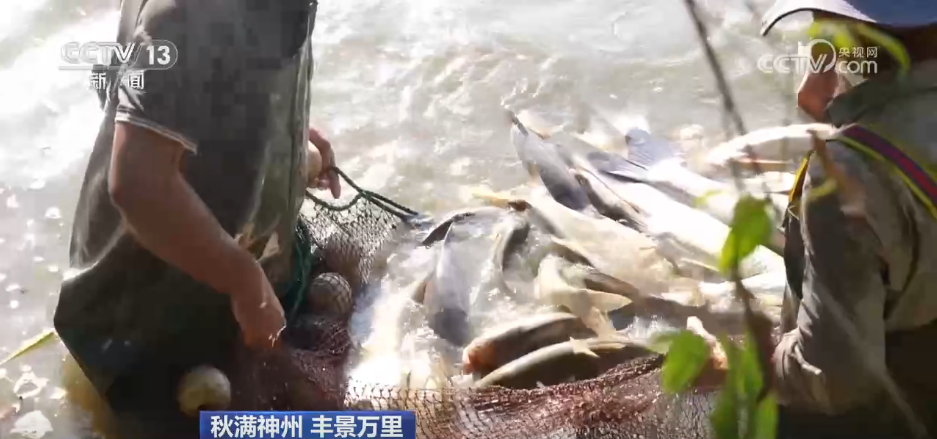
Core Insights - China possesses 25 globally significant agricultural heritage sites, accounting for nearly one-fourth of the world's total, along with 188 important agricultural heritage sites within the country, contributing to rural revitalization while preserving ancient farming wisdom [1][13]. Group 1: Agricultural Heritage and Economic Impact - The "Sangji Fish Pond" system in Huzhou, Zhejiang, exemplifies the integration of ancient agricultural practices with modern economic benefits, showcasing a sustainable ecosystem that has been maintained for over 2,500 years [3][7]. - The fish produced in this system are of high quality due to traditional ecological farming methods, leading to a significant annual output of over 12,000 pounds of fish and 300 pounds of quality silkworm cocoons, generating nearly 50,000 yuan in income [3][7]. - The village of Digan has welcomed over 700,000 tourists this year, with tourism revenue surpassing 140 million yuan, and the overall annual output value exceeding 200 million yuan, benefiting over 1,000 local households [7]. Group 2: Cultural and Educational Initiatives - The village has developed over 40 educational programs related to fish culture and sericulture, attracting around 100,000 participants from domestic and international study groups [5][7]. - Local culinary traditions, such as the "Chen Family Cuisine," have been recognized as intangible cultural heritage, further enhancing the village's cultural offerings [4][7]. Group 3: Innovation and Youth Engagement - Young people are actively involved in revitalizing agricultural heritage through innovative projects, such as the "Nongyi New Life" team, which creates cultural products and utilizes AI technology for heritage promotion [10][11]. - The "Nongyi New Life" initiative has produced over 50 creative products and won the "Future Star Award" at the 46th World Heritage Conference, highlighting the potential for agricultural heritage to engage younger generations [10][11]. Group 4: Broader Trends in Agricultural Heritage - Other regions in China, such as Longma Village in Yunnan and Shanggan Village in Heilongjiang, are also experiencing transformations by leveraging their agricultural heritage for tourism and community development [12][13]. - The ongoing efforts to activate agricultural heritage sites are shifting them from static treasures to dynamic assets that contribute to rural revitalization and economic growth [13].
桑基鱼塘、青春IP 解码千年农业文化遗产破“圈”之路
Yang Shi Wang· 2025-10-22 02:25
Core Viewpoint - China's agricultural cultural heritage, with 25 globally recognized sites and 188 nationally significant sites, plays a crucial role in preserving ancient farming wisdom while injecting new vitality into rural revitalization [1][14]. Group 1: Agricultural Cultural Heritage - The "Sangji Fish Pond" system in Huzhou, Zhejiang, exemplifies a sustainable ecological model that has been preserved for over 2,500 years, integrating mulberry cultivation, silkworm breeding, and fish farming [4][11]. - The heritage site has become a modern success story, generating significant economic benefits, with annual fish production exceeding 12,000 pounds and total income around 50,000 yuan from a 5-acre pond [4][8]. Group 2: Economic Impact and Community Engagement - The village of Ogan has developed over 40 educational programs related to fish culture and sericulture, attracting more than 100,000 visitors and generating over 5 million yuan in additional income for local residents [6][8]. - The tourism revenue for Ogan village has surpassed 140 million yuan this year, with total annual output value exceeding 200 million yuan, benefiting over 1,000 local households [8][14]. Group 3: Innovation and Modernization - Young innovators are utilizing technology to enhance the visibility and sustainability of agricultural heritage, including interactive tourism experiences and creative cultural products [9][13]. - The "Yiyuan Tea House Youth Version" project has received international recognition, showcasing innovative educational approaches to promote agricultural heritage [13]. Group 4: Broader Trends in Agricultural Heritage - Other regions in China, such as Longma Village in Yunnan and various locations in Guizhou, are also revitalizing their agricultural heritage through community-driven tourism initiatives, addressing the challenge of maintaining cultural significance while achieving economic viability [14][15]. - The integration of agriculture, tourism, and cultural experiences is transforming static agricultural heritage into dynamic economic assets, contributing to rural revitalization across the country [17].