
模拟月壤砖

Search documents
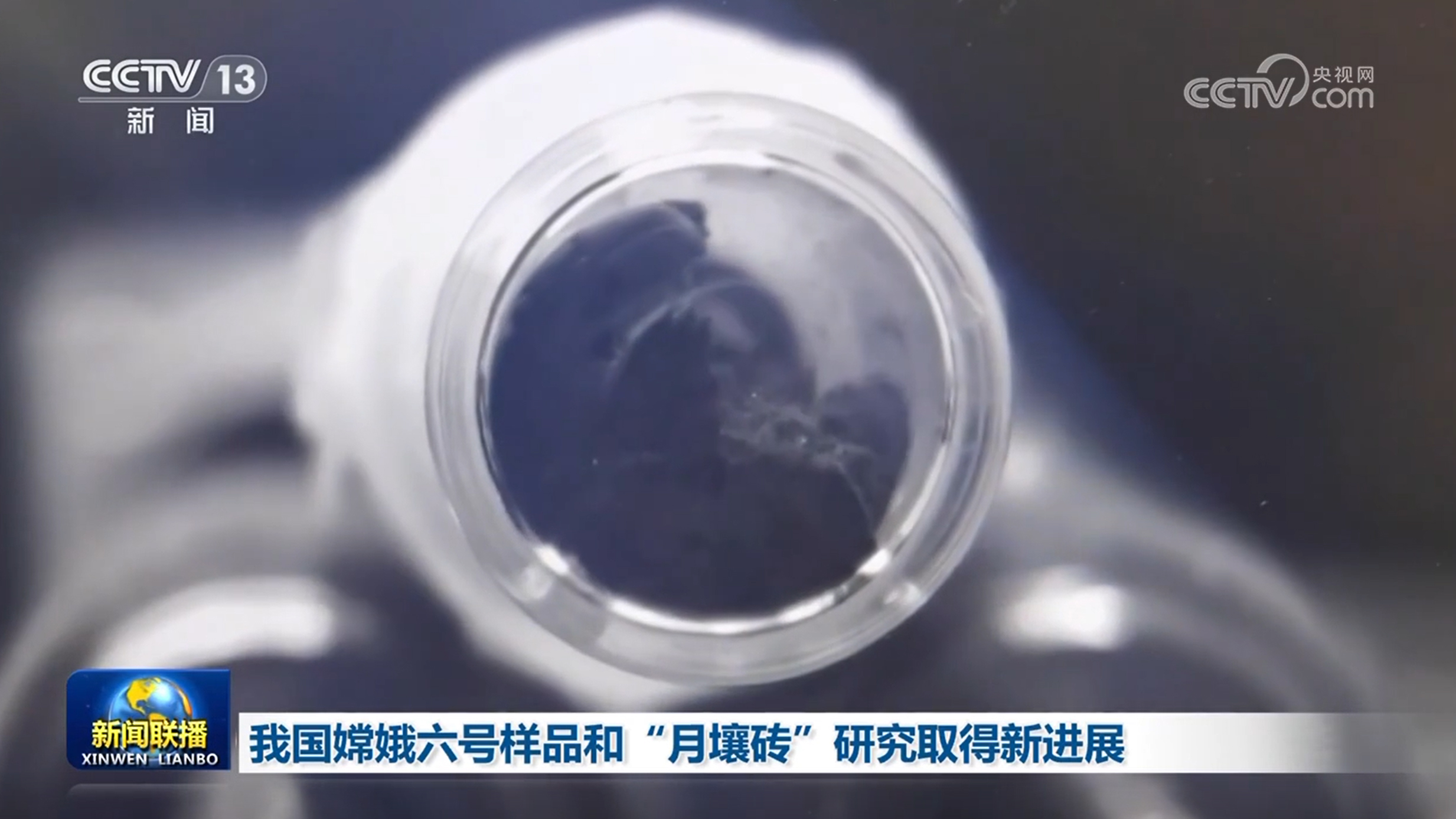
我国嫦娥六号样品和“月壤砖”研究取得新进展
Yang Shi Wang· 2025-11-25 12:19
Group 1 - The core finding from the research on Chang'e 6 lunar samples is the successful resolution of the "viscosity mystery" of the lunar regolith on the far side of the moon, which exhibits more complex particle shapes and rougher surfaces compared to the near side, leading to increased friction and significant molecular and electrostatic interactions [1] - The research indicates that the lunar regolith samples from the far side display distinct viscous characteristics due to these enhanced interactions [1] Group 2 - A recent development from the team at Huazhong University of Science and Technology involves the creation of simulated "lunar bricks," which have shown good condition after one year of exposure to extreme space environments and temperature variations [2] - The research team plans to conduct a three-year space experiment with the simulated "lunar bricks" to gather important data for lunar exploration and base construction [2]

武汉,一座离月亮很“近”的城市
Chang Jiang Ri Bao· 2025-06-23 00:21
Core Insights - Wuhan is emerging as a hub for innovation and education, particularly in the fields of space exploration and technology, attracting students to pursue their studies there [1][9] - The city is home to several universities that are actively involved in space research, including the development of materials for lunar missions and the study of lunar soil [2][5][7] Group 1: Lunar Exploration and Research - Wuhan Textile University and China University of Geosciences (Wuhan) have made significant contributions to China's lunar exploration efforts, including the development of a national flag for lunar missions and the study of lunar soil [2][3][6] - The teams have faced numerous challenges, including creating materials that can withstand the harsh lunar environment, with extensive testing leading to breakthroughs in material science [2][4][6] - The successful return of lunar samples from the Chang'e 5 mission has provided new opportunities for research and development in planetary science within Wuhan [5][6] Group 2: Educational Opportunities and Innovations - Wuhan's universities are fostering a new generation of scientists and engineers, with students actively participating in groundbreaking research projects related to lunar exploration and space technology [7][9] - The establishment of comprehensive academic programs in planetary geology and related fields is attracting young talent to the region, enhancing its reputation as a center for scientific research [8][9] - Innovative projects, such as the development of lunar bricks for potential construction on the moon, are being pursued by students and faculty, showcasing the ambitious goals of these institutions [7][8]