武汉云

Search documents
锚定数智经济一线城市,武汉有底气
Chang Jiang Ri Bao· 2026-02-03 00:50
Core Insights - Wuhan is accelerating its development as a leading city in the digital economy, with a focus on integrating artificial intelligence across various sectors [1][2][7] - The city aims to achieve a scale of 100 billion yuan in its artificial intelligence industry by the end of 2025, with over 1,300 related enterprises and a notable presence in the Forbes China AI Technology Companies TOP 50 [2][5] Group 1: Development Plans and Goals - The Wuhan Municipal Committee has approved a three-year action plan (2026-2028) to enhance the city's digital economy [1][7] - The plan emphasizes the transition from a digital economy to a smart economy, indicating a systemic transformation in urban development and industrial forms [1][2] Group 2: Industry Integration and Applications - The concept of "smart economy" is defined as the deep integration of AI with various industries, representing an advanced stage of digital economic development [2] - AI applications are already evident in multiple sectors, such as telecommunications, automotive, and healthcare, showcasing significant improvements in efficiency and capabilities [2][3] Group 3: Infrastructure and Talent - Wuhan boasts advanced infrastructure, including 40 5G base stations per 10,000 people and 13 intelligent computing centers, positioning it as a leader in digital infrastructure [4] - The city has a strong talent pool with over 90 universities, including 33 with AI programs, contributing to its competitive edge in AI research and development [4][5] Group 4: Ecosystem and Innovation - The establishment of a global industrial partner conference in Wuhan signifies the city's commitment to building a comprehensive ecosystem for smart innovation [4] - The city has identified 103 typical AI application scenarios across eight major fields, indicating a robust framework for supporting AI integration into the economy [5][6] Group 5: Future Directions - The upcoming action plan will focus on eight key tasks, including smart industry transitions and data element development, to create a closed-loop system connecting technology, industry, and value [7] - Wuhan's journey from a digital economy to a smart economy is characterized by technology-driven, industry-supported, and scenario-led transformations [7]
华为云AI CITY战略落地,武汉、石家庄等成智慧城市典范
Guan Cha Zhe Wang· 2025-11-17 15:04
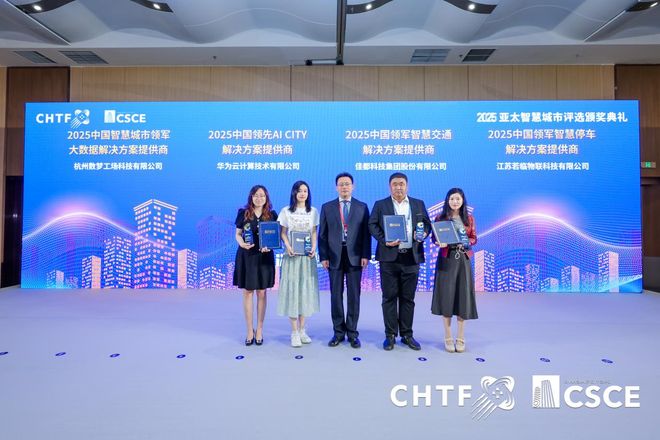
Core Insights - The 27th China International High-Tech Achievements Fair was successfully held in Shenzhen, focusing on the transformation of smart cities through AI and computing power [1] - Huawei Cloud received multiple awards, including "2025 Leading Solution Provider for Smart Cities in China" and "2025 Leading AI CITY Solution Provider" [1][3] - The development of smart cities in China is transitioning from "cloud as the norm" to "AI as the standard" [3] Huawei Cloud's Contributions - Huawei Cloud's AI CITY concept aims to drive urban modernization by integrating AI technology with infrastructure and data resources [3] - The company has partnered with various cities to implement smart city solutions, resulting in numerous awards for cities like Wuhan, Shijiazhuang, and others [1][3] Case Studies of Smart City Initiatives - Wuhan has developed a digital public infrastructure called "Wuhan Cloud," serving 124 units and integrating over 400 business systems [4] - Shijiazhuang's "Kunpeng Government Cloud" has been operational for over 1,000 days with zero incidents, providing services to over 30 units [5] - Xiangyang has implemented an AI traffic light system, improving traffic efficiency by over 15% [5] - Yancheng has created a city management platform that enhances governance efficiency through AI and data integration [6] - Karamay has achieved 95% of its government systems on the cloud, introducing a digital government assistant named "Xiao Ke" [7] - Bao'an and Qianhai are establishing an innovation center for embodied intelligence robotics, focusing on cutting-edge technology [8] - Huadu District in Guangzhou is leveraging "digital twin" technology to enhance governance and public services [9] - Changping District in Beijing is developing a deep-thinking AI governance model, integrating various AI capabilities [10] Market Position - Huawei Cloud has served over 800 government cloud projects in China since 2012 and holds a 23.3% market share, ranking first in the government cloud market [10][11]