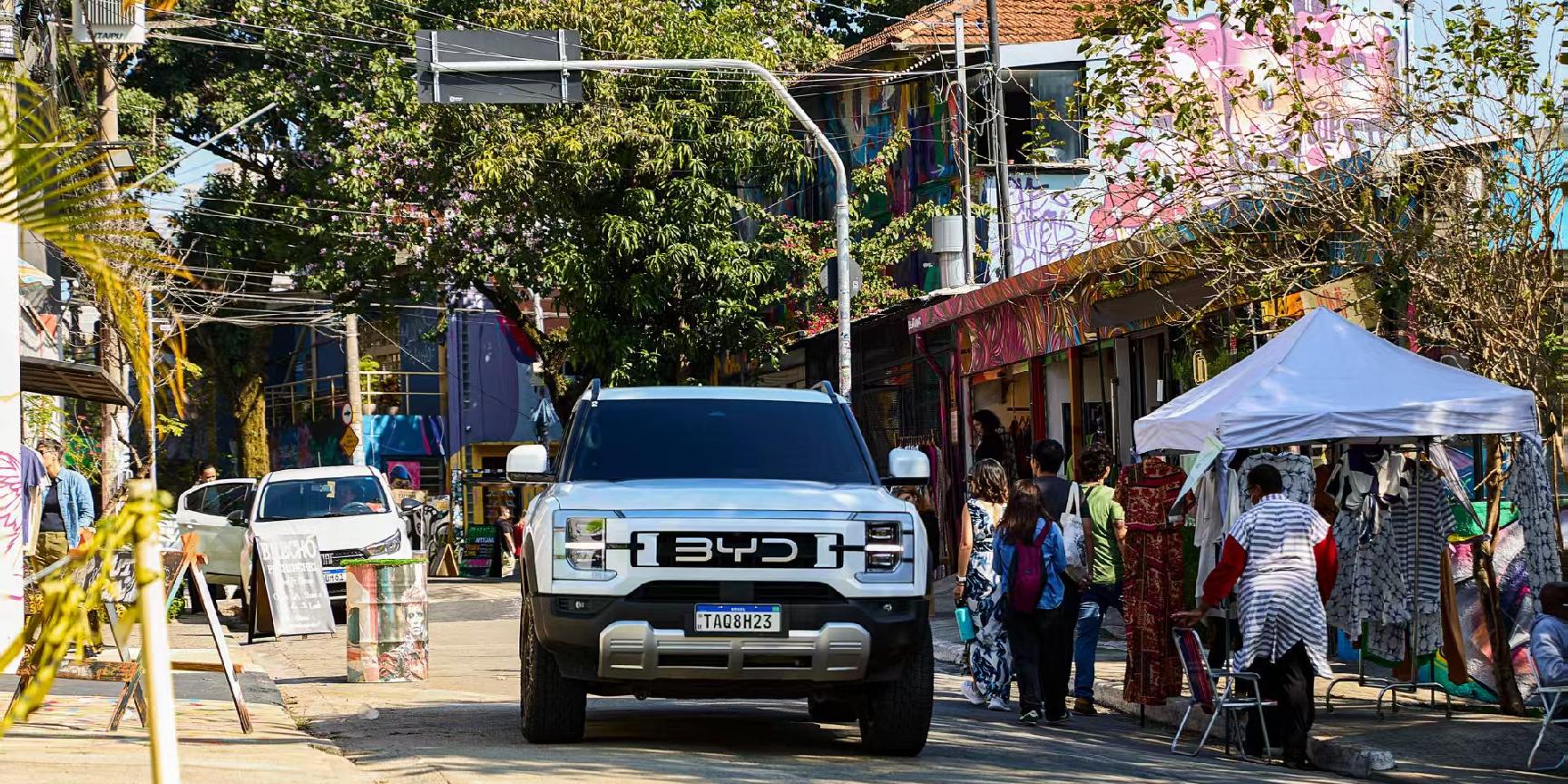
比亚迪元系列

Search documents
低价竞争的风吹向了海外
Zhong Guo Qi Che Bao Wang· 2025-08-22 10:40
证券调研机构BIMB Securities Research最近的一份调研报告显示,在马来西亚,一场围绕价格的较量正随着中国"出海"汽车厂商的不断行动 而升温。事实上,不止马来西亚,在俄罗斯、澳大利亚、巴西等海外市场,中国汽车产品也面临"零利润运营"等质疑。中国汽车产品的低价竞争 之风吹向海外之后,给中国汽车产品的全球化发展带来了新挑战。 被指"零利润运营" 证券调研机构BIMB Securities Research的调研显示,不久前,比亚迪在马来西亚当地推出2025款Atto 3 Ultra(国内对应车型为比亚迪元系列), 定价12.38万林吉特(约人民币21万元),较前代车型直接下调了2.6万林吉特(约人民币4.42万元)。同时,该车型也在首发期给出了11.88万林 吉特(约人民币20.2万元)的限时售价。不仅比亚迪,其他中国品牌也在下调产品售价。比亚迪降价后奇瑞迅速跟进,将奇瑞Omoda E5的价格 从14.68万林吉特(约人民币24.95万元)下调至11.98万林吉特(约人民币20.36万元),降幅超过18%。双方在价格上开展了激烈竞争。在该调 研机构看来,这些激进的定价策略,已构成价格导向竞争逐步 ...



中国汽车“二征”巴西,比亚迪开启新能源狂欢叙事
Jing Ji Guan Cha Wang· 2025-07-11 23:31
Core Viewpoint - The news highlights the significant progress of BYD in Brazil, including the inauguration of its passenger car factory and the growing presence of Chinese automotive brands in the Brazilian market, driven by local production and the increasing demand for electric vehicles. Group 1: BYD's Investment and Local Production - BYD's factory in Camaçari, Bahia, represents an investment of 5.5 billion reais (approximately 710 million yuan) and aims to produce 150,000 electric and plug-in hybrid vehicles, creating 20,000 local jobs [6][7][12] - The factory's establishment follows the closure of a Ford assembly plant, reviving hope for local workers and the economy [6][7] - BYD's local production strategy aligns with the broader trend of Chinese automotive companies expanding into overseas markets [6][12] Group 2: Market Potential and Growth - Brazil's automotive market is substantial, with a size of approximately 2 million vehicles, and is projected to grow by 14.1% in 2024, reaching 2.6349 million new car sales [14] - BYD's sales in Brazil are expected to reach 76,800 units in 2024, capturing a market share of 3.1%, while Chery is projected to sell 60,900 units, marking a 93.6% year-on-year increase [16] - The Brazilian market is unique as it lacks domestic automotive brands, with all vehicles sold being foreign brands, providing an opportunity for Chinese brands to gain market share [14][16] Group 3: Challenges and Competitive Landscape - Brazil imposes high tariffs on imported vehicles, which has prompted BYD and other Chinese companies to establish local manufacturing to avoid these costs [19] - The Brazilian automotive market has experienced volatility, with past peaks and declines affecting both local and foreign manufacturers [22] - BYD faces competition from established foreign brands, but its focus on high-tech, mid-to-high-end products differentiates it from the perception of Chinese vehicles as low-cost alternatives [24][30] Group 4: Future Prospects and Strategic Initiatives - BYD plans to localize its entire supply chain in Brazil, including battery production, to enhance its competitive edge [33][37] - The company is also establishing two R&D centers in Brazil, indicating a commitment to long-term growth and innovation in the region [34][37] - The Brazilian government is promoting energy transition, which supports the growth of electric vehicles and aligns with BYD's product offerings [25][31]