比特币现货交易所交易基金(ETF)

Search documents
美投资者远离比特币,继续下跌担忧加剧
日经中文网· 2026-02-27 02:53
Core Viewpoint - Bitcoin is currently hovering around the $60,000 range, having dropped to about half of its all-time high, with concerns about further declines as U.S. investment funds are flowing out of the market [2][4]. Group 1: Market Trends - In the past 30 days, the outflow of funds from major cryptocurrencies like Bitcoin, Ethereum, and leading stablecoins has reached $40 billion, marking the largest outflow since the FTX Trading collapse in 2022 [6]. - The price of Bitcoin has been in a downward trend since reaching a historical high of $126,000 in October 2025, exacerbated by stalled progress on the Digital Asset Market Clarity Act and the nomination of Kevin Walsh as the next Federal Reserve Chair [4][6]. Group 2: Institutional Investor Behavior - The outflow of funds is primarily attributed to U.S. institutional investors, with the Coinbase premium indicator reflecting a lack of buying interest among American investors, as it has remained negative since late 2025 [6][7]. - The Bitcoin spot ETF listed in the U.S. has seen outflows exceed inflows since November 2025, with expectations of a record four consecutive months of net outflows starting in February 2026 [6]. Group 3: Price Correlation and Future Outlook - Bitcoin was initially included in asset allocations by U.S. institutional investors to enhance diversification, but its price has increasingly correlated with traditional assets like stocks since fall 2025, leading to significant sell-offs [7]. - Analysts suggest that the potential for a price reversal hinges on policy support, particularly regarding the Digital Asset Market Clarity Act, with some expressing skepticism about the likelihood of its passage [8].


韩国允许企业投资加密货币,年度上限为自有资本5%
Sou Hu Cai Jing· 2026-01-12 03:41
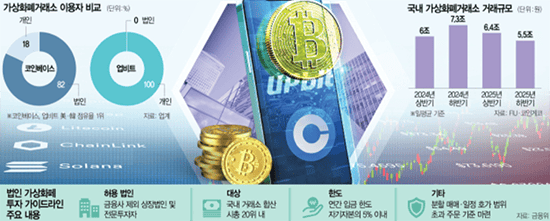
Core Viewpoint - South Korea's financial authorities are set to implement a second phase of cryptocurrency investment policies, allowing listed companies and qualified institutional investors to invest up to 5% of their own capital in cryptocurrencies like Bitcoin and Ethereum, potentially attracting around 3,500 institutions and companies with significant capital [1][2]. Group 1: Regulatory Developments - The final rules for the cryptocurrency investment policy are expected to be announced in January or February, with companies likely permitted to start trading by the end of the year [1]. - The proposed regulations include a 5% annual investment cap on companies' own capital to mitigate risks associated with large-scale investments in cryptocurrencies [1][2]. - The investment scope will be limited to the top 20 cryptocurrencies by market capitalization on South Korea's five major exchanges, with the list updated biannually based on trading data [1]. Group 2: Market Impact and Comparisons - The inclusion of stablecoins, particularly USD stablecoins, is still under discussion by South Korean financial authorities [2]. - The introduction of institutional investment is expected to accelerate the issuance of Korean won stablecoins and promote the launch of Bitcoin spot exchange-traded funds (ETFs) [2]. - While the approval for cryptocurrency investment is welcomed, the 5% cap is viewed as low compared to more open policies in the US, Japan, the EU, and Singapore, which may hinder capital inflow and the growth of professional cryptocurrency investment firms [2]. Group 3: Future Projections - By the second half of 2025, the average daily trading volume on South Korean cryptocurrency exchanges is projected to be approximately 5.5 trillion won [3].
私募科技巨头或在IPO中丧失稀缺性溢价
Xin Lang Cai Jing· 2025-12-17 16:11
Core Viewpoint - The scarcity of assets, such as precious metals and private tech companies, significantly contributes to their value, leading investors to pay high valuations for companies like SpaceX and OpenAI [2][8]. Investment Landscape - Wealth managers and fund executives have profited by connecting clients with hot private investment projects, resulting in substantial gains for some clients so far [2][8]. - Many of the companies receiving investments are in highly competitive industries and are burning cash, making future profitability uncertain [2][8]. IPO Considerations - There is speculation that SpaceX and Anthropic may launch IPOs in 2026, followed by OpenAI, which could diminish their current scarcity and lead to a drop in valuations [2][8]. - Historical examples indicate that once assets become widely available, their valuations may decline, as seen in the cryptocurrency and real estate markets [2][9]. Performance of Assets - The performance of assets like cryptocurrencies and SPACs has been disappointing, serving as a warning for potential investors considering buying into private tech giants at current valuations [3][9]. - The average market value of companies that went public via SPACs from 2021 to 2024 has decreased by two-thirds, highlighting the risks associated with such investments [10]. Real Estate Investment Trusts (REITs) - Blackstone's REIT, which once reached a size of $70 billion, faced challenges as rising interest rates and declining commercial real estate prices led to investor redemption attempts being restricted [5][11]. - Many investors entered the market at unfavorable times, missing out on gains and instead facing losses as the market turned [12]. Market Trends - The majority of newly listed stocks this year have not provided significant returns to public market investors, with many experiencing substantial declines post-IPO [12]. - The high valuations of current private companies suggest that individual investors may struggle to achieve even short-term gains after their IPOs, as the focus shifts from scarcity to scrutiny of profitability and growth potential [12].