
民营企业科创债

Search documents
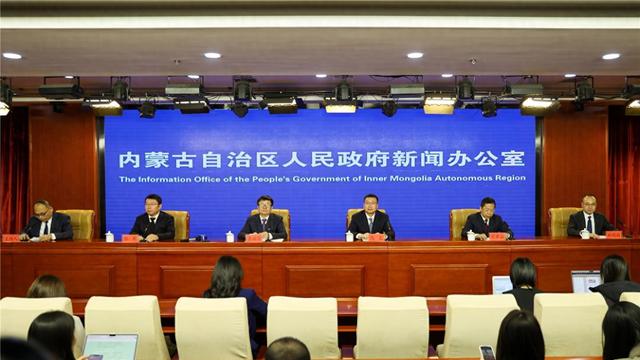
“十四五”北疆答卷| 减税降费超300亿!内蒙古营商环境有温度、有效率
Nei Meng Gu Ri Bao· 2025-11-25 09:31
Core Viewpoint - Inner Mongolia is actively enhancing its business environment through a series of reforms and initiatives aimed at promoting high-quality development, as highlighted in the recent press conference on the "14th Five-Year Plan" [1] Group 1: Business Environment Optimization - Inner Mongolia has implemented four versions of action plans to optimize the business environment, introducing a total of 511 reform measures [3][4] - The satisfaction of enterprises regarding the business environment has steadily improved over five consecutive years, as indicated by monitoring from 2020 to 2024 [3] Group 2: Policy Implementation - A series of targeted policies, including tax reductions and financial support, have been effectively implemented, with the total amount of tax reductions and refunds exceeding 30 billion in 2024 [5] - Innovative financial products, such as "Tax E Loan," have been promoted to broaden financing channels for enterprises [5] Group 3: Innovation and Infrastructure - The "Technology-Driven Inner Mongolia" strategy has been deeply implemented, leading to significant improvements in innovation capabilities, with the number of effective invention patents per ten thousand people doubling since 2020 [6] - The reliability and stability of municipal facilities have been enhanced, contributing to a stronger foundational capacity [6] Group 4: Legal and Regulatory Framework - A new legal framework has been established to support the optimization of the business environment, focusing on market registration, social credit, and foreign trade [7] - The transparency of government actions has improved with the implementation of administrative power lists, ensuring that no permits are issued outside the established lists [8] Group 5: Regulatory Practices - Over 6,300 administrative enforcement entities in Inner Mongolia have adopted list-based management, increasing the proportion of minor violations exempt from penalties from 11% in 2020 to 26% [9] - A credit-based regulatory approach has been introduced, reducing interference with compliant enterprises while closely monitoring those with credit issues [9] Group 6: International Trade and Investment - The scale of foreign trade cooperation has expanded, with innovative investment attraction models and support for the private economy, resulting in over 600 cooperation agreements signed during the five sessions of the China-Mongolia Expo [10] - A comprehensive cross-border transportation network has been established, significantly enhancing the capacity of key ports and facilitating trade [11] Group 7: Customs and Clearance Efficiency - The construction of "smart ports" and "digital borders" has been actively promoted, leading to a significant increase in customs clearance efficiency, with some ports reducing clearance times from half a day to just 30 minutes [13] Group 8: Government Services - The efficiency of government services has improved, with the online processing rate of administrative matters rising from 52% in 2020 to 80% [14] - A comprehensive feedback mechanism for enterprise service requests has been established, ensuring effective resolution of issues faced by businesses [15]

南京银行杭州分行:聚生态之力 助民企展新枝
Xin Hua Wang· 2025-08-08 08:43
Core Viewpoint - The article highlights the evolving role of financial institutions, particularly Nanjing Bank's Hangzhou branch, in supporting the growth of private enterprises in Zhejiang, transitioning from traditional lenders to partners in development and innovation [1][2]. Group 1: Financial Support for Private Enterprises - Private enterprises are crucial for high-quality development and technological innovation, yet they face significant challenges in financing [2]. - Nanjing Bank's Hangzhou branch provided over 10 million yuan in loans to Diwei II Space Technology Co., Ltd., aiding its growth during its early development phase [2]. - The bank has supported over 2,500 technology enterprises with financing exceeding 65 billion yuan, with a technology loan balance of over 9 billion yuan, addressing the financing difficulties faced by many tech firms [3]. Group 2: Innovative Financial Products - The demand for diverse funding solutions among private enterprises is increasing, necessitating innovative financial products to meet their varied needs [4]. - Nanjing Bank's Hangzhou branch successfully issued the first private enterprise technology bond in response to the new policy, with a total underwriting scale of 2.25 billion yuan for eight bonds [5]. - The bank has tailored its "Provincial Credit Loan" product to meet the urgent short-term financing needs of local manufacturing enterprises, providing over 30 million yuan through 21 loans [5]. Group 3: Building an Ecosystem - Nanjing Bank has been recognized as the "Most Satisfied Bank for Private Enterprises" in Zhejiang, reflecting its commitment to creating a collaborative ecosystem for private businesses [6]. - The bank has facilitated connections between enterprises and potential partners, exemplified by its support for Liang'an Technology, which resulted in an 800,000 yuan order [6]. - The "Xinsixiang" platform developed by the bank integrates various resources, promoting collaboration and breaking down information silos within the industry [7].
