永续债券

Search documents
债券翻译:跨越金融与法律的语言桥梁
Sou Hu Cai Jing· 2026-02-15 06:18
Core Viewpoint - The translation of bond market literature is crucial for knowledge transfer, requiring precision in language and alignment with financial concepts, legal terms, and market rules [1][2]. Group 1: Characteristics of Bond Translation - Bond translation features complexity in terminology, such as the distinction between convertible bonds and exchangeable bonds, which have fundamentally different rights structures [1]. - Legal texts in bond issuance documents must maintain consistency in legal effectiveness while adhering to the expression habits of the target language's judicial practice [1]. - Differences in market conventions, such as bond maturity classifications and yield calculation methods, necessitate that translators possess cross-market knowledge [1]. Group 2: Practical Considerations in Bond Translation - Conceptually, bond translation must ensure clear correspondence of professional terms like coupon rate, yield to maturity, and duration in the target language to avoid misunderstandings due to cultural differences [2]. - Structurally, financial statements, risk factor lists, and legal declarations in bond issuance documents should retain their original format to allow professional readers to quickly locate key information [2]. - Normatively, expressions related to financial regulation, accounting standards, and tax policies must align with the official terminology of the target market, particularly in referencing international financial reporting standards and U.S. GAAP [2]. Group 3: Applications of Bond Translation - The increasing internationalization of the RMB and the opening of the bond market have expanded the scenarios for bond translation, aiding international investors in understanding the credit status and policy direction of issuers [2]. - In the green bond market, professional translation facilitates international benchmarking of environmental performance indicators and carbon accounting methods [2]. - During the cross-border issuance of corporate bonds, the legal effectiveness and commercial information in prospectuses must be secured through precise translation [2]. Group 4: Case Study - A representative case is the Asian Infrastructure Investment Bank's first global bond issuance, where the translation team addressed differences in the judicial interpretation of "force majeure clauses" between civil law and common law systems [3]. - The collaboration between legal experts and financial translators resulted in a balanced expression in three language versions, ensuring both legal enforceability and market understanding [3]. - This case illustrates that excellent bond translation serves as an art of communication that bridges legal system differences [3].


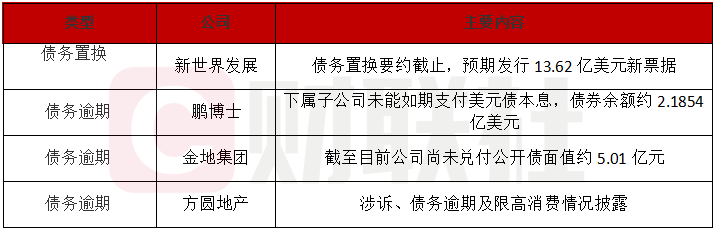
新世界发展完成债务置换要约 将发行13.62亿美元新票据
Xin Lang Cai Jing· 2025-12-05 02:17
Group 1: New World Development - New World Development announced the completion of a debt exchange offer, with a total of approximately $1.362 billion in new notes expected to be issued, which is 71.7% of the original issuance cap of $1.9 billion [1] - As of June 30, 2025, the company's total debt reached HKD 146.1 billion, with net debt at HKD 120.1 billion, and short-term debt decreased by HKD 35 billion to HKD 6.6 billion [2] - The company reported a revenue decline of 22.64% year-on-year to approximately HKD 27.681 billion for the first half of 2025, with a significant increase in shareholder losses to HKD 16.302 billion, up 38.07% year-on-year [2] Group 2: Peng Bo Shi - Peng Bo Shi Telecom Media Group announced that its subsidiary failed to repay approximately $218.54 million in principal and interest on a bond due December 1, 2025, due to liquidity issues [3] - The company is negotiating with creditors for an extension and restructuring plan, facing potential litigation risks if unresolved [3] - The "18 Peng Bo Bond" has been suspended since April 12, 2024, with the maturity date adjusted to May 25, 2026, indicating uncertainty in repayment [3] Group 3: Jin Di Group - Jin Di Group reported that it has not yet repaid public debt with a face value of approximately RMB 501 million [4][5] - The company’s revenue for the first three quarters of 2025 was approximately RMB 23.994 billion, a decrease of 41.48% year-on-year, with a net loss of RMB 5.186 billion [4] - Jin Di Group emphasizes cash flow management as a core strategy to ensure financial safety [4] Group 4: Fang Yuan Real Estate - Fang Yuan Real Estate disclosed overdue debts totaling RMB 6.306 billion and has been restricted from high consumption activities due to legal issues [6] - The company is facing a bondholder meeting on December 11, 2025, to discuss adjustments to bond repayment arrangements [6] - Fang Yuan has a total of RMB 918 million in outstanding bonds and $340 million in offshore debt, which has defaulted [6]