汇丰One账户

Search documents
外资行战略重心南移 竞逐香港财富管理“主场”
2 1 Shi Ji Jing Ji Bao Dao· 2026-02-06 10:53
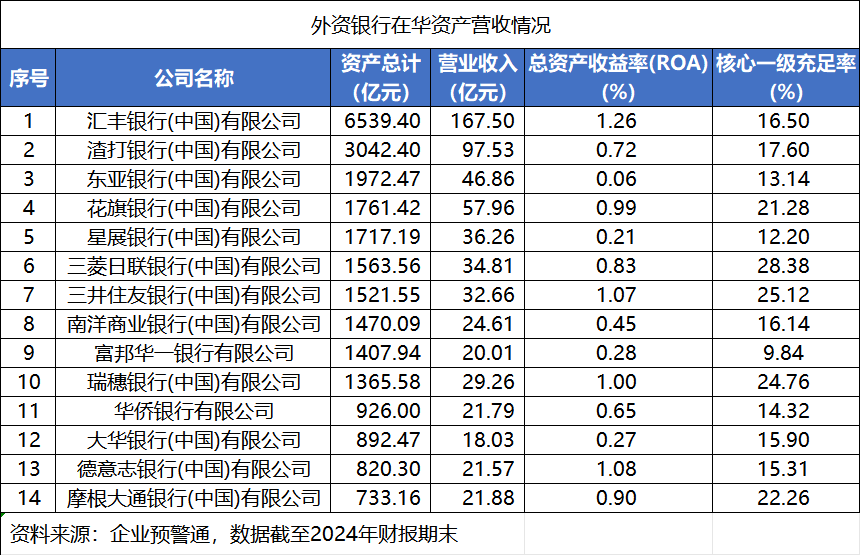
Core Viewpoint - Foreign banks in China are undergoing a significant strategic transformation due to deepening financial openness and intensified competition in the domestic banking sector, with a shift from traditional advantages to a focus on specialized services and cross-border business opportunities [1][10]. Group 1: Financial Performance and Market Challenges - As of Q3 2025, state-owned banks, city commercial banks, and private banks reported net profit growth of 2.27%, 1.73%, and 7.09% respectively, while foreign banks experienced a 19.34% decline in net profit, the largest drop among all bank types [1]. - The asset scale of major foreign banks in China shows a clear tiered structure, with HSBC China leading with over 600 billion yuan in total assets, followed by Standard Chartered, East Asia, and Citibank in the 150-300 billion yuan range [2]. Group 2: Strategic Focus on Wealth Management - Foreign banks are shifting their strategic focus from scale expansion to specialized deepening, particularly in wealth management, with Hong Kong becoming a key battleground for attracting wealth management clients [3][4]. - HSBC launched the "HSBC One Account" for mainland residents, enhancing convenience while raising the threshold for new accounts, indicating a strategic focus on high-net-worth clients [4]. Group 3: Structural Adjustments in Physical Network - Foreign banks are restructuring their physical networks in mainland China, with some institutions like HSBC and Standard Chartered reducing traditional branches while simultaneously establishing flagship wealth management branches in key cities [6][10]. - HSBC plans to increase its wealth management flagship outlets to 11 across nine major cities, emphasizing a shift towards high-value client services [6]. Group 4: Asset Management and Cross-Border Services - The asset management sector is becoming a critical area for foreign banks, with HSBC successfully launching its first local public fund custody business, marking a significant entry into the Chinese capital market [7]. - Foreign banks are also deepening their integration with local asset management firms through equity partnerships, enhancing their position in the Chinese asset management market [8]. Group 5: Future Outlook and Competitive Landscape - The transformation towards specialization and cross-border services is crucial for foreign banks' future in China, as they seek to balance global advantages with local service needs [11]. - The ability to accurately grasp structural opportunities in the Chinese market and flexibly integrate global resources with local demands will be key competitive factors in this deep adjustment phase [11].

2026年香港银行:进入全面收费时代,非港籍用户何去何从?
Sou Hu Cai Jing· 2026-01-29 10:46
Core Viewpoint - The era of "zero-cost holding of Hong Kong accounts" will officially end on January 1, 2026, as major banks in Hong Kong adjust their account management fee policies [1]. Group 1: HSBC's New Fee Policy - HSBC, as one of the largest banks in Hong Kong, will implement a new fee policy starting January 1, 2026, primarily affecting non-Hong Kong ID holders with the HSBC One account [3]. - Non-Hong Kong ID holders must maintain an average total wealth of HKD 10,000 over three months to avoid a monthly service fee of HKD 100, which totals HKD 1,200 annually [3][5]. - Local residents holding a Hong Kong ID are exempt from this new fee, reflecting the bank's protective policy towards local customers [3]. Group 2: Implementation Details and Transition Period - The new regulations will take effect on January 1, 2026, with the first three complete calendar months post-account activation serving as the assessment period [4]. - Customers who completed their applications and identity verification by December 31, 2025, will be considered "old rule customers" and will not be subject to the new TRB assessment [4]. Group 3: Comparative Analysis of Other Banks - Bank of China Hong Kong offers a more user-friendly account system with various tiers, where the lowest tier requires a minimum balance of HKD 10,000, with actual user feedback indicating current exemptions from management fees [5]. - Standard Chartered Bank has a clear differentiation strategy, with high thresholds for its priority accounts and lower thresholds for its easy wealth accounts, impacting mainland residents due to policy restrictions [5]. - Citibank targets high-net-worth individuals, requiring a monthly average balance of HKD 1.5 million to waive a management fee of HKD 500 [5]. Group 4: Cross-Border Transfer Fees - The article outlines typical fees for cross-border transfers among major banks, with HSBC's outgoing remittance fees ranging from HKD 100 to HKD 240 [7]. - Other banks, such as Bank of China Hong Kong and DBS Bank in Singapore, have varying fee structures, with some offering lower fees for electronic channels [7]. Group 5: Recommendations for Different Customer Segments - For small cross-border payment and travel needs, virtual banks in Hong Kong or basic savings accounts in Singapore are recommended due to their low-cost financial touchpoints [10]. - Middle-class global allocators should establish wealth management accounts in Hong Kong or Singapore to waive management fees and reduce cross-border transfer costs [10]. - High-net-worth individuals should leverage global priority banking or private banking services to achieve account linkage across borders, ensuring fee waivers and competitive exchange rates [10].