资产管理

Search documents
万科海外发布年度业绩,收入5.97亿港元 将持续关注优质投资机遇
Zhi Tong Cai Jing· 2026-03-31 12:23
Core Viewpoint - Vanke Overseas (01036) reported a revenue of HKD 597 million for the year ending December 31, 2025, representing a year-on-year decrease of 23.05% and a shareholder loss of HKD 92.393 million, an increase of 82.85% compared to the previous year [1] Financial Performance - The revenue for the year was approximately HKD 596.7 million, down from HKD 775.5 million in 2024, marking a decline of about 23% [1] - The increase in shareholder loss to HKD 92.393 million resulted in a loss per share of HKD 0.24 [1] Factors Influencing Performance - The decline in revenue was primarily due to a reduction in the number of units sold in the Lianfang I project and decreased income from asset management services, attributed to reduced investment capital from contracting parties in Hong Kong, the UK, and the US [1] Future Outlook - The board anticipates a recovery in residential prices by 2026, driven by lower borrowing costs and improved buyer sentiment [1] - The company aims to maintain a healthy financial status to seize future market opportunities while focusing on quality investment opportunities to create value for shareholders [1] Property Management Expectations - The company expects the Regal Center in Hong Kong to maintain its occupancy rate and average rent in 2026, with serviced apartments and hotels also projected to sustain occupancy and average rental rates [1] - The Lianfang I residential project is expected to continue sales, with related transactions recognized as units sold are delivered in 2026 [1] - The asset management business is anticipated to continue contributing stable income and profits in 2026 [1]

关于调整银河水星现金添利货币型集合资产管理计划管理费适用费率公告
Xin Lang Cai Jing· 2026-02-25 17:54
Group 1 - The announcement mentions that the term "fund" includes securities company collective products that have been modified in accordance with the operational guidelines of the "Guidance on Regulating Financial Institutions' Asset Management Business" [1] - The asset management company commits to managing and utilizing the collective plan assets with honesty and diligence, but does not guarantee profits or minimum returns for investors [1] - Investors are advised to carefully read the asset management contract, prospectus, and product summary before investing in the collective plan [1] Group 2 - The announcement is issued by Galaxy Jinhui Securities Asset Management Co., Ltd. on February 26, 2026 [2]
如何应对不确定环境?全球最大主权基金掌门人最新对话:在风浪中前行的人,先要把自己“绑在桅杆上”……︱重阳荐文
重阳投资· 2026-02-24 07:32
Core Viewpoint - The article emphasizes the importance of discipline and strategy in long-term investing, particularly in the context of the global economic landscape and technological advancements. It highlights the approach of the Norwegian sovereign wealth fund, which relies on predefined rules for asset allocation to navigate market volatility and achieve consistent returns over time [1][2]. Group 1: Investment Strategy and Philosophy - The Norwegian sovereign wealth fund has achieved an annualized return of 6%-7% over the past thirty years by adhering to a disciplined investment strategy that involves automatic rebalancing between stocks and bonds [2][22]. - The fund's current asset allocation consists of 70% in equities and 30% in bonds, with some investments in real estate and renewable energy [2][20]. - The fund operates under a clear mandate from the Norwegian government, which includes specific guidelines on investment strategies and regional allocations, ensuring stability and transparency [20][21]. Group 2: Impact of Technology and AI - AI is seen as a transformative force that could exacerbate inequality, with countries and companies that effectively adopt AI rapidly outpacing those that do not [2][41]. - The fund has fully integrated AI tools into its operations, with 100% of employees using large model tools and 65% participating in code enhancement work, indicating a significant shift in organizational structure [2][45]. - Despite the potential of AI, the fund acknowledges that productivity gains from AI have not yet been fully realized, with a pivotal change expected once "AI agents" become mature [2][46]. Group 3: Ethical Considerations and Climate Change - The fund advocates for clear "net-zero" pathways for companies and engages in constructive dialogue regarding climate issues, reflecting its commitment to responsible investing [29][30]. - The fund's origins in oil wealth do not contradict its push for decarbonization; rather, it emphasizes the ethical use of wealth generated from natural resources [28][29]. - Climate risk is viewed as a financial risk, with the fund recognizing its potential impact on inflation and inequality, particularly affecting developing nations [28][29]. Group 4: Navigating Uncertainty - The fund does not make tactical adjustments based on geopolitical changes, as historical data shows that market resilience often defies intuitive judgments [36][38]. - A diversified and long-term investment approach is deemed essential for managing uncertainty in the current global environment [37][38]. - The fund's historical performance, with an annualized return of approximately 6%-7%, underscores the effectiveness of its long-term strategy amidst geopolitical fluctuations [38].


云南省7470个县级以上党政机关创建成为节约型机关
Xin Lang Cai Jing· 2026-02-14 15:34
Core Insights - Yunnan Province aims to establish 7,470 energy-saving government agencies by 2025, promoting efficient asset management and a culture of frugality in government operations [1] - Over the past five years, Yunnan has developed a high-quality asset management system, achieving a significant increase in the unified registration rate of provincial office properties from 29% to 83% [1] - The province has implemented a comprehensive management system for public vehicles, effectively monitoring usage and preventing misuse [1] Group 1 - The provincial asset management system identified over 239,000 key administrative assets, with 2.17 billion yuan in assets activated at the provincial level [2] - The implementation of 15 measures and 27 specific regulations has led to the activation of 153,600 assets and savings of 1.095 billion yuan [2] - Yunnan has completed its energy-saving targets for public institutions during the 14th Five-Year Plan, with 2,193 distributed photovoltaic projects expected to generate 8 billion kilowatt-hours annually [2] Group 2 - The province has fostered 9 green low-carbon public institutions and 8 national water efficiency leaders, along with 17 energy efficiency leaders [2] - The government is exploring a "government supervision + market operation" model to enhance asset management and procurement efficiency [2]
资管能力再获权威认可 晋商银行以专业服务书写普惠金融新篇章
Sou Hu Cai Jing· 2026-02-13 01:21
Core Viewpoint - Jinshang Bank has been awarded the "Mixed Asset Management Award" for the second consecutive year in the 2025 China Asset Management "Star Gathering" selection, highlighting its strong foundation and professional capabilities in wealth management [1] Group 1: Award Recognition and Performance - Jinshang Bank's two flagship FOF products have achieved impressive performance, with annualized returns of 7.54% and 7.31% respectively, and total assets growing from under 2 million to 400 million within less than a year [1] - The bank's total assets reached 398 billion as of September 2025, ranking 82nd in the "2025 China Banking Industry Top 100" list, indicating continuous improvement in its overall strength [1] Group 2: Strategic Focus and Product Development - Jinshang Bank emphasizes the importance of asset management as a key financial link between residents' wealth and the real economy, aiming to meet diverse financial needs while safeguarding investors' rights [2] - The bank launched two FOF products in April and May 2025, targeting various investment opportunities across A-shares, bonds, and gold, providing a one-stop asset allocation solution [2] Group 3: Industry Trends and Future Outlook - The wealth management industry is experiencing significant growth, with the banking wealth management sector expected to increase by 3.34 trillion in 2025, driven by low interest rates and a growing awareness of asset allocation among investors [3] - Predictions indicate that the banking wealth management scale will exceed 38 trillion by 2026, with a year-on-year growth rate expected to surpass 12% [3] Group 4: Future Development Goals - Jinshang Bank aims to enhance its comprehensive competitiveness in wealth management and private banking, focusing on optimizing cross-market and multi-asset investment strategies [4] - The bank plans to transition from traditional product sales to comprehensive service models, creating a full lifecycle wealth management service system to help local residents achieve stable wealth growth [4]
2026新年献词|兴证全球基金董事长庄园芳:“投资者获得感”成发展新共识 力争与持有人长期共赢和长久同行
Xin Lang Cai Jing· 2026-02-12 09:06
Core Viewpoint - The article emphasizes the importance of the public fund industry in connecting resident wealth with the real economy, highlighting the need for high-quality development and a focus on investor interests as the industry evolves [1][4][12]. Group 1: Industry Overview - The public fund industry is at a new starting point in 2026, coinciding with the beginning of the national "14th Five-Year Plan," with trends of wealth transfer to financial assets and steady inflow of long-term funds continuing [3][13]. - The past year saw the Shanghai Composite Index rise above 4000 points for the first time in a decade, indicating a recovery in investor confidence and willingness to allocate funds [3][12]. - A series of top-level design and reform measures aimed at promoting high-quality development in the industry have been implemented, guiding the sector back to its core mission of managing client assets [3][13]. Group 2: Strategic Focus - The company aims to prioritize the interests of its investors, maintaining asset management responsibilities and striving to create value for clients [5][14]. - The product lineup will continue to be developed based on the real needs of investors, with a focus on creating competitive products that cater to various risk-return profiles [5][14]. - The company is enhancing its research and investment system through professional collaboration and mentorship, aiming to cultivate a new generation of fund managers with strong industry insights and risk awareness [5][14]. Group 3: Service Commitment - The company seeks to provide not only quantifiable investment returns but also a sense of trust and security for clients, offering comprehensive asset allocation solutions tailored to their lifecycle needs [6][15]. - Continuous, professional, and sincere communication will be maintained to ensure long-term win-win relationships with investors [6][15].
我国资产管理行业进入稳健发展新阶段
Jin Rong Shi Bao· 2026-02-11 01:43
Core Insights - The asset management industry in China is projected to reach a total scale of 184.53 trillion yuan by the end of 2025, reflecting a growth of 13.1% compared to the previous year [1][2] Group 1: Industry Growth and Structure - The asset management industry is transitioning from rapid expansion to a focus on quality and detailed management, influenced by regulatory policies and market changes [2] - By the end of 2025, the breakdown of the asset management industry includes: bank wealth management at 33.29 trillion yuan, public funds at 37.71 trillion yuan, private funds at 22.15 trillion yuan, pension funds at 6.85 trillion yuan, private asset management by securities firms at 12.30 trillion yuan, insurance fund utilization at 37.46 trillion yuan, and trust assets at 32.43 trillion yuan [2] - The number of bank wealth management products reached 46,300 by the end of 2025, marking a 14.89% increase from the beginning of the year [3] Group 2: Performance of Funds - In 2025, public fund indices showed significant performance variation, with stock fund indices achieving an annualized return of 27.84%, and actively managed stock funds reaching 33.58% [4] - The number of private securities investment fund managers decreased to 7,531, while the number of funds dropped to 80,390, although the total management scale increased by 35.8% to 7.1 trillion yuan [4] - The trust industry is experiencing a notable shift towards standardized products, with the number of standard trust products increasing by 46.93% year-on-year [4] Group 3: Insurance Asset Management - The balance of funds utilized in insurance asset management is steadily increasing, with stock investment scales for life insurance and property insurance companies growing by 50.47% and 30.28% respectively [5] Group 4: Technological Integration - The report highlights the integration of artificial intelligence in asset management, with firms like BlackRock utilizing smart investment research platforms and risk control systems to enhance decision-making [6] - The dual focus on wealth management and asset management is becoming a significant development direction for the industry, with expectations for a key transformation period over the next five years [6]
Solana 财库公司 Solmate Infrastructure 宣布不再推进与 Rock...
Xin Lang Cai Jing· 2026-02-09 13:53
Core Viewpoint - Solmate Infrastructure has decided to halt its merger plans with RockawayX due to significant changes in the market environment, aiming to enhance capital efficiency and avoid equity dilution while maintaining a strategic partnership with RockawayX [1] Company Summary - Solmate Infrastructure currently holds over 1.2 million SOL tokens [1] - The initial plan was to acquire RockawayX through an all-stock deal to create an institutional-grade Solana platform with an asset management scale exceeding $2 billion [1]
十年前的公募基金行业排名
Xin Lang Cai Jing· 2026-02-08 14:12
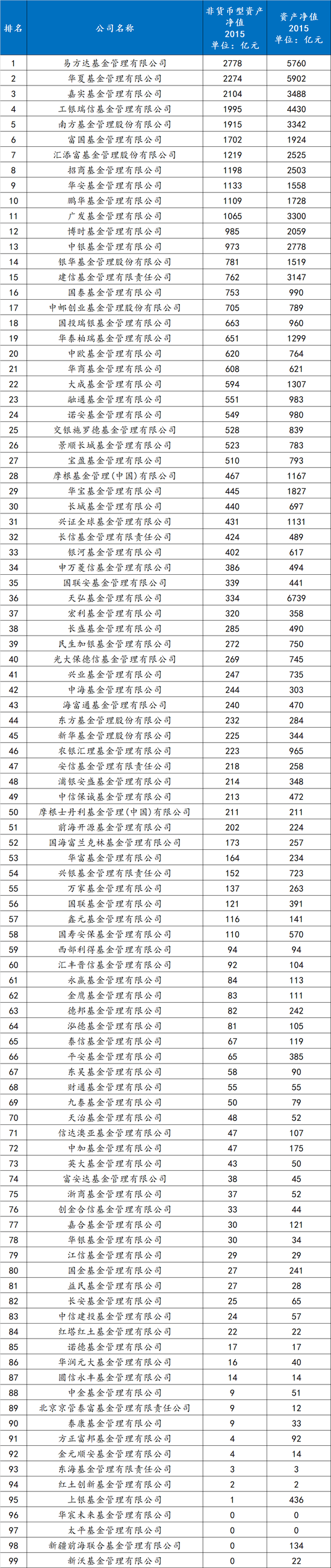
Core Insights - The asset management industry has experienced significant changes over the past decade, with some companies rising to prominence while others have faded from view [3][18] - Strong management and market mechanisms can lead to dramatic shifts in fund company rankings, while poor leadership can result in declines [2][16] Group 1: Fund Company Rankings - The top fund management companies by non-monetary asset net value in 2015 included: - E Fund Management Co., Ltd. with 277.8 billion CNY - Huaxia Fund Management Co., Ltd. with 227.4 billion CNY - Harvest Fund Management Co., Ltd. with 210.4 billion CNY [4][19] - Tianhong Fund, driven by the success of Yu'ebao, had a total scale of 673.93 billion CNY, with over 95% being monetary funds [6][22] Group 2: Industry Evolution - Many well-known names from the past have either seen their rankings decline or have become less prominent in the market [7][22] - Companies like E Fund and Huaxia have maintained strong positions, while others like GF Fund and Xingquan Fund have experienced significant changes in their market presence [10][24] - The rankings from 2015 serve as a snapshot of the industry, highlighting the impact of technological advancements, regulatory changes, and market dynamics on company performance [14][27] Group 3: Future Prospects - Some companies that are now industry leaders were not prominent in the rankings ten years ago, indicating potential for future growth among currently lesser-known firms [10][26] - The survival of smaller companies is often characterized by a focus on bond or monetary products, with many struggling to establish a foothold in equity products [14][27] - The next decade may bring further changes to the rankings, emphasizing the need for continuous effort and adaptation in the asset management industry [14][27]
外资行战略重心南移 竞逐香港财富管理“主场”
2 1 Shi Ji Jing Ji Bao Dao· 2026-02-06 10:53
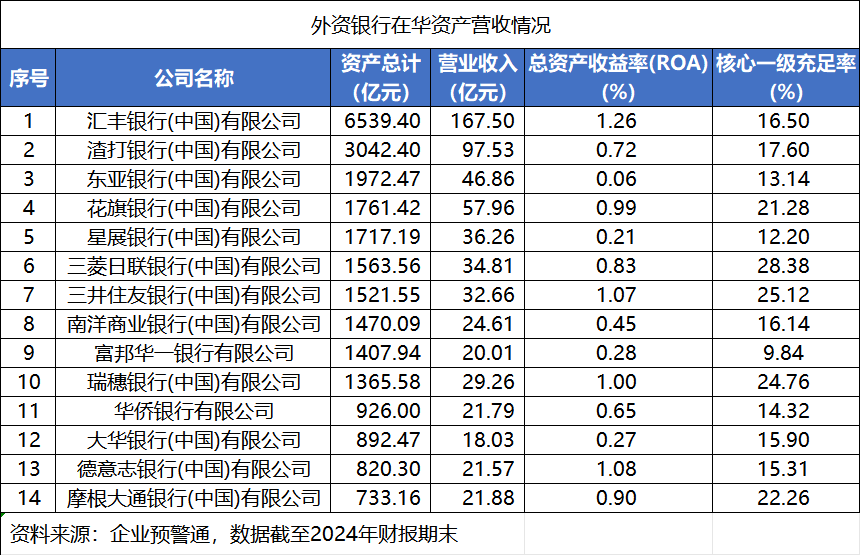
Core Viewpoint - Foreign banks in China are undergoing a significant strategic transformation due to deepening financial openness and intensified competition in the domestic banking sector, with a shift from traditional advantages to a focus on specialized services and cross-border business opportunities [1][10]. Group 1: Financial Performance and Market Challenges - As of Q3 2025, state-owned banks, city commercial banks, and private banks reported net profit growth of 2.27%, 1.73%, and 7.09% respectively, while foreign banks experienced a 19.34% decline in net profit, the largest drop among all bank types [1]. - The asset scale of major foreign banks in China shows a clear tiered structure, with HSBC China leading with over 600 billion yuan in total assets, followed by Standard Chartered, East Asia, and Citibank in the 150-300 billion yuan range [2]. Group 2: Strategic Focus on Wealth Management - Foreign banks are shifting their strategic focus from scale expansion to specialized deepening, particularly in wealth management, with Hong Kong becoming a key battleground for attracting wealth management clients [3][4]. - HSBC launched the "HSBC One Account" for mainland residents, enhancing convenience while raising the threshold for new accounts, indicating a strategic focus on high-net-worth clients [4]. Group 3: Structural Adjustments in Physical Network - Foreign banks are restructuring their physical networks in mainland China, with some institutions like HSBC and Standard Chartered reducing traditional branches while simultaneously establishing flagship wealth management branches in key cities [6][10]. - HSBC plans to increase its wealth management flagship outlets to 11 across nine major cities, emphasizing a shift towards high-value client services [6]. Group 4: Asset Management and Cross-Border Services - The asset management sector is becoming a critical area for foreign banks, with HSBC successfully launching its first local public fund custody business, marking a significant entry into the Chinese capital market [7]. - Foreign banks are also deepening their integration with local asset management firms through equity partnerships, enhancing their position in the Chinese asset management market [8]. Group 5: Future Outlook and Competitive Landscape - The transformation towards specialization and cross-border services is crucial for foreign banks' future in China, as they seek to balance global advantages with local service needs [11]. - The ability to accurately grasp structural opportunities in the Chinese market and flexibly integrate global resources with local demands will be key competitive factors in this deep adjustment phase [11].