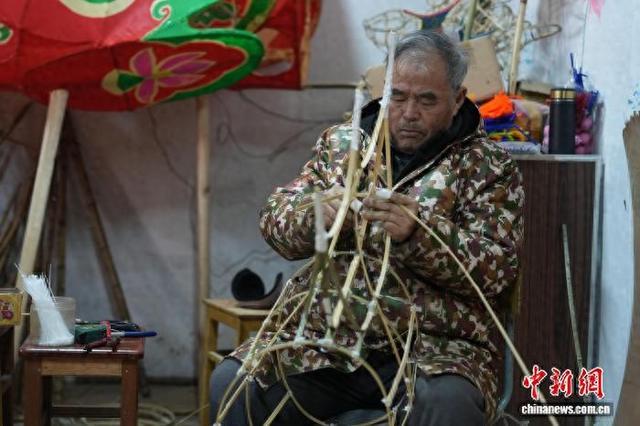
汪满田鱼灯

Search documents
古艺绽新彩 年味别样浓
Ren Min Ri Bao· 2026-02-21 11:56
Group 1: Intangible Cultural Heritage - The article emphasizes the importance of intangible cultural heritage as a vital part of Chinese traditional culture and a living testament to the continuity of Chinese civilization [1] - Various local customs and activities are organized during the Spring Festival, showcasing the richness of intangible cultural heritage and enhancing the festive atmosphere [1] Group 2: Jiao Dong Flower Steamed Buns - Jiao Dong flower steamed buns, a provincial intangible cultural heritage, have a history of over 1,000 years and are particularly prominent in the Jiaodong Peninsula and southwestern Shandong [2] - The production of flower steamed buns involves 72 intricate steps, with critical attention to fermentation and shaping techniques to ensure quality [2][3] - Lin Rongtao, a representative inheritor of this craft, has developed over 100 varieties and has trained more than 400 apprentices, indicating a strong tradition of knowledge transfer [4] Group 3: Cultural Significance and Modern Adaptation - The flower steamed buns not only represent culinary traditions but also embody the cultural genes and artisan spirit of the Shandong region [3] - Lin Rongtao has innovated the traditional recipes to make them more appealing to modern tastes while maintaining their cultural essence [3][4] - The flower steamed buns have gained popularity beyond local markets, with orders coming from across the country and even overseas [4] Group 4: Other Intangible Cultural Heritage Examples - The article also highlights the "Iron Flower" performance in Henan, which combines ancient techniques with modern safety measures, showcasing the revival of this nearly lost art [6][7] - The "Fish Lantern" tradition in Anhui, with its historical roots and modern adaptations, has become a popular cultural event, attracting significant tourist interest [9][10][12] - The "Yingge" dance from Guangdong has evolved to include female performers and modern choreography, demonstrating the adaptability of traditional arts to contemporary audiences [14][15][16]
古艺绽新彩 年味别样浓(文化中国行)
Ren Min Ri Bao· 2026-02-20 22:42
Core Perspective - The article highlights the significance of intangible cultural heritage in China, showcasing various traditional customs and practices during the Spring Festival, emphasizing their role in cultural transmission and community bonding [1]. Group 1: Intangible Cultural Heritage - Intangible cultural heritage is a vital part of Chinese traditional culture and a living testament to the continuity of Chinese civilization [1]. - Various regions in China celebrate the Spring Festival with diverse folk activities, enhancing the festive atmosphere through intangible cultural heritage [1]. Group 2: Jiao Dong Flower Steamed Buns - Jiao Dong flower steamed buns, a provincial intangible cultural heritage, have a history of over 1,000 years and are characterized by their intricate designs and flavors [2][4]. - The production process involves 72 steps, requiring precise control of time and temperature to ensure quality [3]. - Lin Rongtao, a representative inheritor, has developed over 100 varieties of flower steamed buns and has trained over 400 apprentices [5]. Group 3: Que Shan Iron Flower - Que Shan Iron Flower, also known as "Iron Flower," is a traditional performance art that involves throwing molten iron into the air, creating a spectacular visual display [7][8]. - This ancient technique faced near extinction but was recognized as a national intangible cultural heritage in 2008, leading to renewed interest and training efforts [8]. - The performance requires significant physical skill and experience, making it a rare and valuable cultural practice [8]. Group 4: Wang Mantian Fish Lanterns - Wang Mantian fish lanterns, a traditional folk custom in Huizhou, have a history of over 600 years and are used in celebrations to pray for safety and prosperity [11][12]. - The production of fish lanterns involves meticulous craftsmanship, with specific materials and techniques that have been passed down through generations [12]. - The lanterns have gained popularity, with local artisans producing them for various orders, contributing to the local economy [13]. Group 5: Chaoyang Yingge - Chaoyang Yingge is a folk dance that integrates martial arts and theatrical performance, recognized as a national intangible cultural heritage [15]. - The dance has evolved to include female performers and innovative choreography, appealing to younger audiences [16]. - Efforts are being made to promote Yingge culture internationally, with training programs established for overseas teams [17].
新春走基层丨鱼灯游曳年味足
Xin Lang Cai Jing· 2026-02-20 09:22
Core Viewpoint - The article highlights the revival and innovation of traditional fish lanterns in Huangshan, Anhui Province, particularly through the efforts of Wang Qinyan, who transitioned from selling buns in Beijing to becoming a representative inheritor of the Wang Mantian fish lantern craft [3][4]. Group 1: Traditional Craft and Personal Journey - Wang Qinyan has been crafting fish lanterns since she was nine years old, showcasing her deep-rooted skills in this traditional art [3]. - In 2019, after making fish lanterns for friends, she gained popularity, leading to a shift from her previous job to fully embracing the fish lantern craft [3][4]. Group 2: Innovation in Traditional Craft - The traditional fish lanterns are undergoing modernization, with new designs and materials being introduced, such as using iron wire instead of cotton thread for sturdiness and cotton fabric instead of paper for durability [4]. - The incorporation of electric lights instead of candles enhances the longevity and visual appeal of the lanterns [4]. Group 3: Cultural Preservation and Development - The "Three-Year Plan for the Protection, Inheritance, and Innovative Development of Shixian Intangible Cultural Heritage Fish Lanterns (2025-2027)" was officially released, marking a new phase in the standardized protection of fish lantern culture [7]. - The establishment of the Shixian Intangible Cultural Heritage Fish Lantern Protection and Development Association in August 2025 signifies a commitment to cultural preservation and innovation [7]. Group 4: Community Engagement and Future Generations - Children are actively participating in the cultural transmission by painting their own fish lanterns, fostering a new generation of interest and creativity in this traditional craft [8].

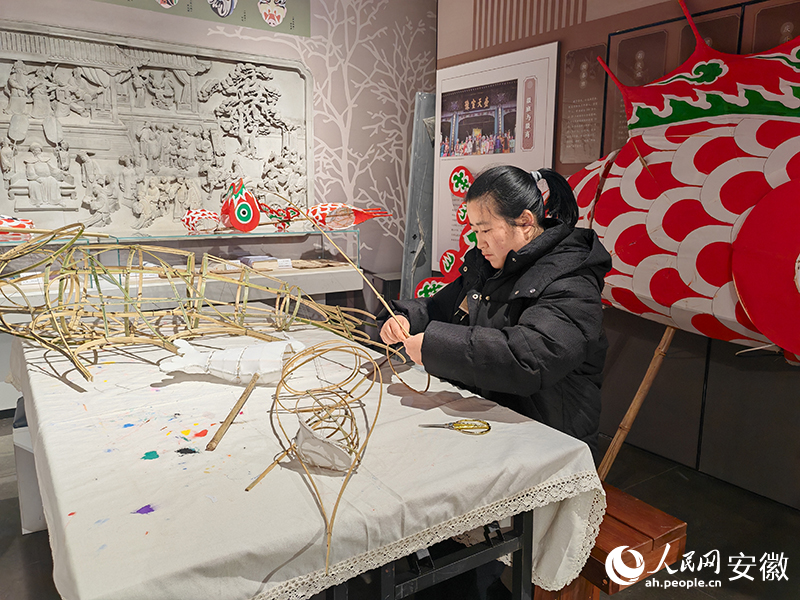
新年将至 歙县鱼灯走俏市场
Xin Lang Cai Jing· 2025-12-30 09:46
Group 1 - The consumption market is heating up as the New Year approaches, with significant orders for fish lanterns in Shexian, Anhui, indicating a vibrant festive demand [2][4] - The production of fish lanterns, such as Wang Mantian and Zhanqi fish lanterns, is driving the development of rural cultural and tourism economies through innovation [2] - Artisans are actively engaged in the production process, including checking, assembling, and coloring the fish lanterns, showcasing a thriving local craftsmanship [4][8][10] Group 2 - The fish lanterns have become a popular item in the holiday market, reflecting their cultural significance and appeal [2][16] - Various stages of production are highlighted, from crafting the fish body to final touches, indicating a detailed and labor-intensive process [6][8][10] - The presence of tourists visiting local fish lantern creative stores suggests a growing interest in cultural products and experiences [16]