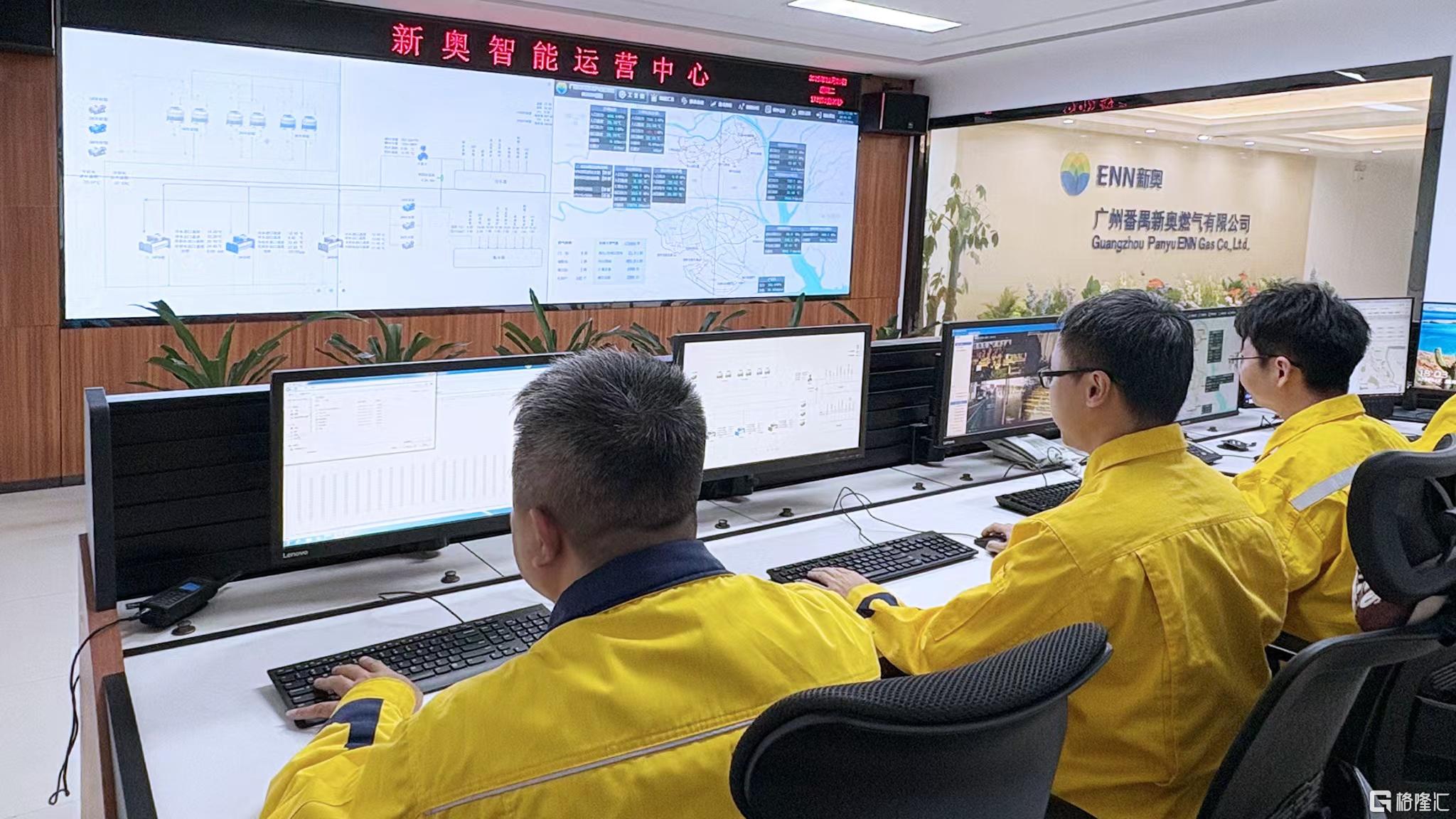
泛能网边云协同智慧平台

Search documents
年碳减排2400吨,这个企业用AI破解制造业转型困局
Zhong Guo Zheng Quan Bao· 2025-12-15 08:32
Core Insights - The article discusses the challenges faced by manufacturing companies, particularly in energy efficiency, as they transition towards high-end and green production. Despite technological advancements, energy systems often become bottlenecks, necessitating a shift towards optimized energy management solutions [1][2]. Group 1: Company Overview - Guangdong Jinko Electronics, a leader in LED visual technology, has struggled with energy efficiency in its manufacturing processes, particularly in its cooling systems, which have remained at industry average levels [1][3]. - The collaboration with New Energy has led to the development of a low-carbon smart factory project, which integrates photovoltaic systems, high-efficiency cooling stations, and energy storage to enhance energy efficiency significantly [1][4]. Group 2: Project Implementation - The project has resulted in a more than 50% improvement in cooling system efficiency, achieving intelligent control across the entire system while also delivering substantial energy savings and cost reductions [1][4]. - New Energy's approach is characterized by a gradual, modular upgrade path, allowing for tailored solutions that meet the specific energy demands of the electronics manufacturing sector [4][5]. Group 3: Technological Integration - The deployment of the "Pan-Energy Network Edge Cloud Collaborative Wisdom Platform" has transformed energy management from manual inspections to real-time, AI-driven optimization, enhancing the overall system's responsiveness and efficiency [7][8]. - AI algorithms have been shown to improve system efficiency by an additional 5% to 10% under similar operating conditions, highlighting the potential of digital intelligence in energy management [8][9]. Group 4: Economic and Environmental Impact - The low-carbon smart factory not only reduces energy costs but also enables Jinko Electronics to participate actively in energy management, transforming from a mere consumer to a flexible regulator within the energy grid [12][13]. - The project has led to significant environmental benefits, including a reduction of 731 tons of carbon emissions annually, contributing positively to the company's ESG performance and brand image [13][14]. Group 5: Industry Implications - The "Jinko Model" represents a replicable industry paradigm, showcasing a modular and standardized energy solution that can be adapted across various sectors, including hotels and food production [15][16]. - As the manufacturing industry increasingly integrates green and digital transformations, comprehensive service providers like New Energy are positioned to play a crucial role in facilitating this transition [16].


年碳减排2400吨 这个企业用AI破解制造业转型困局
中国基金报· 2025-12-12 02:36
Core Viewpoint - The article discusses the challenges faced by manufacturing companies, particularly in energy efficiency, as they transition towards high-end and green production. It highlights the case of Guangdong Jinko Electronics, which, despite its technological advancements, struggled with energy system efficiency until a low-carbon smart factory project was implemented by New Energy, significantly improving energy efficiency and reducing costs [1][2]. Group 1: Energy Efficiency Challenges - Manufacturing companies are encountering a common challenge of energy system efficiency becoming a bottleneck, even when they lead in product technology [1]. - Jinko Electronics' cooling system efficiency was at the industry average, and the lack of an integrated smart management platform limited its competitiveness in terms of cost and sustainability [1]. Group 2: Low-Carbon Smart Factory Project - In 2023, New Energy initiated a low-carbon smart factory project for Jinko Electronics, integrating photovoltaic systems, high-efficiency cooling stations, and energy storage as the hardware foundation [1]. - The project led to a significant increase in cooling system efficiency, improving by over 50%, while achieving full system intelligent control and substantial energy savings [1]. Group 3: New Energy Service Model - The project represents a shift in energy service models, moving from traditional energy supply to comprehensive energy service solutions, demonstrating New Energy's transformation from a gas supplier to an integrated energy service provider [4]. - New Energy's approach involved a gradual, modular upgrade path tailored to the specific energy needs of the electronics manufacturing sector, ensuring stability and efficiency [4][6]. Group 4: AI Integration in Energy Management - The deployment of the "Pan-Energy Network Edge Cloud Collaborative Smart Platform" by New Energy transformed energy management from manual inspections to real-time, AI-driven optimization [8][9]. - AI algorithms enhanced system efficiency by an additional 5% to 10% under similar operating conditions, showcasing the potential of digital intelligence in energy management [9]. Group 5: Value Creation and ESG Performance - The low-carbon smart factory not only improved energy efficiency but also embedded carbon management and smart work order capabilities, transitioning Jinko Electronics from an energy consumer to an energy participant [14]. - The project resulted in significant environmental benefits, including a reduction of 731 tons of carbon emissions annually, enhancing the company's ESG performance and brand image [14][15]. Group 6: Replicability of the "Jinko Model" - The low-carbon smart factory project is positioned as a replicable industry model, with a modular and standardized energy solution that can be adapted across various sectors [16]. - New Energy aims to leverage the "Jinko Model" to expand its role from a project service provider to an industry energy system integrator, capitalizing on the scalability and adaptability of the solution [17]. Group 7: Future Outlook - The integration of AI and system efficiency improvements is seen as a critical path for manufacturing industries to address low-carbon transition challenges and promote regional industrial upgrades [18].
年碳减排2400吨 这个企业用AI破解制造业转型困局
Zhong Jin Zai Xian· 2025-12-12 01:57
Core Insights - The article discusses the challenges faced by manufacturing companies, particularly in energy efficiency, as they transition towards high-end and green production. Despite technological advancements, energy systems often become bottlenecks for growth [1] - Jinko Solar, a leader in LED visual technology, has struggled with energy efficiency in its operations, prompting a partnership with New Energy to develop a low-carbon smart factory project that significantly improves energy efficiency [1][3] - The project demonstrates a new model of energy service that integrates AI and system efficiency, shifting the competitive edge of manufacturing from singular technological advancements to comprehensive system performance [2] Group 1: Project Overview - New Energy has designed a low-carbon smart factory project for Jinko Solar, incorporating photovoltaic systems, high-efficiency cooling stations, and energy storage as hardware foundations, along with a smart management platform [1][4] - The cooling system's energy efficiency improved by over 50% post-implementation, achieving full system intelligent control and resulting in significant energy savings and cost reductions [1][3] Group 2: Energy Management and AI Integration - The New Energy platform enhances energy management by integrating AI, allowing for real-time monitoring and dynamic optimization of energy systems, which is crucial for the electronic manufacturing sector [7][9] - The AI system not only connects data from various energy devices but also predicts energy needs based on multiple factors, leading to a 5%-10% increase in overall system efficiency through optimized scheduling [9][10] Group 3: Economic and Environmental Benefits - The low-carbon smart factory project enables Jinko Solar to transition from being an energy consumer to an energy participant, allowing for reduced reliance on the grid and participation in demand-side response [12] - The project is expected to generate additional revenue through energy storage and demand response, with projected annual earnings of 90,000 yuan from the energy storage system alone [13] Group 4: Replicability and Industry Impact - The modular and standardized energy solution developed for Jinko Solar is seen as a replicable model for other companies in the Pearl River Delta region, which share similar energy needs [14] - The "Jinko Model" is evolving into a broader industry energy solution, positioning New Energy as a system integrator rather than just a project service provider [14][15]
年碳减排2400吨!这个企业用AI破解制造业转型困局
Ge Long Hui· 2025-12-12 01:23
Core Insights - The article discusses the challenges faced by manufacturing companies, particularly in energy efficiency, as they transition towards high-end and green production methods [1][2] - Jinko Solar, a leading company in LED visual technology, has struggled with energy system efficiency despite its product innovation achievements [1][3] - A significant transformation began in 2023 when New Energy planned a low-carbon smart factory project for Jinko Solar, integrating photovoltaic systems, high-efficiency cooling stations, and energy storage [1][4] Group 1: Energy Efficiency and System Integration - The project led to a remarkable improvement in the factory's cooling system efficiency, increasing by over 50% while achieving intelligent control across the entire system [1][4] - New Energy's approach emphasizes a modular and progressive energy upgrade path, addressing the specific needs of the electronic manufacturing sector [4][5] - The AI-driven "Pan-Energy Network Edge Cloud Collaborative Platform" enhances energy management by enabling real-time monitoring and dynamic optimization of energy systems [6][7] Group 2: Economic and Environmental Impact - The low-carbon smart factory not only improves energy efficiency but also incorporates carbon management and virtual power plant capabilities, transforming the company from an "energy consumer" to an "energy participant" [11][12] - The project is expected to reduce carbon emissions significantly, with annual reductions estimated at 2,400 tons, enhancing the company's ESG performance and brand image [11][12] - The energy management system's ability to generate carbon asset reports positions the company favorably for future participation in carbon trading markets [11][12] Group 3: Replicability and Industry Impact - The "Jinko Model" is identified as a replicable industry benchmark, showcasing a modular, standardized, and systematic energy solution adaptable across various sectors [12][13] - New Energy aims to evolve from a project service provider to an industry energy system integrator, leveraging the scalability of the "Jinko Model" in similar enterprises [12][13] - The integration of AI and system efficiency is highlighted as a critical factor for the future of manufacturing, with comprehensive service models aiding companies in their low-carbon transition [13]