
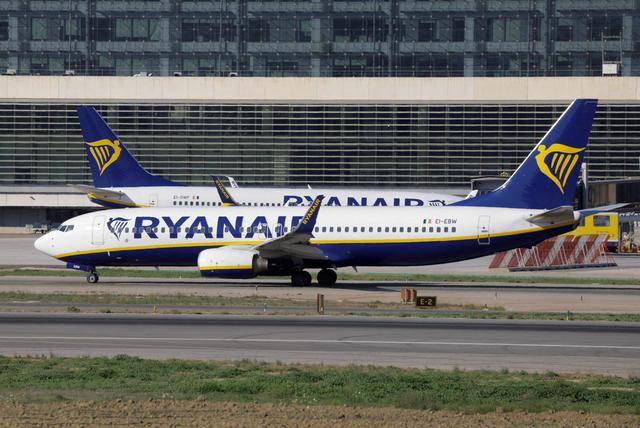
波音737MAX8飞机

Search documents
瑞安航空CEO对波音交付表示“乐观”
Sou Hu Cai Jing· 2025-08-28 08:30
Core Insights - Ryanair's CEO Michael O'Leary revealed that Boeing has committed to increasing the monthly production of the 737 series from 38 to 42 aircraft by October [2] - Ryanair has placed firm orders for 150 Boeing 737 MAX 10 aircraft, which are expected to complete certification by early next year [2] - Boeing is projected to deliver the 737 MAX 10 jets by early 2027, and O'Leary expressed optimism regarding this timeline [2] - Ryanair has reached an agreement with Boeing to expedite the delivery of 25 new MAX 8 aircraft to October 2025 [2]


美国发动关税战陷入进退维谷困境
Zhong Guo Fa Zhan Wang· 2025-04-24 03:27
Group 1: Trade Policies and Impacts - The U.S. President Trump continues to reinforce his trade war policies, specifically targeting non-tariff barriers set by the EU and Japan, while demanding Japan to significantly reduce its trade deficit with the U.S. [1] - Countries like Thailand and Vietnam are showing reluctance to quickly compromise with the U.S. on trade negotiations, indicating a shift in global trade dynamics [1][2]. - The U.S. is imposing new port fees on Chinese vessels, which could accelerate the shift of shipping orders from China to Japan and South Korea, potentially increasing global shipping costs [5][6]. Group 2: Market Reactions and Economic Indicators - The U.S. stock market has experienced significant declines, with the S&P 500 index down 6% in April, while the dollar index has dropped 5%, reflecting concerns over "stagflation" in the U.S. economy [2]. - Gold prices have surged over 2.5%, reaching a historical high of over $3420 per ounce, driven by increased demand for safe-haven assets amid rising market volatility [2]. - The U.S. manufacturing sector is facing challenges as companies like the American baby products firm are halting orders due to new tariffs, highlighting the impact of trade policies on domestic production capabilities [3]. Group 3: Supply Chain Adjustments - China has significantly reduced imports of U.S. liquefied natural gas, with a 70% decrease in the first quarter, as it shifts to suppliers in Indonesia and Qatar due to tariffs [3]. - The logistics sector is facing increased complexity and costs, with major shipping companies like DHL and FedEx adjusting their operations in response to new trade regulations [4]. - The Chinese shipbuilding industry is under pressure as U.S. tariffs may lead to a shift in orders to South Korea and Japan, which could raise global ship prices by 30% to 50% [6]. Group 4: Diversification Strategies - China is actively pursuing a diversified global economic strategy, with increased engagement in Southeast Asia and other regions to mitigate the impact of U.S. trade policies [9][11]. - The recent statistics show a rise in foreign buyers at trade fairs, with countries along the Belt and Road Initiative accounting for 72% of the total, indicating a shift in trade focus [9]. - Chinese manufacturing investment abroad has reached nearly $300 billion, with a notable increase in investments in Latin America and Europe, reflecting a strategic shift to counter geopolitical pressures [11].