注意力训练系统

Search documents
强脑科技秘密闯关港交所:脑机接口第一股的资本博弈
Xin Lang Cai Jing· 2026-01-14 05:48
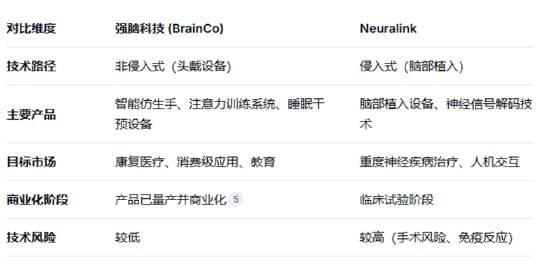
Core Viewpoint - BrainCo has secretly submitted a listing application to the Hong Kong Stock Exchange, aiming to become the first company in the global brain-computer interface (BCI) sector to enter the public capital market [1][10]. Technology Choice - Founded by Harvard dropout Han Bicheng in 2015, BrainCo chose a non-invasive BCI technology route, contrasting with Neuralink's invasive approach [2][12]. - BrainCo's technology collects brain signals through super sensors without surgical implantation, focusing on practical applications and scalability [2][12]. - The company has achieved significant milestones, including enabling amputees to control prosthetic limbs with their thoughts, addressing a market of 24 million disabled individuals in China [12][14]. Commercial Breakthrough - BrainCo's business strategy is pragmatic, starting with clear medical needs and expanding into consumer applications [4][14]. - The company has seen a substantial increase in sales, with 2024 quarterly sales projected to be four to five times that of 2023 [4][14]. - BrainCo's products include smart prosthetic hands and attention training systems, creating a dual-driven model of "medical rehabilitation + consumer applications" [4][14]. Capital Competition - The BCI industry is on the verge of explosive growth, with Morgan Stanley predicting a $400 billion market in the U.S. by 2045 [15]. - BrainCo has raised approximately 2 billion RMB, marking the second-largest financing record in the global BCI sector after Neuralink [15]. - The company’s decision to list in Hong Kong aligns with the trend of Chinese companies returning to the market and aims to enhance its global influence [15]. Industry Resonance - The news of BrainCo's listing application has triggered a positive response in the capital market, with related stocks rising significantly [16]. - BrainCo's listing is seen as a critical indicator of the BCI industry's development, contrasting with Neuralink's focus on disruptive innovation [16]. - The market reflects differing valuation perspectives, with investors weighing the commercial viability of BrainCo against the speculative nature of Neuralink's technology [16].

速递|强脑科技韩璧承:正在研发电子版司美格鲁肽,可抑制食欲助力减肥
GLP1减重宝典· 2025-12-15 10:43
Core Viewpoint - The brain-computer interface (BCI) industry is entering a rapid growth phase, with the global market expected to reach approximately $12.4 billion by 2034, reflecting a compound annual growth rate (CAGR) of 17.35% [4] Group 1: Market Overview - The BCI market is experiencing significant advancements due to the integration of technologies such as artificial intelligence, flexible materials, and biosensors [4] - Strong Brain Technology, one of the "Six Little Dragons" in Hangzhou, has completed a Pre-B round of financing, achieving a post-investment valuation exceeding $1.3 billion, positioning it as a leading unicorn in the domestic BCI sector [4][7] Group 2: Technological Directions - There are two main technological directions in the BCI field: invasive and non-invasive. Invasive technologies, represented by Neuralink, involve surgical implantation of electrodes, offering high signal quality but facing high costs and ethical concerns [5] - Non-invasive technologies, exemplified by Strong Brain Technology, do not require surgery and are more suitable for large-scale applications, primarily used in rehabilitation training and seen as having greater commercial potential [5] Group 3: Product Development and Controversies - Strong Brain Technology is developing a product akin to an "electronic version of semaglutide," aimed at reducing appetite to assist with weight loss, which has sparked discussions about the boundaries of consumer applications for BCI [7] - The company's product portfolio spans three main areas: smart bionics, smart health, and smart education, including devices like bionic hands and legs, sleep devices, and attention training systems [7] Group 4: Technological Accumulation - Strong Brain Technology has developed a proprietary solid-state gel electrode known as the "super sensor," capable of high-precision collection of brain and muscle electrical signals [8] - The company has secured over 460 authorized patents, with more than 250 core invention patents, placing it among the leaders in the global BCI industry [8]

哈佛博士休学创业给残疾人做十年假肢:用脑机接口技术书写杭州六小龙传奇
36氪· 2025-09-10 13:35
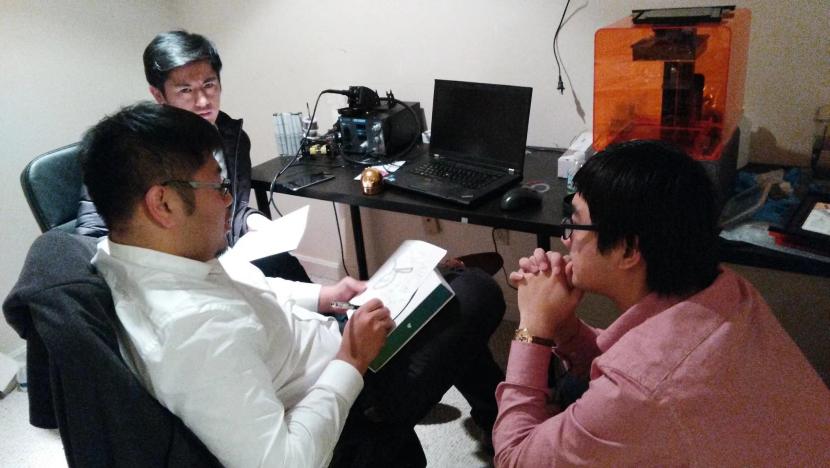
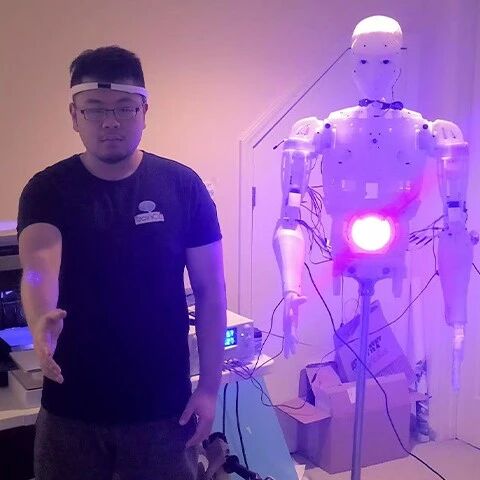
Core Viewpoint - BrainCo, founded by Han Bicheng, focuses on non-invasive brain-computer interface (BCI) technology to help individuals with disabilities regain control and improve their quality of life, marking significant advancements in the field of neurotechnology [3][9]. Company Development - Han Bicheng began his journey in the field of neuroscience at Harvard University, where he was inspired to create BrainCo after witnessing groundbreaking BCI experiments [3][4]. - The company was established in a basement, and within a year and a half, it achieved a technological breakthrough that allowed amputees to control prosthetic limbs using their thoughts [6][9]. - By 2020, BrainCo had developed a product that enabled users to control prosthetic fingers independently, receiving positive feedback from users [6][9]. Market Potential - The global market for brain-computer interfaces is projected to reach $400 billion by 2045 in the U.S. medical market alone, with even broader opportunities worldwide [20]. - In China, BCI technology has been included in the "14th Five-Year Plan," highlighting its importance for national security and development [20]. Technological Pathways - BrainCo chose a non-invasive approach to BCI technology, focusing on developing super sensors that capture brain signals without the need for surgical procedures, contrasting with Neuralink's invasive methods [14][16]. - This decision allows BrainCo to prioritize safety, accessibility, and cost-effectiveness, enabling rapid deployment in various applications such as prosthetic control and cognitive rehabilitation [14][16]. Product Ecosystem - BrainCo has built a diverse product ecosystem that includes smart prosthetic hands, attention training systems, sleep intervention devices, and autism rehabilitation solutions, expanding the application boundaries of BCI technology [16][18]. - The company achieved mass production of 100,000 units of its BCI products in 2022, breaking through the limitations of laboratory testing [16][21]. Social Impact - The company has significantly impacted the lives of amputees, allowing them to perform daily activities and regain independence [9][12]. - A project initiated by the Zhejiang Provincial Disabled Persons' Welfare Foundation aims to provide funding for installing BrainCo's smart prosthetics for individuals with limb disabilities, demonstrating a collaborative approach to social responsibility [23][25]. Competitive Landscape - BrainCo and Neuralink represent two distinct approaches in the BCI industry, with BrainCo focusing on practical applications and commercial viability, while Neuralink pursues high-risk, high-reward innovations [16][21]. - The contrasting business models highlight the importance of scalability and multi-scenario applications in the upcoming industry reshuffle [21].
哈佛博士休学创业给残疾人做十年假肢:用脑机接口技术书写杭州六小龙传奇
3 6 Ke· 2025-09-10 13:35
Core Insights - The article highlights the journey of BrainCo, founded by Han Bicheng, focusing on non-invasive brain-computer interface (BCI) technology aimed at addressing neurological disorders and enabling next-generation thought control technology [1][3][5] Company Development - BrainCo was established in 2015 after Han Bicheng's extensive research in the BCI field at Harvard University, where it became the first incubated project led by Chinese individuals [1] - The company achieved a significant technological breakthrough in 2020, allowing amputees to control prosthetic limbs using their thoughts, with independent finger movement capabilities [3][5] - By 2022, BrainCo successfully scaled production of its BCI products, achieving a milestone of 100,000 units, and received FDA certification for its smart prosthetics, marking its entry into international markets [11][14] Market Potential - The global BCI market is projected to reach $400 billion by 2045 in the U.S. medical sector alone, with China recognizing BCI technology as a core area in its 14th Five-Year Plan [13] - BrainCo is preparing for an IPO, potentially in Hong Kong or the Sci-Tech Innovation Board, indicating its readiness to capitalize on the growing market opportunities [13][14] Competitive Landscape - BrainCo and Neuralink represent two distinct approaches in the BCI industry: Neuralink focuses on invasive technology for high-quality signal acquisition, while BrainCo emphasizes non-invasive methods for broader accessibility and safety [9][11] - The contrasting strategies highlight the industry's bifurcation, with BrainCo's practical applications and commercial viability appealing to investors seeking lower-risk opportunities [14][15] Social Impact - BrainCo's technology has significantly improved the lives of thousands of amputees, enabling them to regain independence and dignity, exemplified by the installation of smart prosthetics for individuals in Zhejiang Province [15][17] - The company's success reflects China's growing innovation capabilities in advanced technology and offers a unique model for integrating social responsibility with technological advancement [17]