泰国旅游

Search documents
旅行社撤下日本游:韩国取代日本成最热出境游目的地
Jing Ji Guan Cha Wang· 2025-11-18 06:11
Core Insights - The Ministry of Culture and Tourism of China has issued a warning for Chinese tourists to avoid traveling to Japan recently [1] - There has been a noticeable increase in cancellations and changes to travel plans to Japan, with many tourists opting for refunds on flights and hotels [1] - Popular outbound travel destinations have shifted, with South Korea emerging as the top destination for Chinese tourists [1] Travel Industry Impact - Major travel companies have reported a surge in cancellations for trips to Japan, with flight refunds being largely hassle-free [1] - Hotel refunds depend on local hotel policies, but travel agencies are actively working to facilitate no-loss refunds [1] - Data from Qunar indicates that South Korea, particularly Seoul, has become the most searched destination for outbound travel [1] Booking Trends - There is a significant increase in bookings for other Southeast Asian destinations, including Thailand, Malaysia, Singapore, Vietnam, and Indonesia [1] - The search volume for Singapore, Sydney, and Bali has increased by over 10% compared to the previous week [1]
性价比不再,安全感缺失:我们为什么抛弃了泰国?
Hu Xiu· 2025-10-21 06:49
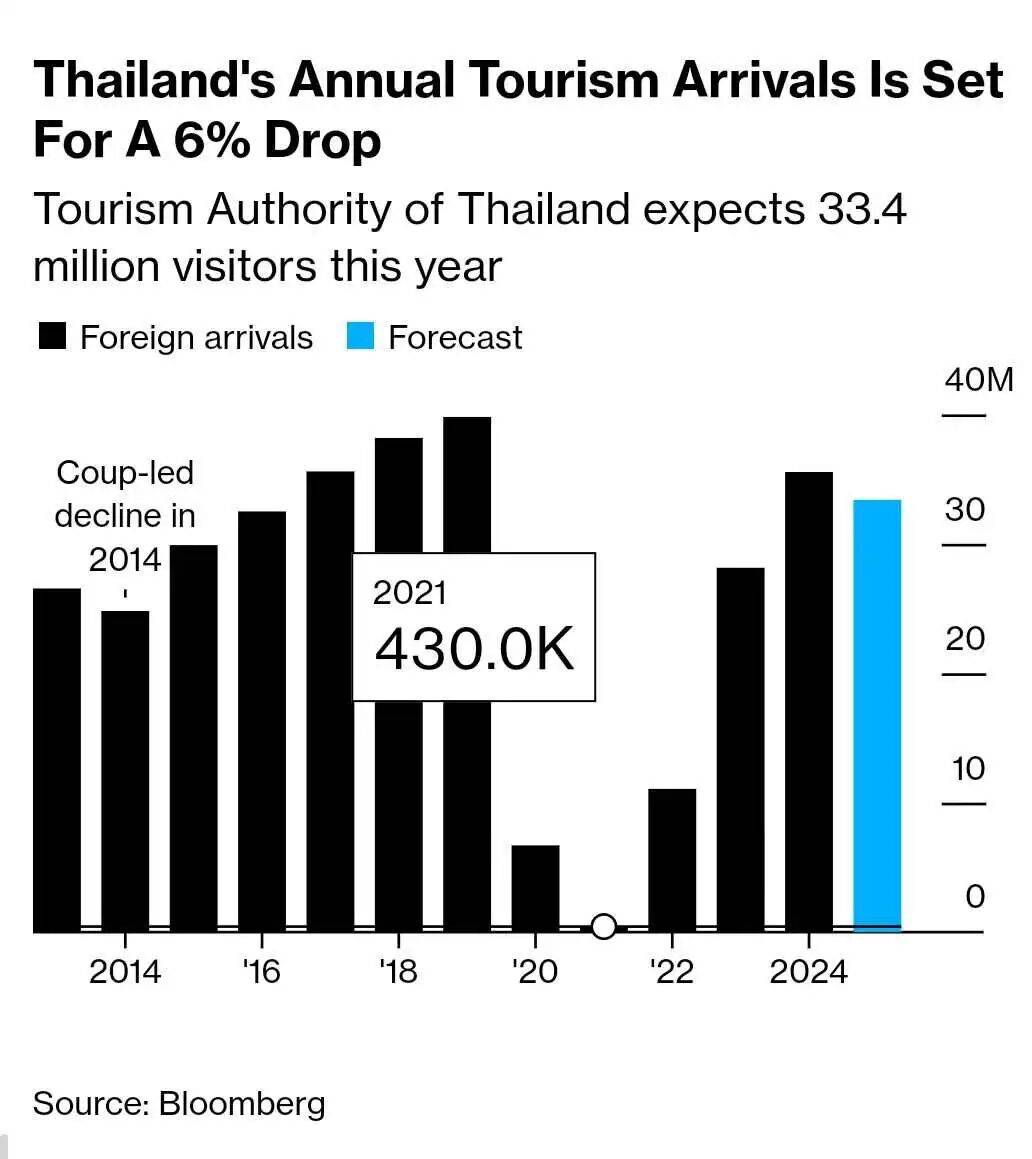
Core Insights - The incident involving a Chinese tourist in Thailand, where a tour guide threatened the tourist to force shopping, has sparked significant online discussion and criticism, highlighting issues within the tourism sector [2][3] - The Thai tourism industry is facing a decline, with a projected drop in total visitors to 33.4 million in 2025, a decrease of nearly 6% from the previous year, marking the first decline in four years [4] - The number of Chinese tourists visiting Thailand has significantly decreased, with only 2.3 million visitors in the first half of the year, down from 3.4 million in the same period last year, representing a one-third drop [5] Industry Impact - The ongoing decline in tourist numbers is severely impacting the local hotel industry, particularly small to medium-sized hotels that rely heavily on Chinese group tourists, with average occupancy rates dropping by about 50% in major cities like Bangkok and Phuket [8][9] - The structural changes in the tourism industry are attributed to shifts in consumer preferences, pricing, exchange rates, and safety experiences, rather than just isolated safety incidents [10][11] - The depreciation of the Chinese yuan against the Thai baht by 3.85% over the past year, coupled with rising airfare, has led many tourists to reconsider the value of traveling to Thailand [12][14] Competitive Landscape - The decline in visitors to Thailand is evident in travel agency bookings, with a reported 30% decrease in orders for trips to Thailand compared to the previous year, particularly affecting island destinations like Phuket and Krabi [18] - Other destinations such as Malaysia and Singapore are increasingly attracting Chinese tourists, with Malaysia seeing a 35.6% increase in Chinese visitors in the first half of the year, nearly matching Thailand's numbers [23] - Japan has also become a more popular destination, with over 5.69 million Chinese tourists visiting Japan in the first seven months of the year, nearly double the number visiting Thailand [21] Government Response - In response to the declining tourist numbers, the Thai government and tourism industry are implementing various measures, including charter flights, discounted tickets, and festive events to attract visitors [26][27] - Starting in November, charter flights from 16 Chinese cities are expected to operate, with a total of approximately 731 flights planned for the fourth quarter of 2025 to the first quarter of 2026 [28] - Thai Airways is expanding its routes to China, aiming to enhance connectivity and attract more tourists, while also addressing the growing number of Thai tourists traveling to China [29][31] Future Outlook - The Thai tourism industry is at a crossroads, needing to redefine its value proposition in a competitive market where it no longer enjoys a dominant position [41][44] - The shift from low-cost group tours to a focus on quality, transparency, and safety reflects a broader change in consumer expectations, necessitating a transformation in the tourism model [42][43] - The potential for recovery exists, particularly in high-end and customized travel segments, but the industry must adapt to new consumer demands and preferences to regain its appeal [44]

泰国游客量首跌,屋漏偏逢连夜雨
3 6 Ke· 2025-10-17 03:02
Core Insights - A recent incident involving a Chinese tourist in Thailand, where a tour guide forced shopping, has sparked significant backlash on social media, highlighting growing dissatisfaction with the tourism experience in Thailand [2][4] - The Thai tourism industry is facing a decline in visitor numbers, particularly from China, with projections indicating a drop in total tourists for 2025 compared to 2024 [5][9] Group 1: Visitor Trends - The Thai Tourism Authority predicts a decrease in total visitors to 33.4 million in 2025, down nearly 6% from 35.5 million in 2024, marking the first decline in four years [5] - Chinese tourist arrivals have significantly decreased, with only 2.3 million visiting in the first half of the year, a drop of one-third from 3.4 million in the same period last year [5] - The hotel industry, particularly those reliant on Chinese group tourists, is experiencing a 50% drop in average occupancy rates, especially in major cities like Bangkok and Phuket [8] Group 2: Market Dynamics - The decline in Thai tourism is attributed to various factors, including changes in consumer preferences, currency exchange rates, and rising travel costs [9] - The depreciation of the Chinese yuan against the Thai baht by 3.85% over the past year has led to increased travel costs, prompting tourists to reconsider their travel destinations [9] - The overall cost of travel to Thailand has risen significantly, with prices for group tours increasing by 60% and independent travel costs rising by 100%, leading to a substantial drop in visitor numbers [11] Group 3: Competitive Landscape - Other destinations, such as Japan, Malaysia, and Singapore, are increasingly attracting Chinese tourists, with Japan seeing a record 30 million visitors in the first nine months of the year [12][13] - Malaysia welcomed 2.17 million Chinese tourists in the first half of the year, a 35.6% increase, nearly matching Thailand's numbers [12] - The Thai government is implementing measures to attract tourists, including charter flights and promotional activities, but faces challenges due to limited aircraft capacity and competition from other destinations [15][17] Group 4: Future Outlook - The Thai tourism industry must adapt to a more competitive environment, moving away from low-cost group travel models to focus on quality experiences and services [20] - The shift in consumer expectations necessitates a reevaluation of Thailand's unique value proposition in the tourism market [21] - There is potential for recovery in specific segments, such as high-end and independent travelers, particularly in island destinations like Koh Samui and Krabi [20]

抱歉了三亚,我的钱包选择了出国
3 6 Ke· 2025-09-02 10:47
Group 1 - The core viewpoint is that young travelers are increasingly opting for international travel due to better cost-effectiveness compared to domestic tourism, leading to a significant rise in outbound tourism [1][3][4] - The number of outbound tourists from China in the first half of 2025 has increased by over 30% compared to the same period last year, with 56.14 billion domestic trips expected in 2024, and 37.6% of Gen Z travelers showing a preference for international travel [4][6] - Price comparisons reveal that a three-day domestic trip to Sanya costs around 4200 yuan, while a seven-day trip to Bangkok can be as low as 4600 yuan, highlighting the cost advantages of international travel [6][32] Group 2 - The imbalance in resource distribution and the concentration of tourism resources in a few popular domestic destinations lead to high prices and limited experiences for travelers [33][35] - The homogenization of domestic tourism experiences, characterized by repetitive attractions and commercial models, diminishes the appeal of local travel compared to the diverse offerings available abroad [35][36] - The shift towards experience-based tourism is necessary for the domestic industry to remain competitive, as young travelers seek unique and immersive experiences rather than traditional sightseeing [39][40]

中国游客为什么涌向越南?
Hu Xiu· 2025-06-04 00:08
Group 1 - The article highlights the increasing popularity of Vietnam as a travel destination for Chinese tourists, particularly during the Dragon Boat Festival, with many Chinese visitors participating in local celebrations [12][15][22] - Data from Vietnam's National Tourism Administration indicates that in the first four months of 2025, 1.95 million Chinese tourists visited Vietnam, accounting for 25.4% of total foreign visitors, marking a 56.7% year-on-year increase [12][15][22] - The reopening of the Nanning-Hanoi international train service has made travel more accessible, allowing Chinese tourists to easily visit Vietnam for short trips [8][27][28] Group 2 - Vietnam's geographical proximity to China, combined with affordable travel options and a favorable exchange rate, makes it an attractive destination for budget-conscious young travelers [25][30][32] - The article compares the cost of accommodations and dining in Vietnam to those in Thailand, emphasizing that Vietnam offers better value for money [30][31] - The rise of social media platforms like Xiaohongshu and Douyin has contributed to Vietnam's appeal, showcasing its scenic locations and cultural experiences [34][37] Group 3 - The Vietnamese government is actively promoting tourism by increasing flight routes, relaxing visa policies, and hosting tourism promotion events [44][45] - Despite the current influx of Chinese tourists, Vietnam faces challenges in maintaining this growth, particularly regarding its visa policies, which are seen as cumbersome compared to other Southeast Asian countries [48][50][56] - The article suggests that if Vietnam does not improve its visa processes, it risks losing Chinese tourists to other destinations like Thailand and Singapore [58][62]