
泽立美®本维莫德乳膏

Search documents
共拓皮肤病治疗领域,泽德曼与济川药业达成一项独家商业化合作
Guang Zhou Ri Bao· 2026-02-27 10:04
Group 1 - Shanghai Zedman Pharmaceutical Technology Co., Ltd. has signed an agreement with Jichuan Pharmaceutical Co., Ltd. for the exclusive commercialization rights of Zeli Mei® in China (excluding Hong Kong, Macau, and Taiwan), with a maximum upfront payment of 190 million yuan, including 125 million yuan upfront and 65 million yuan in milestone payments [2] - Zeli Mei® is a non-hormonal innovative drug developed by Zedman, recognized as the first approved AhR modulator for treating eczema in children over 2 years old and adults, addressing clinical pain points of traditional treatments [3] - The collaboration is seen as a significant milestone for Zedman in market expansion and resource complementarity, aiming to enhance pediatric and dermatological treatments in China [2][3] Group 2 - Zedman’s CEO emphasized the importance of this partnership in maximizing the innovative value of Zeli Mei® and accelerating its internationalization process [3] - Jichuan Pharmaceutical's General Manager highlighted that this collaboration strengthens their product portfolio in pediatric and dermatological treatments, showcasing the strength of Chinese innovation in the dermatology field [3]


医药新闻-2月27日 天辰生物递表港交所
Xin Lang Cai Jing· 2026-02-27 02:03
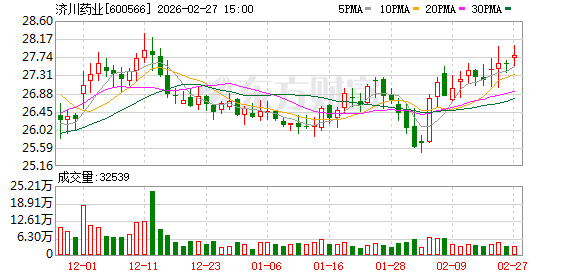
Group 1 - Jichuan Pharmaceutical has acquired exclusive commercialization rights for the drug Benvimod Ointment in mainland China, with a total payment not exceeding RMB 1.9 billion (including tax) [1][7] - Benvimod Ointment is the first approved treatment for eczema in children aged 2 and above in China, providing a non-hormonal option for young patients [1][7] - The product is expected to be launched in November 2024 and is currently in the early stages of market expansion [1][7] Group 2 - BeiGene reported a total revenue of USD 5.3 billion for 2025, a 40% increase year-on-year, with significant contributions from its products [2][8] - The company anticipates revenue of USD 6.2 to 6.4 billion for 2026, with GAAP operating profit projected at USD 7 to 8 billion [2][8] Group 3 - Charles River Laboratories announced the divestiture of its entire CDMO business and part of its early discovery services in Europe, generating approximately USD 2.87 billion in revenue last year [3][9] - The divested CDMO business, which focuses on gene therapy production, is expected to be sold to GI Partners and IQVIA [3][9] Group 4 - Zai Lab reported a total revenue of USD 127.6 million for Q4 2025, a 17% increase year-on-year, and an annual revenue of USD 460.2 million, a 15% increase [4][10] - The company is advancing its pipeline with several promising products expected to enter registration studies by the end of 2026 [4][10] Group 5 - Baillie Gifford's ADC drug, Iza-bren, achieved positive results in a Phase III trial for triple-negative breast cancer, marking a significant milestone for the drug [5][10] - The trial demonstrated a significant extension in both progression-free survival (PFS) and overall survival (OS) [5][10] Group 6 - Tianchen Biopharmaceuticals is preparing for an IPO on the Hong Kong Stock Exchange, having raised significant funding in recent years [6][11] - The company focuses on developing innovative drugs for allergic and autoimmune diseases, with key products currently in clinical development [6][11] Group 7 - Zhixiang Jintai reported a total revenue of approximately RMB 231 million for 2025, a staggering increase of 666.65% year-on-year, despite significant losses [12][13] - The company experienced a decline in operating profit and net profit compared to the previous year [12][13]
2月26日晚间重要公告一览
Xi Niu Cai Jing· 2026-02-26 10:14
Group 1 - Hehe Information achieved operating revenue of 1.81 billion yuan in 2025, a year-on-year increase of 25.83%, and net profit of 454 million yuan, a year-on-year increase of 13.39% [1] - Shengyi Technology announced that Guangxin Group and Chen Renxi have completed their share reduction plan, with Guangxin Group reducing its shares by 24.29 million, accounting for 1% of the total share capital [2] - Huaci Co., Ltd. received approval from the China Securities Regulatory Commission for its stock issuance to specific targets [3] Group 2 - New Nuo Wei plans to transfer 30.07% of its shares in Guoxin Huijin to Shiyao Holdings for 230 million yuan, with a valuation increase of 94.85% [4] - Tianli Lithium Energy has completed the scheduled maintenance of its lithium iron phosphate production line and resumed production [5] - Jinchuan Electric reported a net profit of 81.218 million yuan in 2025, a year-on-year decrease of 10.87% [6] Group 3 - Shenzhou Taiyue reported a net profit of 798 million yuan in 2025, a year-on-year decrease of 44.09% [7] - Jingwei Hengrun achieved a net profit of 99.5375 million yuan in 2025, reversing a loss from the previous year [8] - Keheng Technology signed a maximum pledge contract worth 450 million yuan to support its supply chain procurement [9] Group 4 - Zhongchu Media reported a net loss of 20.2858 million yuan in 2025, with operating revenue of 157 million yuan, a year-on-year decrease of 18.99% [10] - Tongde Chemical's subsidiary is involved in a lawsuit with a claim amount of approximately 49.1824 million yuan [12] - Jichuan Pharmaceutical signed an exclusive commercialization rights agreement for a new eczema treatment, with payments not exceeding 190 million yuan [13] Group 5 - Tianli Lithium Energy reported a net loss of 211 million yuan in 2025, with operating revenue of 408 million yuan, a year-on-year decrease of 20.20% [14] - Fortune Trend achieved a net profit of 315 million yuan in 2025, a year-on-year increase of 3.62% [15] - CITIC Securities received approval to publicly issue corporate bonds totaling no more than 80 billion yuan [16] Group 6 - Yongshan Lithium Industry reported a reduction of 23 million shares by Ningbo Jutai, decreasing its total shareholding from 13.24% to 4.52% [17] - Taifu Pump Industry achieved a net profit of 17.5631 million yuan in 2025, a year-on-year increase of 38.78% [18] - Longxun Co., Ltd. reported a net profit of 172 million yuan in 2025, a year-on-year increase of 19.05% [19] Group 7 - Duori Pharmaceutical's acquisition offer period has expired, and the company's stock will resume trading [20] - Tianhao Energy obtained a loan commitment letter for stock repurchase from a financial institution, with a loan amount not exceeding 90 million yuan [21] - Lijun Co., Ltd. reported a net profit of 57.545 million yuan in 2025, a year-on-year decrease of 52.09% [22] Group 8 - Zhongchumai reported a net profit of 212 million yuan in 2025, a year-on-year increase of 45.55% [23] - Kangxino reported a net profit of 27.8727 million yuan in 2025, reversing a loss from the previous year [24] - Baiao Saitu achieved a net profit of 173 million yuan in 2025, a year-on-year increase of 416.37% [25] Group 9 - Guangxun Technology's private placement application was approved by the Shenzhen Stock Exchange [26] - Sandam Membrane reported a net profit of 378 million yuan in 2025, a year-on-year increase of 19.95% [27] - Shangsheng Electronics reported a net profit of 184 million yuan in 2025, a year-on-year decrease of 21.71% [28] Group 10 - Xin'an Century reported a net profit of 79.2904 million yuan in 2025, reversing a loss from the previous year [29] - Zhenlei Technology achieved a net profit of 133 million yuan in 2025, a year-on-year increase of 582.01% [30] - Fuan Pharmaceutical's subsidiary received approval for a new drug application [32] Group 11 - Baotai reported a net loss of 336 million yuan in 2025, with operating revenue of 934 million yuan [33] - Aohua Endoscope reported a net profit of 11.4619 million yuan in 2025, a year-on-year decrease of 45.45% [34] - Maide Medical reported a net profit of 65.2599 million yuan in 2025, reversing a loss from the previous year [35] Group 12 - Chip Original Co. reported a net loss of 528 million yuan in 2025, with operating revenue of 3.152 billion yuan [36] - Zhongwei Semiconductor set a preliminary transfer price of 43.35 yuan per share for its inquiry [37] - Tieke Railway reported a net profit of 171 million yuan in 2025, a year-on-year decrease of 20.09% [38] Group 13 - Changjiang Electric announced a cash dividend distribution plan of 2.1 yuan per 10 shares for the 2025 fiscal year [39] - Kunheng Shunwei reported a net profit of 46.7676 million yuan in 2025, a year-on-year increase of 26.28% [40] - Ailis reported a net profit of 2.181 billion yuan in 2025, a year-on-year increase of 52.55% [41] Group 14 - Aerospace Software reported a net loss of 11.3126 million yuan in 2025, with operating revenue of 1.216 billion yuan [42] - Qizhong Technology reported a net profit of 266 million yuan in 2025, a year-on-year decrease of 15.16% [43] - Guotou Zhonglu plans to acquire 70% of Luochuan Lingxian Company for 74.8745 million yuan [44] Group 15 - Aokema plans to acquire 45% of its subsidiary for 253 million yuan [45] - ST Dali signed a procurement framework agreement worth 88.8794 million yuan with a leading new energy company [46] - Zhifei Biological received clinical trial approval for a new mRNA vaccine [47]


事关7000万患者,中国原研新药打破激素治疗恶性循环
第一财经· 2025-11-24 13:43
Core Viewpoint - The article discusses the challenges and advancements in the treatment of atopic dermatitis (AD), highlighting the issues of steroid misuse and the introduction of a new non-steroidal innovative drug that aims to break the cycle of treatment and relapse [3][4][5]. Group 1: Atopic Dermatitis Overview - Atopic dermatitis is a chronic, recurrent inflammatory skin disease often associated with other allergic conditions, with a rising incidence globally, particularly severe in China where the prevalence in children aged 1-7 years is 12.94% and in infants aged 1-12 months is 30.48% [4]. - The misuse of steroid creams has become a significant issue, leading to severe side effects such as irreversible skin changes and dependency, as patients often self-medicate without proper guidance [3][5]. Group 2: Treatment Challenges - The current treatment landscape is characterized by a dichotomy of steroid overuse and fear of steroid use, complicating effective management of the disease [6]. - Traditional treatments involve a trade-off between the rapid relief provided by steroids and the long-term damage they can cause to the skin, while non-steroidal options are perceived as slower and less effective [6]. Group 3: Innovative Solutions - The introduction of the innovative drug, Zeli Mei® (bimekizumab), represents a significant advancement, being the first aromatic hydrocarbon receptor (AhR) modulator approved for treating AD in patients over 2 years old [8]. - Clinical trials have shown promising results, with nearly 60% of patients achieving deep itch relief after 8 weeks of treatment, and 70% of patients remaining relapse-free for 10 months after stopping the medication [8]. - The Chinese market for eczema topical agents is projected to reach approximately 5.28 billion yuan in 2024, with steroid-based medications currently dominating the market, exemplified by "Pian Yan Ping" achieving sales of 1.04 billion yuan in 2023 [8].

事关7000万患者,中国原研新药打破激素治疗恶性循环
Di Yi Cai Jing· 2025-11-24 12:22
Core Insights - The article discusses the challenges of managing atopic dermatitis (AD) in China, highlighting the issues of hormone abuse and the need for innovative treatments [1][2][3] - A new non-steroidal drug, Zeli Mei® (bimekizumab), has been approved for the treatment of AD, offering a potential solution to the ongoing cycle of flare-ups and treatment failures [2][3] Regulatory and Market Context - The current regulatory gray area and excessive marketing contribute to the widespread abuse of steroid medications for AD [2] - The prevalence of AD is increasing, with a reported incidence of 12.94% among children aged 1-7 years and 30.48% among infants aged 1-12 months in China [1] Treatment Challenges - Patients often resort to self-medication due to the availability of various topical treatments, leading to a dual challenge of overuse and fear of necessary steroid treatments [2] - Traditional steroid treatments are effective but can cause long-term skin damage, while non-steroidal options are safer but take longer to show results [2] Innovative Solutions - The introduction of Zeli Mei® represents a significant advancement, being the first aromatic hydrocarbon receptor (AhR) modulator approved for AD treatment in children over 2 years old and adults [3] - Clinical trials indicate that nearly 60% of patients experienced significant itch relief after 8 weeks of treatment, and 70% of patients remained relapse-free for 10 months after stopping the medication [3] Market Potential - China has approximately 70 million AD patients, with over 90% requiring topical treatments, indicating a substantial market opportunity for new therapies [3] - The market for eczema topical agents in China is projected to reach approximately 5.28 billion yuan in 2024, with steroid medications currently holding a significant market share [3]
中国皮肤湿疹外用制剂行业白皮书
Tou Bao Yan Jiu Yuan· 2025-10-22 12:10
Investment Rating - The report does not explicitly state an investment rating for the eczema ointment industry Core Insights - The Chinese eczema ointment market is characterized by a growing demand for innovative solutions that balance efficacy and safety, driven by a trend of patient consumerization and the prevalence of unsafe products containing illegal additives [3][5] - The report emphasizes that only products with the "National Drug Approval Number" can ensure safety and efficacy, highlighting the non-hormonal innovative drug, Zeli Mei® (Benvimod Ointment), as a representative of the future market direction [3][8] Summary by Sections Market Overview - Eczema is a chronic, recurrent, itchy, and inflammatory skin disease affecting 15% to 30% of dermatology patients [13][29] - Topical medications account for 67% of eczema treatments, with non-hormonal topical agents becoming increasingly important due to the potential adverse effects of long-term steroid use [13][30] - The market for eczema ointments is projected to grow from approximately 5.5 billion yuan in 2019 to 7.44 billion yuan by 2029, with a compound annual growth rate (CAGR) of 7.5% from 2025 to 2029 [43][45] Product Categories and Efficacy Analysis - The report identifies various types of topical agents and their effectiveness, noting that treatment strategies should be adjusted based on the stage of eczema: acute, subacute, and chronic [47][52] - Non-hormonal innovative drugs like Benvimod Ointment are highlighted for their clinical advantages in efficacy and safety compared to traditional treatments [30][33] Patient Behavior and Awareness - Patients prioritize ingredient safety and brand reputation when purchasing eczema medications, with a significant shift towards online and branded channels for drug acquisition [6][36] - The consumerization of healthcare is evident, with patients actively seeking information and making informed decisions about their treatments [40][41] Market Challenges and Regulatory Landscape - The report discusses the prevalence of misleading marketing and unsafe products in the eczema ointment market, emphasizing the need for strict regulatory compliance and consumer education [7][8] - The "National Drug Approval Number" is presented as a critical standard for ensuring the safety and efficacy of eczema treatments, with a trend towards increased regulatory scrutiny [8][43]
头豹研究院:中国皮肤湿疹外用制剂
Tou Bao Yan Jiu Yuan· 2025-09-15 12:33
Investment Rating - The report does not explicitly state an investment rating for the eczema ointment market in China Core Insights - The Chinese eczema ointment market is characterized by a growing demand for innovative solutions that balance efficacy and safety, driven by a trend of patient consumerization and the prevalence of unsafe products containing illegal hormone additives [5][7] - The report emphasizes that only products with the "National Drug Approval Number" can ensure safety and efficacy, highlighting the innovative non-hormonal drug, Zeli Mei® (Benvimod Cream), as a representative of future market direction [5][10] Summary by Sections Market Overview - Eczema is a chronic, recurrent inflammatory skin disease affecting 15% to 30% of dermatology patients, with topical medications accounting for 67% of treatment options [15][25] - Non-hormonal topical agents are crucial due to the potential adverse effects of long-term steroid use, with Benvimod Cream showing significant clinical advantages in efficacy and safety [15][21] Product Categories and Efficacy Analysis - The report outlines the importance of recognizing "National Drug Approval Number" products as the only legally validated treatment for eczema, with a focus on innovative drugs that enhance both efficacy and safety [10][42] - The market is transitioning from traditional to innovative drugs, with a notable increase in online pharmacy sales, reaching 1.78 billion yuan in Q2 2025, a year-on-year growth of over 37% [35][42] Patient Behavior and Awareness - The primary demographics of eczema patients in China are children (ages 2-12) and young adults (ages 18-60), with nearly 90% of cases being mild to moderate [48][54] - Patients prioritize ingredient safety and brand reputation when purchasing topical medications, with over 40% avoiding steroid treatments due to concerns about side effects [48][60] - The digital healthcare landscape is evolving, with e-commerce becoming a significant growth driver for dermatological products, as online medical consultations are increasingly popular [61][62] Market Issues and Analysis - The report identifies significant market issues, including the prevalence of misleading advertising and unsafe products, which pose serious health risks to consumers, particularly infants [9][10] - It stresses the need for strict regulatory measures to eliminate non-compliant products and promote a market focused on innovative, compliant drugs [10][42]