海能人工智能模型

Search documents
石化化工行业AI+进展点评:政策指引推动AI+转型,三大路径驱动化工企业智能化落地
EBSCN· 2026-01-14 06:22
Investment Rating - The report maintains an "Overweight" rating for the basic chemical industry [1] Core Insights - The chemical and new materials industry is set to drive the comprehensive "AI + manufacturing" transformation, as outlined in the State Council's policy document released in August 2025, which aims for deep integration of AI across six key sectors by 2027 [3][4] - The focus for the petrochemical industry is on "quality improvement and efficiency enhancement" through AI, utilizing large models and digital twin technologies to optimize various processes [5] - The report identifies three main pathways for chemical companies to implement AI: self-developed large models, third-party model integration, and investment in AI startups [13][14] Summary by Sections Policy Guidance - The State Council's document emphasizes the necessity for AI integration in the chemical industry, marking it as a compulsory aspect for achieving high-quality development [3] - The Ministry of Industry and Information Technology's implementation opinions further detail goals for AI technology and its application in manufacturing by 2027 [4] AI Empowerment in Petrochemical Industry - AI's role in the petrochemical sector focuses on enhancing operational efficiency and safety through predictive maintenance and process optimization [5] - The establishment of high-quality data sets and infrastructure is crucial for supporting AI applications in the industry [5] AI Empowerment in New Materials Industry - The new materials sector aims to leverage AI for deep integration in research and development, enhancing capabilities in material design and synthesis [5] Implementation Pathways - **Self-Developed Large Models**: Companies like China National Petroleum Corporation (CNPC) and China National Offshore Oil Corporation (CNOOC) are developing proprietary AI models to enhance their operational capabilities [9][10] - **Third-Party Model Integration**: WanHua Chemical collaborates with Huawei Cloud to implement AI solutions for predictive maintenance and operational efficiency [11] - **Investment in AI Startups**: Companies like Qicai Chemical are investing in AI startups to accelerate innovation in materials science [12][13] Investment Recommendations - The report suggests focusing on leading companies that excel in data utilization and AI integration, such as CNPC, Sinopec, and WanHua Chemical [14] - Attention is also drawn to companies involved in new materials and fine chemicals, which are expected to benefit significantly from AI-driven R&D advancements [14]



21现场|新能源迎技术新周期:城市、AI与储能
2 1 Shi Ji Jing Ji Bao Dao· 2025-09-20 06:24
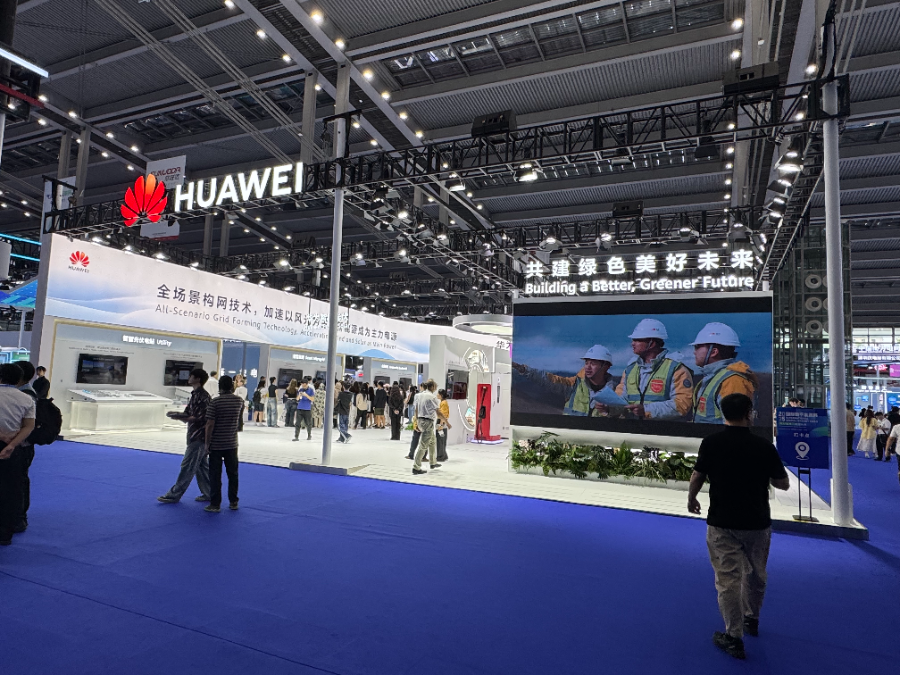
Core Insights - The new technology cycle in the renewable energy industry is emerging, with significant advancements showcased at the 2025 International Digital Energy Exhibition in Shenzhen, featuring over 2,000 companies from more than 50 countries [1][3] Group 1: Digital Energy and Urban Transformation - Shenzhen is exploring digital energy solutions to provide replicable models for energy transition in high-density cities, aiming for a trillion-level scale [1] - The city has initiated the "Super Charging City 2.0" project, with plans to exceed the number of supercharging stations compared to gas stations by December 2024 [3] - Shenzhen's virtual power plant has achieved a dispatchable capacity of 1.3 million kilowatts, representing over 5.4% of the city's peak load, the highest in the country [4] Group 2: AI Empowerment in Energy Management - AI has become a focal point, with companies like Huawei and CNOOC leveraging AI for predictive maintenance and operational efficiency, enhancing power plant management by up to 50% [1][9] - The integration of AI in energy management is reshaping operational logic, with potential for redefining the value of electricity through real-time services [10] Group 3: Energy Storage Innovations - The emergence of large battery cells is providing new pathways for long-duration energy storage, with BYD introducing a 2710Ah blade battery for a 10MWh storage system [1][12] - The demand for large-capacity battery cells is driven by the need to reduce overall system costs and improve energy density, with a significant increase in installed capacity expected in the coming years [16]