
人工智能+制造

Search documents
北交所定期报告:北交所扩容提速,科创属性持续强化
Guotou Securities· 2026-03-15 12:08
Market Overview - The Shanghai Composite Index decreased by 0.40%, while the North Exchange A-share Index fell by 1.49%, underperforming the Shanghai Composite by 1.09 percentage points[1] - The total trading volume for North Exchange A-shares was 98.643 billion yuan, with the North Exchange 50 accounting for 30.11% of this total[1] - The average daily trading volume for North Exchange A-shares was 19.729 billion yuan, down 15.08% from the previous week[1] Valuation Metrics - As of March 13, 2026, the median price-to-earnings (PE) ratio for North Exchange A-shares was 44.89X, compared to 37.4X for the Sci-Tech Innovation Board and 37.52X for the ChiNext[1] Individual Stock Performance - As of March 13, 2026, there were 298 companies listed on the North Exchange, with notable gainers including Dapeng Industrial and Wuhan Land Electric, while major losers included Tereis and Naconor[2] - A total of 37 new companies have been listed from January 1, 2025, to March 13, 2026, with the latest addition, Mirui Technology, seeing a first-day increase of 91.91%[2] Industry Dynamics - The government work report set a GDP growth target of 4.5%-5% and emphasized support for innovative small and medium-sized enterprises during the National People's Congress[3] - The North Exchange is on the verge of surpassing 300 listed companies, with a record number of five companies reviewed in one week, four of which are specialized "little giant" enterprises[3] Investment Recommendations - Focus on sectors highlighted in the government report, including future industries like quantum technology and aerospace, with specific recommendations for companies in robotics, new energy, and commercial aerospace[7] - Attention is drawn to companies with strong technical barriers and performance certainty, such as Dingzhi Technology and Lingge Technology[7] Risk Factors - Potential risks include lower-than-expected market demand, intensified industry competition, geopolitical risks, and delays in policy implementation and R&D progress[8]
通用智能机器人研发制造商非夕科技完成新一轮融资,国际长线资本领投
机器人圈· 2026-03-11 10:19
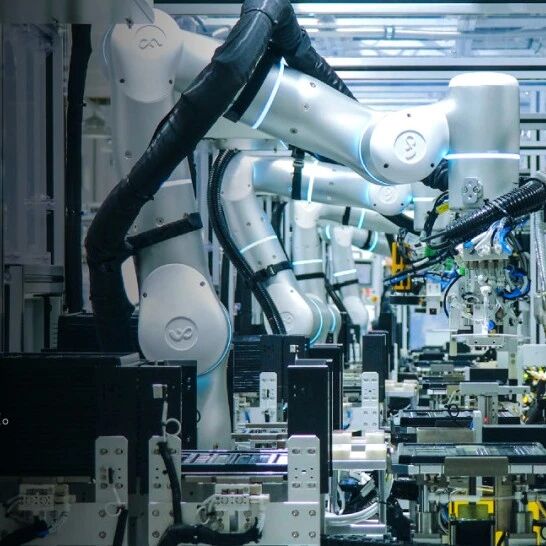
Core Insights - Flexiv, a developer and manufacturer of general-purpose intelligent robots, has recently completed a new round of financing led by Invus, with participation from Atma Capital and other institutional investors [1][3]. Financing and Investment - The funds from this round will primarily be used for the continuous development of the general-purpose intelligent platform, core technology research, scaling up general robot products, enhancing the global sales and service system, and expanding into key industry scenarios [3][4]. - Invus, the lead investor, is a global investment firm with over $12 billion in assets under management, known for its long-term investment strategy and support for enterprise growth over decades [5][6]. - Atma Capital focuses on long-term investments in the fields of intelligence, automation, and capital integration, supporting breakthrough technologies from concept to large-scale application [5][6]. Technological Development - Flexiv is not just manufacturing another robotic arm but is pioneering a new category of adaptive robots that integrate AI and advanced force control technology, enabling machines to perceive, adapt, and operate with human-like dexterity [6][8]. - The company is redefining the paradigm of intelligent automation by building a "general-purpose intelligent platform" that combines advanced force control technology with hierarchical AI, allowing robots to perform dexterous operations in unstructured environments [8]. Market Application and Vision - Flexiv's products are widely applied across various industries, including mobility, electronics, general manufacturing, fast-moving consumer goods, commercial services, and biomedicine, becoming a crucial platform for many large enterprises and unicorn companies in the field of embodied intelligence [8]. - The founder and CEO of Flexiv emphasizes a commitment to long-termism and the belief that general-purpose intelligent robots will be the core engine driving future productivity leaps in society [8].

大公国际:“人工智能+制造”政策指挥棒+政府投资基金组合拳,助力新质生产力规模化及国内大循环
Da Gong Guo Ji· 2026-03-08 14:50
Group 1: Policy Evolution and Strategic Importance - The "Artificial Intelligence + Manufacturing" policy was officially launched on January 7, 2026, marking a significant step in integrating AI into manufacturing, which is crucial for high-quality development and industrial transformation[2] - China aims to maintain its manufacturing sector's share of GDP at around 25% by 2025, down from 32% in 2006, highlighting the need for transformation from a manufacturing power to a manufacturing stronghold[6] - The policy emphasizes the importance of AI in enhancing manufacturing efficiency and quality, with AI expected to penetrate over 70% of business scenarios in leading factories[12] Group 2: Investment and Financial Support - The government has established over 2,178 investment funds, with a total scale exceeding 12 trillion yuan, to support the integration of AI in manufacturing[15] - The National Development and Reform Commission has introduced guidelines to enhance government investment fund planning, aiming to provide systematic financial support for AI and manufacturing integration[14] - The investment strategy focuses on "early, small, hard technology, and long-term" investments, addressing the funding gap in early-stage technology development[17] Group 3: Market Impact and Domestic Circulation - The integration of AI in manufacturing is expected to enhance production efficiency and product quality, thereby improving the domestic supply system's quality and stability[18] - The collaboration between AI and manufacturing is projected to create a virtuous cycle of investment, employment, and tax revenue, contributing to the domestic economy[21] - By guiding resources towards key areas in AI and manufacturing, the government aims to stimulate effective demand and support the overall economic structure transformation[20]
内蒙古加快建设以先进制造业为骨干的现代化产业体系
Xin Lang Cai Jing· 2026-02-27 18:26
Core Viewpoint - The Inner Mongolia Autonomous Region is focusing on high-quality development by implementing the "1571" work deployment, aiming to build a modern industrial system and enhance traditional industries while fostering emerging and future industries [1] Group 1: Promotion of "Two New" Integration Development - Strengthening the role of enterprises in technological innovation, aiming for full coverage of R&D activities in large-scale manufacturing enterprises [2] - Coordinating innovation chains with industrial chains, focusing on key areas such as rare earth materials and modern coal chemical industry [2] - Enhancing the construction of innovation platforms and increasing the cultivation of manufacturing innovation centers [2] Group 2: Improvement and Renewal of Traditional Industries - Stabilizing growth in key industries by implementing national plans to mitigate "involution" competition in sectors like crystalline silicon [3] - Promoting technological upgrades and equipment renewal in traditional industries such as chemicals and steel [3] - Advancing the deep processing of resource-based industries and increasing the share of green electricity consumption [3] Group 3: Development of Emerging and Future Industry Clusters - Restructuring advanced manufacturing industry clusters and implementing high-quality development actions for key industrial chains [4] - Fostering new materials, digital economy, and new chemical industries as trillion-level industry clusters [4] - Supporting the development of strategic emerging industry clusters such as new energy and bio-manufacturing [4] Group 4: Collaboration Among Enterprises of All Sizes - Strengthening the cultivation of leading enterprises and enhancing the role of chain master enterprises [5] - Improving the cultivation system for quality enterprises and promoting the growth of specialized and innovative small and medium-sized enterprises [5] - Enhancing the management and development of industrial parks to boost their comprehensive strength [5][6]
广西多举措力保企业春节期间连续生产 逾7400家企业复工复产
Xin Lang Cai Jing· 2026-02-27 11:12
Core Viewpoint - Guangxi is implementing multiple measures to ensure continuous production during the Spring Festival and the resumption of work post-holiday, aiming to sustain and enhance the positive momentum of the industrial economy [1][2]. Group 1: Continuous Production and Resumption of Work - The number of enterprises maintaining continuous production during the Spring Festival and those resuming work afterward is higher than last year [1]. - As of February 24, over 7,400 large-scale industrial enterprises in Guangxi have resumed operations, achieving a resumption rate of over 71% [2]. - Among the top 500 enterprises by output value, 407 have resumed operations, resulting in a resumption rate of 81.4% [2]. Group 2: Financial Support and Policy Implementation - Guangxi has focused on financial support for enterprises, collecting financing needs exceeding 250 billion yuan and facilitating nearly 1.4 billion yuan in signed financing intentions [1]. - The region is enhancing special fund support for major industrial projects, including those related to digital transformation and AI integration in manufacturing [1]. Group 3: Technological and Service Improvements - Guangxi is promoting the "AI + Manufacturing" initiative, encouraging large-scale industrial enterprises to undergo technological upgrades and digital transformation [2]. - The government is collaborating with various departments to provide support in labor, electricity, and logistics to stabilize key industries [2]. Group 4: Future Plans and Market Expansion - The industrial and information technology system in Guangxi will strengthen monitoring and coordination for key regions, industries, and enterprises to address growth constraints [3]. - Plans include organizing market expansion activities for wood processing and automotive industries to enhance production and sales rates [3].
长沙经开区以“新春大礼包”解锁产业升级新路径
Zhong Guo Xin Wen Wang· 2026-02-27 07:31
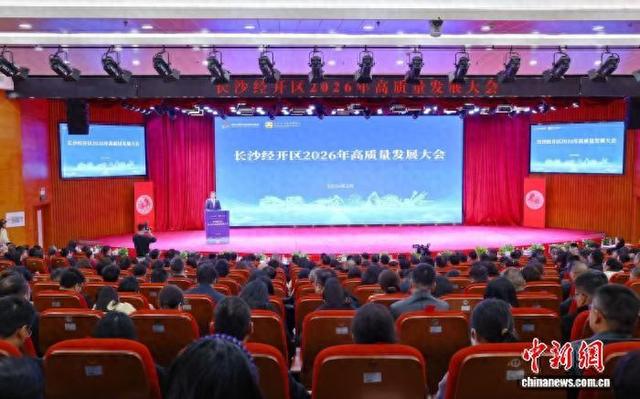
Core Insights - The Changsha Economic and Technological Development Zone held a high-quality development conference for 2026, inviting 300 key enterprises and executives to discuss development opportunities [1] - The conference introduced a comprehensive investment opportunity list for 2026, with a total expected investment scale exceeding 50 billion yuan, focusing on various core areas such as zero-carbon park development and AI+ manufacturing [1][2] Group 1: Investment Opportunities - The first batch of the "Top Ten Investment Opportunities List" for 2026 was released, targeting major asset revitalization, smart platform construction, and industry-education integration [1][2] - The zone aims to support the construction of 100 basic-level smart factories and promote AI applications through initiatives like "computing power vouchers" for small and medium-sized enterprises [2] Group 2: Innovation and Support Systems - The "Star Innovation Hub" service system was launched to address information silos and resource mismatches in technological innovation, featuring an online matching platform and a series of brand activities [2] - A fund service system was introduced, including a 5 billion yuan advanced manufacturing industry fund to support key industries and emerging future industries [3][4] Group 3: Economic Performance and Recognition - The zone has seen a 24% annual growth in the number of high-tech enterprises and has established 230 new R&D institutions, showcasing its role as a pioneer in building "three high grounds" in Hunan [3] - The conference recognized 100 enterprises for their outstanding contributions to the zone's development, with notable companies like SANY Group and Lens Technology receiving accolades [4]

全省工业经济高质量发展推进会议召开
Da Zhong Ri Bao· 2026-02-27 00:57
Group 1 - The meeting focused on promoting high-quality development of the industrial economy in the province, emphasizing the importance of new industrialization as per Xi Jinping's directives [2] - The provincial government aims to strengthen the industrial economy by targeting smart, green, and integrated development, establishing a modern industrial system centered on advanced manufacturing [2] - There is a strong emphasis on stabilizing industrial growth, enhancing traditional industries, and fostering emerging and future industries through deep integration of technological and industrial innovation [2] Group 2 - The government plans to implement a "chain leader system" to strengthen and optimize 19 key industrial chains [2] - There is a commitment to developing digital core industries and advancing the digital transformation of key sectors through "artificial intelligence + manufacturing" initiatives [2] - The approach combines effective market mechanisms with proactive government involvement to enhance enterprise services and stimulate the vitality of various business entities [2]
多地“新春第一会”释放强烈信号,“实体经济为本”为纺织服装业赋能
Xin Hua She· 2026-02-26 02:06
Group 1 - The core message emphasizes the importance of the real economy as the foundation for a country's development strategy, with various provinces signaling a commitment to building a modern industrial system [1][2] - Guangdong province focuses on the coordinated development of manufacturing and service industries, aiming to transition from traditional manufacturing to a "manufacturing + service" model, enhancing the value chain [2][3] - Shandong province aims for significant industrial growth, targeting an industrial revenue of 12.2 trillion yuan by 2025, with a focus on integrating artificial intelligence into manufacturing processes [3][4] Group 2 - The emphasis on nurturing leading enterprises and creating industry alliances is crucial for enhancing the overall vitality of the industrial ecosystem, with a focus on providing comprehensive solutions [4][5] - Hunan province's "Enterprise Service Year" initiative aims to improve the business environment and support private sector growth, with legal frameworks being established to protect enterprise rights [4][5] - The policies from various provinces indicate new development opportunities for the textile and apparel industry, highlighting a focus on growth and development in the early stages of the 14th Five-Year Plan [5]
广州拟用80%工信产业发展资金支持“人工智能+制造”项目
Nan Fang Du Shi Bao· 2026-02-25 09:16
Core Viewpoint - The Guangzhou Municipal Industry and Information Technology Bureau emphasizes the integration of artificial intelligence with manufacturing to enhance the quality and scale of the manufacturing sector, thereby upgrading services and consumption [2]. Group 1: Artificial Intelligence and Manufacturing Integration - The implementation of the "Artificial Intelligence + Manufacturing" initiative aims to solidify the foundation of AI empowerment, focusing on the development of industry-specific models and intelligent systems [2]. - The bureau plans to establish a Guangdong multi-agent collaborative manufacturing innovation center, targeting the creation of 100 vertical large models and 20 high-level industrial intelligent systems [2]. - A multi-layered industrial internet platform system will be constructed to provide tailored service packages for various industry applications [2]. Group 2: Smart Manufacturing and Digital Transformation - The strategy includes fostering more integrated clusters by promoting collaboration between strategic industries like fashion consumer goods and integrated circuits with industrial internet and intelligent systems [3]. - The initiative aims to implement smart upgrades across the entire production chain, including R&D, manufacturing, supply chain management, and operational services [3]. - The bureau will support over 1,000 enterprises in technology transformation and aims to establish a number of lighthouse factories, smart factories, 5G factories, and green factories [3]. Group 3: Policy and Financial Support - The bureau will create a conducive environment for enterprise development by introducing new policies to reduce costs associated with AI, modeling, and data usage [4]. - Over 80% of the industrial development funds will be allocated to support "Artificial Intelligence + Manufacturing" projects, encouraging increased investment from government and private sectors [4]. - Plans include the establishment of national pilot bases for AI industry applications and the development of specialized, intelligent, and quality-focused industrial parks [4].
建议提案办理见成效丨推动人工智能赋能制造业转型升级——工业和信息化部积极推动落实代表委员建议提案
Xin Hua Wang· 2026-02-11 23:31
Core Viewpoint - The integration of artificial intelligence (AI) into the manufacturing sector is crucial for driving industrial upgrades and reshaping the global landscape, as highlighted by industry representatives [1]. Group 1: AI Integration in Manufacturing - AI technologies are being applied across various stages of manufacturing, including research and development, production scheduling, distribution, and supply chain management [1]. - Challenges such as data silos, talent shortages, and insufficient integration of technology with business practices need to be addressed through supportive policies [1]. Group 2: Legislative Support and Policy Implementation - Recommendations for enhancing the integration of AI in manufacturing were submitted during the 2025 National People's Congress, focusing on strategic planning, collaborative innovation, data ecosystems, and talent development [1]. - The Ministry of Industry and Information Technology (MIIT) has actively engaged with industry representatives to discuss and implement these recommendations, leading to the publication of the "AI + Manufacturing" action plan [2]. Group 3: Policy Outcomes and Industry Response - The MIIT has adopted a diverse approach to policy implementation, including face-to-face meetings and field research, to ensure effective handling of proposals [3]. - A total of 101 policy measures have been introduced, incorporating 334 suggestions from various proposals, demonstrating a commitment to translating high-quality recommendations into actionable policies [3].