
清洁类电器

Search documents
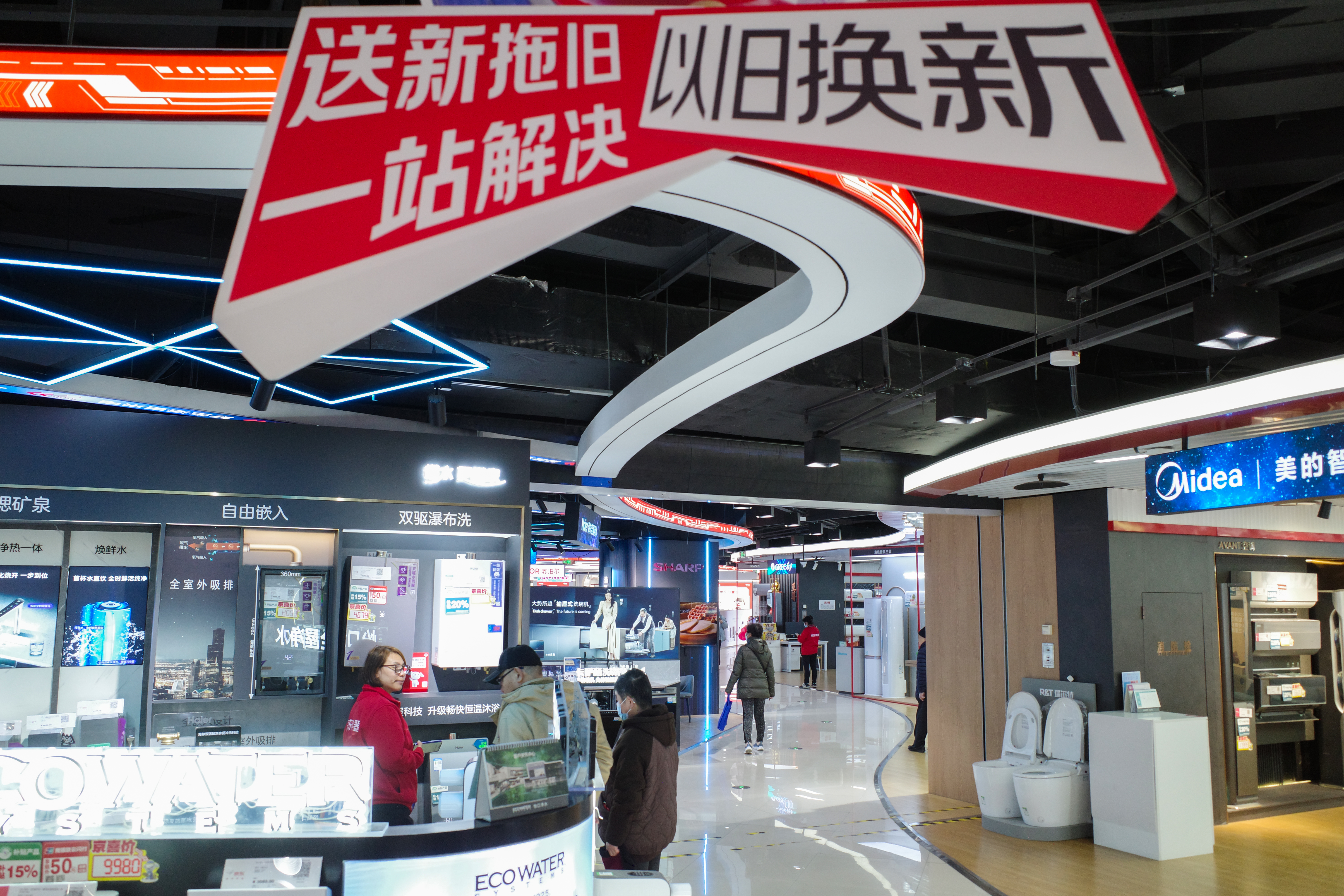
春节期间中国家电市场总体平稳,各地及各商家的销售情况冷热不均
Di Yi Cai Jing· 2026-02-28 01:11
Core Insights - The Chinese home appliance market remained stable during the Spring Festival promotion period, with varying sales performance across regions and retailers, highlighting smart products and rural markets as key growth areas [1][2][3] Group 1: Market Performance - Sales in Shanghai during the Spring Festival promotion reached 299 million yuan, driven by new subsidy policies and participation from 815 companies [1] - A retail chain in East China reported a 10% decline in sales compared to the same period last year, indicating a relatively weak market [1] - A retailer in South China noted a stable overall market without significant fluctuations, attributing this to the early release of demand due to national subsidy policies [1][2] Group 2: Product Trends - Smart water heaters and large-capacity smart refrigerators performed relatively well during the holiday season [1] - The market is evolving towards home-oriented, energy-efficient, smart, and personalized products [1] - GfK's data indicated that major appliance categories like refrigerators, washing machines, and TVs experienced robust growth during the promotion period, with both volume and revenue increasing [3] Group 3: Regional Insights - Sales in some western regions showed positive performance, with one retailer reporting a 42% increase in air conditioner sales [3] - Rural markets are gradually developing, influenced by returning migrant workers who bring new consumption concepts [3] - Growth rates in third and fourth-tier cities outpaced those in first and second-tier cities, reflecting a shift in consumer behavior [3]
春节家电市场消费结构稳步提升,乡镇市场成为主要增长点
Di Yi Cai Jing· 2026-02-27 11:34
Group 1 - The core viewpoint of the article highlights the steady improvement in the structure of China's home appliance consumption market, driven by new consumption concepts brought by returning workers and the increasing popularity of smart appliances in county-level markets, with growth rates in third and fourth-tier cities outperforming those in first and second-tier cities [1][5][6] Group 2 - During the Spring Festival promotional period, the overall performance of the Chinese home appliance market was stable, but sales varied significantly across different regions and retailers, with smart products and rural markets identified as key growth areas [5][6] - The Shanghai home appliance association reported that the new round of government subsidies, including instant lottery measures for trade-in programs, boosted sales to 299 million yuan, with 815 participating companies during the promotional period [5] - Some retailers noted a decline in sales compared to the previous year, with a reported 10% drop in sales in certain areas, while specific products like smart water heaters and large-capacity refrigerators performed relatively well [5][6] - The market is evolving towards home integration, energy efficiency, intelligence, and personalization, with ongoing growth pressure and opportunities for expansion in lower-tier markets [5][6] - Data from GfK indicated that most appliance categories benefited from the trade-in policy during the Spring Festival, with refrigerators, washing machines, and televisions leading the market in both volume and revenue growth, reflecting a steady improvement in consumer spending structure [6]

健康家电标准体系逐步完善
Zhong Guo Chan Ye Jing Ji Xin Xi Wang· 2025-04-22 00:06
Core Viewpoint - The health appliance industry is undergoing a significant transformation, shifting from mere functionality to health empowerment, with consumers increasingly prioritizing health features in their purchasing decisions [1][2]. Group 1: Industry Trends - The home appliance industry is entering the fourth phase of national subsidies, moving from a low point to stable growth, with the market for cleaning appliances reaching 6.6 billion yuan, a year-on-year increase of 34.5% from January to February [2]. - Key trends in appliance innovation include health-oriented living, comfort, green low-carbon solutions, aesthetic space design, and smart living [2]. - The market share of air purifiers with a CADR value of 500 m³/h for formaldehyde removal, range hoods with a capacity of 25 m³/min, and fresh air conditioners has increased [2]. Group 2: Standards and Certifications - The new national standard GB44498-2024 for health appliances will be released on August 23, 2024, marking a strong regulatory phase for the health appliance industry [1]. - The GB/T21551.1-6 series of standards, which detail specific requirements for various appliances regarding disinfection, virus removal, allergen elimination, and antibacterial functions, will be officially published by December 31, 2024 [1]. - A comprehensive health certification system has been established by the China Household Electrical Appliances Research Institute (CHEARI), including health safety certification, biological removal performance certification, and material component biological inhibition performance certification [1][2]. Group 3: Product Innovations - The health safety certification targets appliances that explicitly state health functions, following the GB44498-2024 and CHCT-02-339-2024 standards [3]. - The biological removal performance certification has been upgraded to cover air purification, fabric care, dish cleaning, and surface cleaning, assessing their capabilities in disinfection, virus removal, and allergen elimination [3]. - The materials component biological inhibition performance certification focuses on antibacterial, anti-mold, and antiviral functionalities of materials used in appliances [3]. Group 4: Product Showcase - The conference showcased 15 products that have passed the GB44498-2024 and GB/T21551-2024 standards, receiving certifications for health safety and biological removal performance [4].