智能热水器

Search documents
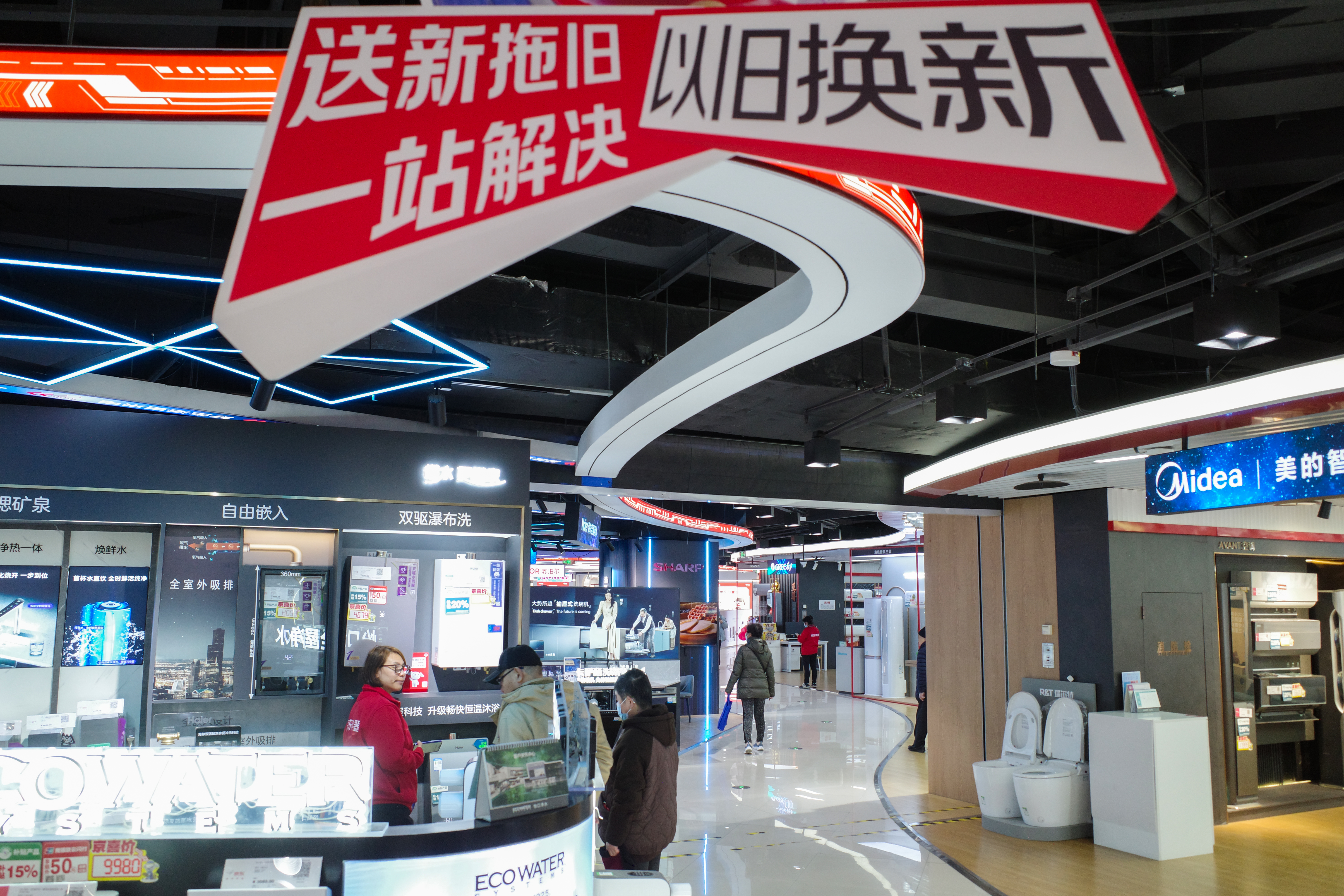
春节期间中国家电市场总体平稳,各地及各商家的销售情况冷热不均
Di Yi Cai Jing· 2026-02-28 01:11
Core Insights - The Chinese home appliance market remained stable during the Spring Festival promotion period, with varying sales performance across regions and retailers, highlighting smart products and rural markets as key growth areas [1][2][3] Group 1: Market Performance - Sales in Shanghai during the Spring Festival promotion reached 299 million yuan, driven by new subsidy policies and participation from 815 companies [1] - A retail chain in East China reported a 10% decline in sales compared to the same period last year, indicating a relatively weak market [1] - A retailer in South China noted a stable overall market without significant fluctuations, attributing this to the early release of demand due to national subsidy policies [1][2] Group 2: Product Trends - Smart water heaters and large-capacity smart refrigerators performed relatively well during the holiday season [1] - The market is evolving towards home-oriented, energy-efficient, smart, and personalized products [1] - GfK's data indicated that major appliance categories like refrigerators, washing machines, and TVs experienced robust growth during the promotion period, with both volume and revenue increasing [3] Group 3: Regional Insights - Sales in some western regions showed positive performance, with one retailer reporting a 42% increase in air conditioner sales [3] - Rural markets are gradually developing, influenced by returning migrant workers who bring new consumption concepts [3] - Growth rates in third and fourth-tier cities outpaced those in first and second-tier cities, reflecting a shift in consumer behavior [3]
春节家电市场消费结构稳步提升,乡镇市场成为主要增长点
Di Yi Cai Jing· 2026-02-27 11:34
Group 1 - The core viewpoint of the article highlights the steady improvement in the structure of China's home appliance consumption market, driven by new consumption concepts brought by returning workers and the increasing popularity of smart appliances in county-level markets, with growth rates in third and fourth-tier cities outperforming those in first and second-tier cities [1][5][6] Group 2 - During the Spring Festival promotional period, the overall performance of the Chinese home appliance market was stable, but sales varied significantly across different regions and retailers, with smart products and rural markets identified as key growth areas [5][6] - The Shanghai home appliance association reported that the new round of government subsidies, including instant lottery measures for trade-in programs, boosted sales to 299 million yuan, with 815 participating companies during the promotional period [5] - Some retailers noted a decline in sales compared to the previous year, with a reported 10% drop in sales in certain areas, while specific products like smart water heaters and large-capacity refrigerators performed relatively well [5][6] - The market is evolving towards home integration, energy efficiency, intelligence, and personalization, with ongoing growth pressure and opportunities for expansion in lower-tier markets [5][6] - Data from GfK indicated that most appliance categories benefited from the trade-in policy during the Spring Festival, with refrigerators, washing machines, and televisions leading the market in both volume and revenue growth, reflecting a steady improvement in consumer spending structure [6]

2025年3C消费电子三大市场增长报告-消费电子的未来战场 中国制造“卷”向全球-数说故事
Sou Hu Cai Jing· 2025-06-21 13:02
Global Consumer Electronics Market Overview - Chinese brands are actively expanding into overseas markets, seeking faster growth, with exports of electromechanical products increasing by over 8% in 2023 compared to 2021 [1] - The global consumer electronics industry is also on an upward trend, with an expected growth rate of approximately 21% in overseas markets by 2024 [1] Demand Differences and Growth Categories in Three Major Markets China Market - Demand Characteristics: Consumers focus on extreme experiences in outdoor, therapeutic, and entertainment scenarios, preferring narrative-driven marketing [1] - Growth Categories: - Power Banks: Driven by outdoor trends, there is an increasing demand for "outdoor power+" and compatibility with new devices [1] - Portable Speakers: Transitioning from individual use to a necessity for creating an atmosphere, catering to various scenarios like camping and group activities [1] - AR/VR Glasses: Evolving from niche products to mainstream necessities, driven by virtual viewing experiences and interactive dramas [1] Europe and America Market - Demand Characteristics: Focus on entertainment atmosphere, emotional companionship, therapeutic needs, and personalized beauty, with emotional experiences becoming essential [1] - Growth Categories: - Projectors: In the post-pandemic era, homes have become primary entertainment venues, with camping culture rising, fulfilling immersive experience demands [1] - Smart Companion Robots: Addressing the loneliness economy and mental health concerns, catering to elderly care needs [1] - Home Beauty Devices: High cost-performance ratio combined with AI skin detection, meeting personalized skincare demands [1] Southeast Asia Market - Demand Characteristics: Safety anxiety, energy concerns, and health needs are driving the smart home product upgrades, with narrative-driven marketing favored [2] Technological Innovations and Future Trends Technology-Driven Transformation - AI technology is empowering product innovation across the board, including AI translation headsets and whole-home smart systems; sustainable development is integrated throughout the industry chain, with eco-friendly technologies covering the entire product lifecycle; health technology upgrades are creating a "full-domain health network" [2] Future Trends - Exhibition Trends: IFA 2024 and CES 2025 indicate that AI, sustainability, and health will be the main trends, with AI experiencing the fastest growth [2] - Scenario Trends: Home and travel are common growth trends across the three major markets, with AI+[home+travel] scenarios driving new product categories, such as smart glasses; the AI+X era will bring limitless possibilities to consumer electronics, deeply integrating into various life scenarios [2]

2025年3C消费电子三大市场增长报告(中国×欧美×东南亚)-数说故事
Sou Hu Cai Jing· 2025-06-20 03:08
Global Consumer Electronics Industry Overview - Chinese brands are actively expanding into overseas markets, driving continuous growth in the global consumer electronics industry. From 2020 to 2024, the export value of electromechanical products from China is expected to rise annually, with growth rates of 8.7%, 1.62%, and 6.78% for 2021-2023 respectively. The global consumer electronics market is also showing growth, with overseas market share exceeding 20% from 2021 to 2024 [1]. Market Demand Differences and Growth Categories China Market - Demand Characteristics: Consumers focus on extreme experiences in outdoor, therapeutic, and entertainment scenarios, preferring narrative-driven marketing [4]. - Growth Categories: - Power banks: Addressing outdoor power anxiety and compatibility with new devices. - Portable speakers: Transitioning from personal use to essential for creating atmosphere in various settings. - AR/VR glasses: Moving from niche to mainstream demand, particularly in entertainment and gaming [4]. Europe and America Market - Demand Characteristics: Key needs include entertainment atmosphere, emotional companionship, and personalized beauty, with a strong preference for narrative-driven marketing [4]. - Growth Categories: - Projectors: Catering to immersive home and outdoor entertainment experiences, symbolizing "lifestyle aesthetics." - Smart companion robots: Addressing loneliness and mental health needs, providing emotional support and elderly care. - Home beauty devices: High cost-performance ratio, integrating AI skin detection for personalized skincare [4]. Southeast Asia Market - Demand Characteristics: Safety concerns, energy anxiety, and health needs are driving the smart home product upgrades, with narrative-driven marketing being more readily accepted by consumers [4]. - Growth Categories: - Smart home security: Rising middle class and increased safety awareness are boosting demand for smart cameras. - Smart water heaters: Addressing soaring electricity prices and unstable gas supply, focusing on energy-saving and dual-mode functions. - Smart mattresses: Post-pandemic health awareness is increasing interest in sleep monitoring and chronic disease management [4]. Technological Innovations and Future Trends Technological Innovation Directions - AI technology: Deep integration into home appliances and wearable devices, such as AI translation headsets and whole-home smart systems. - Environmental technology: Covering the entire product lifecycle to aid in energy saving and carbon reduction. - Health technology: Expanding into home and personal care scenarios, creating a "holistic health network" [4]. Future Trends - Scenario-driven growth: Home and travel are common growth trends across China, Europe, and Southeast Asia. - AI and scenario integration: Examples include AI-driven smart brushing and cooking in home scenarios, and real-time translation with smart glasses in travel scenarios. - Hardware innovation: Standalone AR glasses are expected to become the next major computing platform [4].
3C消费电子三大市场增长报告:消费电子的未来战场,中国智造 “卷” 向全球
数说故事· 2025-06-09 05:35
Investment Rating - The report does not explicitly state an investment rating for the industry Core Insights - The future battlefield of consumer electronics is characterized by China's manufacturing capabilities expanding globally, with a focus on the 3C consumer electronics market [2][8] - The report highlights significant growth in various consumer electronics categories, driven by technological advancements and changing consumer preferences [5][81] - The integration of AI and smart technologies is reshaping consumer electronics, leading to a demand for products that enhance user experience and meet specific lifestyle needs [81][109] Market Overview - The global consumer electronics market is projected to grow, with China's export of electromechanical products expected to reach approximately $130 billion by 2024, reflecting a growth rate of 6.78% [9] - The report identifies three major markets: China, Europe, and Southeast Asia, each exhibiting distinct consumer preferences and growth opportunities [12][67] Category Insights - In the Chinese market, top-performing categories include projectors (175% growth), smart home security (500% growth), and smart water heaters (150% growth) [21][26] - The European market shows a strong demand for entertainment and emotional companionship products, such as smart beauty devices and projectors, with significant growth rates [46][49] - Southeast Asia is experiencing a surge in demand for smart home products driven by safety concerns and energy efficiency needs, with smart home security and smart water heaters leading the growth [67][69] Consumer Behavior Trends - Consumers are increasingly favoring scenario-based narratives in marketing, with a focus on experiences that enhance lifestyle and emotional well-being [38][57] - The rise of outdoor activities and home entertainment has led to increased demand for portable power sources and immersive technologies like AR/VR [35][94] Technological Innovations - The report emphasizes the role of AI in driving product innovation and enhancing sustainability across the consumer electronics industry [81][85] - Emerging technologies are expected to redefine consumer experiences, with a focus on health monitoring and energy efficiency [86][109]
2025年中国AI家电行业发展白皮书 | 36氪研究院
36氪· 2025-03-19 13:07
Group 1 - The core viewpoint of the article emphasizes the transformative impact of AI large models, particularly DeepSeek, on the home appliance industry, enabling a shift towards intelligent and proactive services in smart home devices [1][15][24]. - The evolution of AI home appliances is categorized into three main stages: the voice interaction era ("hearing"), the perception decision era ("seeing"), and the autonomous action era ("doing"). The industry is currently in the second stage, characterized by significant breakthroughs in AI visual technology [2][16][27]. - The current "seeing" stage is marked by three revolutions in user experience, technology restructuring, and scene evolution, leading to a shift from passive response to proactive service [4][17][35]. Group 2 - User experience has evolved from operating appliances to having needs met seamlessly, driven by advancements in spatial, temporal, and emotional dimensions of interaction [5][36][39]. - Technological upgrades in AI appliances involve the integration of multimodal perception, cloud-edge collaboration, and adaptive optimization, enhancing autonomous decision-making capabilities [5][41][45]. - Scene evolution is facilitated by AI technology, enabling data intelligence and deep collaboration among devices, transitioning from isolated operation to interconnected smart scene ecosystems [5][48][49]. Group 3 - Haier Smart Home exemplifies the integration of AI technology, particularly through its "AI Eye," which enhances appliance functionality and creates a new standard for smart homes [6][58]. - The "AI Eye" technology allows appliances to possess proactive observational capabilities, enabling them to recognize user needs and environmental conditions, thus transitioning from passive to active service [7][59]. - Haier's comprehensive smart home solutions, such as the "1+3+5+N" model, illustrate the interconnectedness of various appliances, allowing for seamless collaboration across different home scenarios [5][50][60]. Group 4 - Future AI home appliances are expected to achieve full-scene autonomous collaboration and ubiquitous intelligence, reshaping lifestyles through a highly coordinated smart ecosystem [8][18]. - The integration of household robots is anticipated to enhance the capabilities of AI appliances, enabling them to perform complex tasks autonomously and redefine household management [8][32][33].