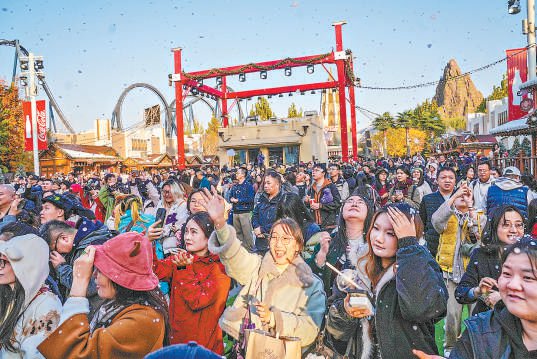
湾里国际娱乐综合体

Search documents
打造世界级旅游目的地 城市副中心瞄准“一年一爆款”
Bei Jing Shang Bao· 2026-01-25 06:41
Group 1 - The Beijing urban sub-center aims to become a world-class tourist destination with a goal of "one blockbuster per year" in its cultural tourism area [4][6] - The planning area for the cultural tourism zone is approximately 12 square kilometers, with projected tourist arrivals exceeding 26 million by 2025, reflecting a year-on-year growth of 12.5% [4][6] - The area is expected to develop a diverse ecosystem of cultural and tourism products, supported by the integration of various attractions and the upcoming Xiaotaihou River navigation system [5][6] Group 2 - By 2025, Beijing anticipates welcoming 5.48 million inbound tourists, generating tourism spending of 50.56 billion yuan, both figures expected to set new historical highs [6] - The urban sub-center's cultural tourism zone is projected to attract nearly 50 million visitors in the future, indicating significant growth potential [6] - The area will feature a complete ecosystem with attractions like Universal Studios, Bay Area, and upcoming projects such as the Peak Park and Haichang Ocean Park, enhancing the overall tourism experience [6]


城市副中心迈向世界级旅游目的地
Xin Lang Cai Jing· 2026-01-18 22:33
Core Insights - The Beijing Sub-Center Cultural Tourism Area is experiencing rapid development with the recent opening of the Bay Area International Entertainment Complex, which has attracted over 2.45 million visitors and generated sales exceeding 200 million yuan within 16 days of trial operation [1] - The area is set to introduce several high-profile projects, including Peppa Pig and Barbie-themed parks, and will see the opening of Haichang Ocean Park in 2027 and a sports center in 2028, marking a new phase of clustered development in the cultural tourism industry [1] Group 1: Industry Growth and Economic Impact - The cultural tourism sector in the sub-center is projected to receive over 26 million visitors by 2025, with tourism spending expected to grow by 12.5%, ranking second in the city [7] - Revenue from cultural and artistic enterprises in the sub-center is anticipated to increase by 33.5% year-on-year, with the share of cultural and entertainment enterprises in GDP rising to 4.7% [7] - The Universal Beijing Resort is expected to attract over 10 million visitors annually, focusing on young families and offering high-quality immersive experiences [7][9] Group 2: Project Differentiation and Target Audience - The upcoming projects are designed to cater to diverse demographics, including young families, youth, and cultural enthusiasts, with attractions like the Peppa Pig indoor snow park and Ferrari World targeting specific interests [8][9] - The strategy emphasizes a "complementary coexistence" model rather than homogeneous competition, aiming to create a comprehensive entertainment ecosystem that meets various consumer needs [9] Group 3: Infrastructure and Connectivity - The integration of various cultural tourism resources is being facilitated through the development of a waterway system that connects different attractions, enhancing the overall visitor experience [10] - The area is set to see the opening of five high-quality hotels by 2025, increasing the total number of hotel rooms to approximately 2,100, with plans for further expansion by 2028 [10] Group 4: Cultural Integration and Unique Offerings - The sub-center is incorporating local cultural elements into its projects, such as the Grand Canal culture and intangible heritage, to create a unique tourism experience [13] - Events like the Grand Canal New Year Garden Party and winter activities are designed to attract visitors year-round, transforming the area into a vibrant cultural hub [13] Group 5: Future Projections - By 2028, the sub-center aims to achieve an annual visitor count exceeding 30 million, with long-term plans to attract over 50 million visitors annually by 2030 through the completion of additional projects [14] - The ongoing development of high-energy projects is expected to solidify the sub-center's position as a world-class tourist destination, contributing significantly to Beijing's status as an international consumption center [14]