
滇越铁路

Search documents
继续延伸81公里,中越边境有重大突破
虎嗅APP· 2025-12-06 09:33
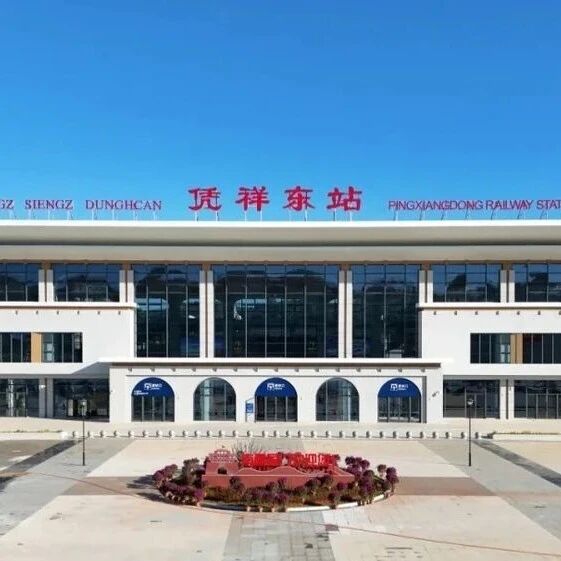
Core Viewpoint - The completion of the Nanning-Pingxiang high-speed railway marks a significant enhancement in connectivity between Guangxi and Southeast Asia, establishing a new international transport corridor to ASEAN countries [6][13]. Group 1: High-Speed Railway Overview - The Nanning-Pingxiang high-speed railway, specifically the Chong-Ping section, officially opened on December 5, 2025, with the first train departing from Pingxiang East Station [6][11]. - This railway is the second high-speed line connecting Guangxi to the China-Vietnam border, enhancing the region's transportation infrastructure [9]. - The railway spans a total length of 201 kilometers, with the Chong-Ping section measuring 81 kilometers and designed for a maximum speed of 250 km/h [48][51]. Group 2: Historical Context - The railway's completion comes 130 years after the initial plans for a cross-border railway between China and Vietnam, which faced numerous historical challenges [63][95]. - The region of Longzhou, which the railway passes through, has historical significance as a former border trading hub and was intended to be part of the first international railway in China [91][95]. Group 3: Economic and Strategic Implications - The new railway significantly reduces travel time between Nanning and Pingxiang from 4 hours to under 2 hours, facilitating trade and tourism [100][105]. - The railway is expected to boost the economic integration of Guangxi with ASEAN, enhancing trade routes and passenger transport [13][110]. - The completion of this railway aligns with China's Belt and Road Initiative, promoting cross-border connectivity and economic cooperation [36][110].

越南与中国大后方
虎嗅APP· 2025-12-04 13:51
Core Viewpoint - The article discusses the strategic importance of the Yunnan-Vietnam Railway during the Second Sino-Japanese War, highlighting its role as a vital supply line for the Chinese government amidst the blockade imposed by Japan [5][11]. Group 1: Historical Context - In August 1937, Japan announced a blockade of China's coast, cutting off strategic materials [5]. - By 1938, major Chinese cities fell to Japanese forces, leaving only a few under the control of the Nationalist government [6]. - The Yunnan-Vietnam Railway became the only significant railway connection for the southwestern rear area of China to the outside world [11]. Group 2: Importance of the Yunnan-Vietnam Railway - The railway, spanning 854 kilometers, connected Kunming to the important port of Haiphong in northern Vietnam, facilitating the import of essential military supplies [11]. - In 1938 and 1939, the railway's freight volume peaked, with 376,628 tons in 1938 and a significant increase to 524,329 tons in 1939, tripling pre-war levels [12]. - Passenger ticket sales also surged, with over 4.2 million tickets sold in 1938 and 4.54 million in 1939, approximately ten times the pre-war figures [12]. Group 3: International Relations and Support - Vietnam served as a crucial communication window for China during this period, with French consent allowing for the transport of supplies [13]. - The Allies, including Britain and France, shifted their stance to support the Nationalist government against Japan after the German invasion of Poland [14]. - The Yunnan-Vietnam Railway was a key route for transporting Allied supplies from Saigon to Kunming [14]. Group 4: Japanese Response and Military Actions - Aware of the railway's significance, Japanese forces bombed it multiple times between 1939 and 1940 [12]. - The local military and civilians took measures to protect the railway, including deploying anti-aircraft guns and smoke devices [12]. Group 5: Changes in Control and Impact - Following France's defeat in June 1940, Japan occupied northern Vietnam, leading to the disruption of the Yunnan-Vietnam Railway [21]. - The Japanese and Vichy French jointly governed Vietnam, with Japan primarily responsible for military occupation and resource exploitation [22]. - The situation escalated with Japan's takeover of French colonial administration in March 1945, leading to the complete control of Vietnam by Japan [27].

跨年,走100年前的铁路去越南
3 6 Ke· 2025-11-28 02:36
Core Viewpoint - The article highlights the historical significance and cultural impact of the Yunnan-Vietnam Railway, also known as the "米轨" (meter-gauge railway), which connected Yunnan, China, to Vietnam, facilitating trade and cultural exchange over a century ago [1][3][5]. Group 1: Historical Context - The Yunnan-Vietnam Railway was constructed during the French colonial period, starting in 1903 and completed in 1910, featuring a narrow gauge of 1 meter [3]. - This railway played a crucial role in linking Yunnan with the outside world, leading to economic growth and the emergence of international cities in southern China [1][5]. Group 2: Cultural Significance - The railway not only transported goods but also brought cultural influences, transforming towns along its route into vibrant centers of trade and culture, reminiscent of "Little Hong Kong" and "Little France" [1][5]. - The article describes various towns along the railway, such as Jianshui and Mengzi, emphasizing their historical and cultural heritage, including local cuisine and traditional practices [6][8][10]. Group 3: Economic Impact - The railway facilitated the transport of valuable resources, such as tin from Gejiu to Haiphong, which were then shipped globally, significantly boosting the local economy [5]. - The article notes that the railway's operation led to the prosperity of small towns in Yunnan, which became bustling hubs of commerce and culture [5][10]. Group 4: Modern Relevance - The article discusses the ongoing significance of the railway, with current tourism activities highlighting its historical legacy and the unique experiences it offers to visitors [6][12]. - The Yunnan-Vietnam Railway is portrayed as a symbol of historical resilience, reflecting the complex interplay of colonialism, trade, and cultural exchange that continues to resonate today [19].
