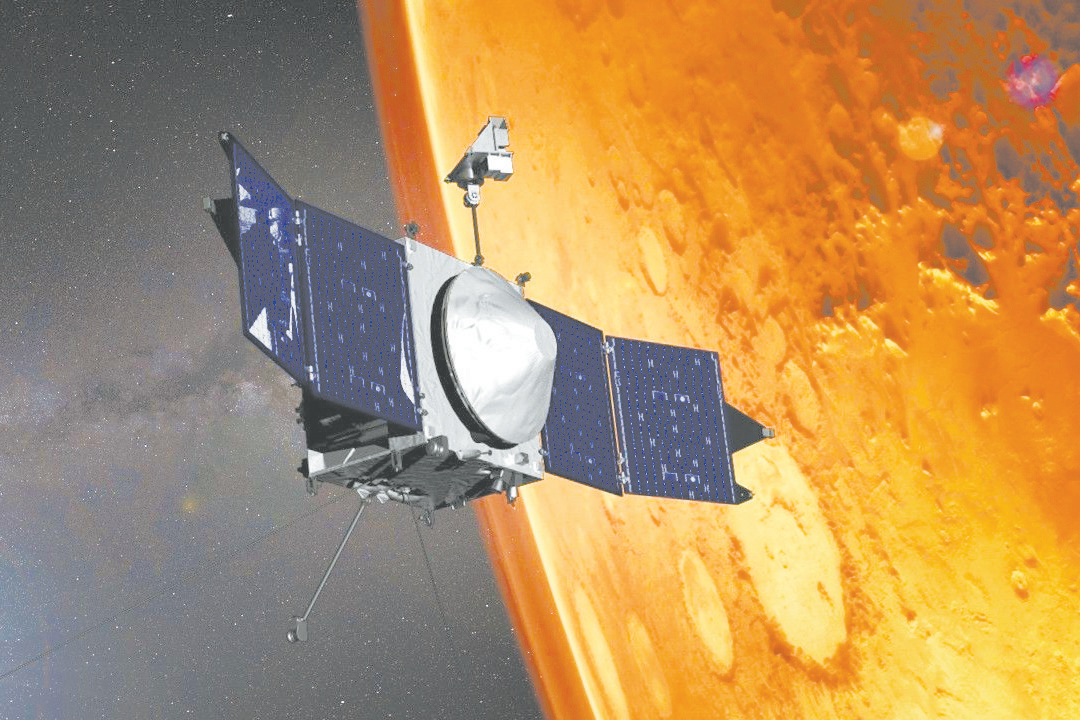
火星勘测轨道器(MRO)

Search documents
NASA火星探测器“失联”,暴露超期服役隐患
Huan Qiu Shi Bao· 2025-12-14 22:36
Core Viewpoint - NASA's MAVEN spacecraft has lost contact with Earth after over 10 years in Mars orbit, raising concerns about the impact on Mars atmospheric research and the overall Mars exploration program [1][3][4] Group 1: MAVEN's Mission and Importance - MAVEN was launched in November 2013 and entered Mars orbit in September 2014, with the mission focused on studying Mars' upper atmosphere, ionosphere, and interactions with solar wind [3] - The spacecraft plays a crucial role as a communication relay for other Mars rovers, including the Perseverance and Curiosity rovers [4] Group 2: Current Status and Investigation - MAVEN lost contact with Earth on December 6, with telemetry data indicating all systems were functioning normally until it passed behind Mars [3] - NASA is currently investigating the loss of contact and working on potential solutions [3] Group 3: Implications of MAVEN's Loss - The loss of MAVEN could significantly impact ongoing research into Mars' atmosphere and climate evolution, as well as the communication capabilities for other Mars missions [4][5] - MAVEN's previous issues, including a three-month safe mode in 2022 due to an inertial measurement unit failure, highlight the systemic risks within NASA's Mars exploration program [4] Group 4: Future Considerations - NASA has been exploring next-generation orbital vehicles for Mars communication, but many plans have not materialized, with a proposed Mars Communication Orbiter project being canceled in the past [4] - The urgency for a commercial relay architecture is emphasized due to the aging fleet of Mars orbiters, which poses risks for future missions [5]

消除“外星母舰”疑云——NASA公布3I/ATLAS彗星最新图像
Ke Ji Ri Bao· 2025-11-24 01:40
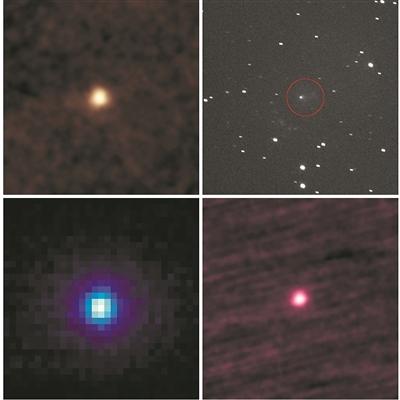
Core Insights - The article discusses the recent observations of the interstellar comet 3I/ATLAS, which has sparked curiosity and speculation since its entry into the solar system this summer, traveling at a speed exceeding 240,000 kilometers per hour [2][3] Group 1: Observations and Findings - NASA has released images from multiple spacecraft, confirming that 3I/ATLAS is a typical comet driven by ordinary physical mechanisms, dismissing theories of it being an alien spacecraft [2] - The closest images were captured by the Mars Reconnaissance Orbiter (MRO), showing a blurry white ball composed of dust and ice, with the comet's activity increasing as it approaches the Sun [3] - Data from the James Webb Space Telescope and SPHEREx provided insights into the comet's composition, revealing a significant amount of carbon dioxide and water ice near its nucleus [3] Group 2: Anomalies and Characteristics - Observations indicated unusual phenomena, such as a rapid brightening of the comet as it neared the Sun and the detection of nickel vapor, which is atypical for low-temperature environments [4] - The comet's behavior was reconstructed in three-dimensional space using data from various spacecraft, enhancing the understanding of its characteristics [4] Group 3: Size and Origin - Despite accumulating observations, the exact size of 3I/ATLAS remains uncertain, estimated to be between several hundred meters to a few kilometers in diameter, with its shape obscured by dust [5] - The origin of 3I/ATLAS is challenging to determine, with possibilities suggesting it has been drifting in interstellar space for a long time or may originate from an older stellar system [5] - The comet is expected to come closest to Earth on December 19, at approximately 270 million kilometers away, before it begins to exit the solar system [5]