
SPHEREx空间望远镜

Search documents
2025年,十大太空发现 | 红杉爱科学
红杉汇· 2025-12-26 00:06
Group 1 - The article highlights ten significant space discoveries in 2025, including gravitational wave echoes from deep space and extreme high-energy particles traversing the Milky Way [3] - The discoveries address long-standing scientific questions and challenge existing assumptions about the fundamental laws of the universe [3] - Key findings include clues to life's building blocks in asteroid samples, the detection of interstellar comets, and the first observation of coronal mass ejections beyond the Sun [3][5][10] Group 2 - The asteroid Bennu, approximately 525 meters in diameter and 320 million kilometers from Earth, yielded samples containing various salts, ribose, glucose, and organic materials, suggesting that the building blocks of life may originate from space [5] - The comet 3I/ATLAS, entering the solar system at a speed of about 152,000 miles per hour, is the third confirmed interstellar object, with ongoing observations to determine its size and physical properties [7] - The first direct observation of coronal mass ejections from an M dwarf star was achieved, marking a significant milestone in understanding solar phenomena [10] Group 3 - A report identified five known microquasars in the Milky Way as sources of high-energy cosmic rays, confirming the existence of natural "particle engines" [13] - An extreme black hole merger event was reported, creating a new black hole with a mass of approximately 225 solar masses, challenging existing theories about black hole mass ranges [16] - The LIGO observatory captured the clearest gravitational wave signal to date, validating Stephen Hawking's area theorem with a confidence level of 99.999% [19] Group 4 - The KM3NeT detector in the Mediterranean reported the detection of a neutrino with an energy of 220 PeV, setting a new record for neutrino energy [22] - Astronomers measured the distribution of ordinary baryonic matter in the universe, revealing that over three-quarters of it is hidden in diffuse gas between galaxies, addressing the "missing baryon problem" [25] - Recent findings suggest that dark energy, previously thought to be constant, may be weakening, which could necessitate significant revisions to the cosmological standard model [26][27] Group 5 - New-generation telescopes, including the Euclid space telescope and Vera C. Rubin Observatory, have released unprecedented cosmic data, paving the way for a new era of understanding in areas such as asteroid and galaxy evolution, dark matter, and dark energy [30]

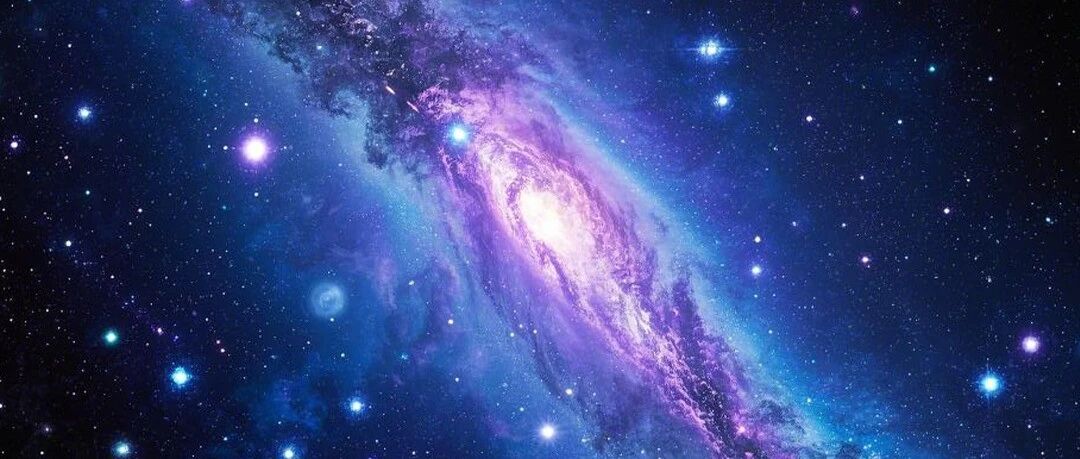
SPHEREx望远镜绘出102色全天空红外图谱
Huan Qiu Wang Zi Xun· 2025-12-23 01:36
Core Insights - NASA's SPHEREx space telescope has successfully created the first all-sky infrared map with 102 colors, aiding in the understanding of physical processes post-Big Bang and the evolution of galaxies over nearly 14 billion years [1][2] - The telescope, launched in March, orbits the Earth approximately 14.5 times a day and captures around 3,600 images daily, achieving full-sky coverage after six months of operation [1] - SPHEREx's unique capability lies in its ability to capture a wide range of infrared colors simultaneously, providing detailed information about star and planet formation regions [2] Group 1 - SPHEREx was launched in March and has completed a full-sky survey, producing a panoramic image by December [1] - The telescope operates with six detectors, each equipped with specially designed filters to capture 17 gradient colors, resulting in images composed of 102 different color layers [1] - The combination of wide field of view and multi-color detection distinguishes SPHEREx from other survey projects, such as NASA's Wide-field Infrared Survey Explorer [2] Group 2 - SPHEREx captures infrared light that is not visible to the human eye, providing unique insights into the universe's structure and the distribution of key materials for life within the Milky Way [2] - Previous projects have created all-sky maps, but none have matched SPHEREx's ability to capture such a rich array of colors simultaneously [2] - The telescope's observations will enhance the understanding of cosmic phenomena and the conditions necessary for life [1][2]
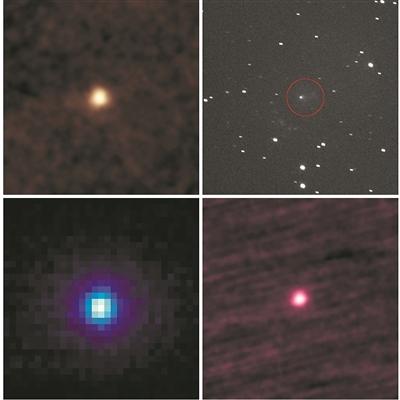
消除“外星母舰”疑云——NASA公布3I/ATLAS彗星最新图像
Ke Ji Ri Bao· 2025-11-24 01:40
Core Insights - The article discusses the recent observations of the interstellar comet 3I/ATLAS, which has sparked curiosity and speculation since its entry into the solar system this summer, traveling at a speed exceeding 240,000 kilometers per hour [2][3] Group 1: Observations and Findings - NASA has released images from multiple spacecraft, confirming that 3I/ATLAS is a typical comet driven by ordinary physical mechanisms, dismissing theories of it being an alien spacecraft [2] - The closest images were captured by the Mars Reconnaissance Orbiter (MRO), showing a blurry white ball composed of dust and ice, with the comet's activity increasing as it approaches the Sun [3] - Data from the James Webb Space Telescope and SPHEREx provided insights into the comet's composition, revealing a significant amount of carbon dioxide and water ice near its nucleus [3] Group 2: Anomalies and Characteristics - Observations indicated unusual phenomena, such as a rapid brightening of the comet as it neared the Sun and the detection of nickel vapor, which is atypical for low-temperature environments [4] - The comet's behavior was reconstructed in three-dimensional space using data from various spacecraft, enhancing the understanding of its characteristics [4] Group 3: Size and Origin - Despite accumulating observations, the exact size of 3I/ATLAS remains uncertain, estimated to be between several hundred meters to a few kilometers in diameter, with its shape obscured by dust [5] - The origin of 3I/ATLAS is challenging to determine, with possibilities suggesting it has been drifting in interstellar space for a long time or may originate from an older stellar system [5] - The comet is expected to come closest to Earth on December 19, at approximately 270 million kilometers away, before it begins to exit the solar system [5]
美空间望远镜“SPHEREx”开启巡天任务
news flash· 2025-05-02 08:03
Core Insights - NASA's newly launched space telescope "SPHEREx" has officially commenced its two-year survey mission on May 1, capturing approximately 3,600 images daily to create a new three-dimensional map of the universe [1] Group 1 - The mission aims to assist in exploring the evolution of the universe and the origins of life in the Milky Way galaxy [1]