焊接圆管

Search documents
友发集团:公司认为推动地下管网建设改造是我国深入推进新型城镇化、实施城市更新等工作的重要举措
Zheng Quan Ri Bao· 2026-02-03 14:17
Core Viewpoint - The company emphasizes that the construction and renovation of underground pipelines, projected to exceed 700,000 kilometers during the 14th Five-Year Plan, represents a significant opportunity for the welding steel pipe industry, driven by increased demand from downstream sectors [2] Group 1: Industry Insights - The underground pipeline construction and renovation is a crucial initiative for advancing new urbanization and urban renewal in China, contributing to high-quality economic development and improving people's livelihoods [2] - The projected investment demand for this initiative is over 5 trillion yuan, indicating substantial growth potential for related industries [2] Group 2: Company Preparedness - The company offers a wide range of products, including welded round pipes, galvanized round pipes, steel-plastic composite pipes, spiral steel pipes, insulated steel pipes, anti-corrosion steel pipes, polyethylene pipes, and various fittings, all of which are applicable in underground pipeline systems [2] - The company plans to closely monitor policy implementation and project progress, ensuring readiness in production, innovation, product quality, marketing, brand qualifications, and supporting services to enhance operational performance [2]


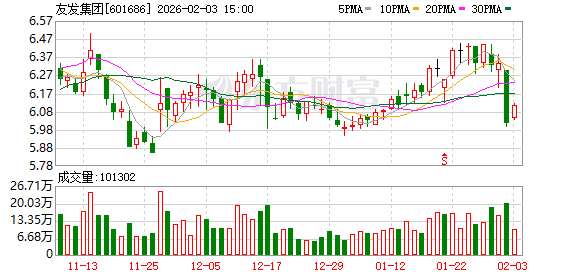
友发集团:“十五五”地下管网规划将为今后公司产品需求带来新的增长空间
Zheng Quan Shi Bao Wang· 2025-11-17 08:26
Group 1 - The company, Youfa Group, provides a wide range of products including welded round pipes, galvanized round pipes, steel-plastic composite pipes, spiral steel pipes, insulated steel pipes, anti-corrosion steel pipes, polyethylene pipes, composite pipes, stainless steel pipes, and various fittings, which are extensively used in underground pipeline networks for water supply, drainage, gas, fire protection, and heating applications [1] - The company's products, along with welded rectangular pipes, galvanized rectangular pipes, galvanized profiles, and扣脚手架, can also be utilized for structural support and wiring protection in underground utility corridors [1] - The "14th Five-Year Plan" includes a large-scale underground pipeline construction and renovation plan, which is expected to create new growth opportunities for the company's product demand in the future [1]
友发集团李茂津:以合作文化为基做全球管业“第一雄狮”
Shang Hai Zheng Quan Bao· 2025-11-16 17:55
Core Viewpoint - The article highlights the journey and strategic vision of Tianjin Youfa Steel Pipe Group, emphasizing its commitment to a cooperative culture and its ambition to become the global leader in the pipe industry. Group 1: Company Culture and Development - Youfa's cooperative culture is deeply ingrained, originating from its founding partners who shared a common vision and resources, leading to a unique decentralized ownership structure [4][5] - The company has evolved its cooperative culture into a broader ecosystem, incorporating customers and distributors into its "Big Youfa" concept, fostering a vibrant industrial community [4][5] - The challenges faced by Youfa include maintaining entrepreneurial spirit among founders, integrating new members into the cooperative culture, and sustaining leadership in technology, cost, brand, and management [5] Group 2: Product Strategy - Youfa's product strategy focuses on two main applications: fluid transportation and structural support, with a goal to dominate the market [6][7] - The company aims to increase its market share in traditional products from one-third to fifty percent, indicating a strong growth target [7] - Youfa has expanded its product line by acquiring a majority stake in Hebei Haiqianwei Steel Pipe Co., thus entering the oil and gas pipe sector [8] Group 3: Strategic Expansion - Youfa's strategic vision includes a shift from "Made in China, Sold Globally" to "Globally Made, Sold Globally," reflecting its ambition to establish a global presence [9][10] - The company plans to complete its national production base layout within three years and aims to replicate its success internationally within ten years [11] - Youfa is actively researching potential locations for overseas production bases, particularly in Southeast Asia, the Middle East, and Central Asia, to support its global expansion strategy [11]